Nihilistic cousins explore the secret deadly language of a folie à deux relationship in a Brexit environment of racism and illusion.
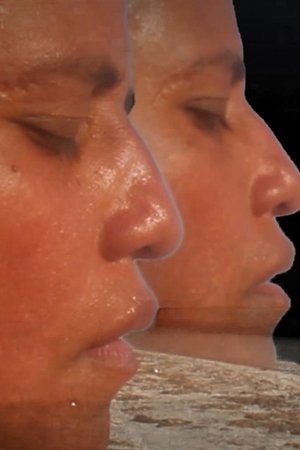
A portrait of Madrid's summer
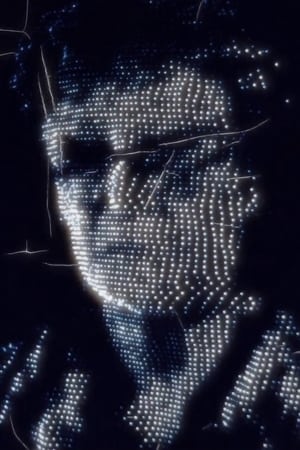
The surreal film Newscaster/Dragon/Maggots is a transmission of what lurks in between the channels. This is a rotoscoped piece of animation created from three randomly selected pieces of found footage. The foundation of this piece is based in mathematics, chance and montage editing measured in increments of triangular numbers. After the Formalist groundwork was laid, elements of Surrealism were employed to take the film beyond the initial framework of the metric and rhythmic editing process. The pixels were playfully manipulated and melded together into an entirely new form, backed by a noise composition set into place without regard for pacing, only duration. Music by legendary noise musician Merzbow.
1981 short film made by Nik Allday, the drummer on Cabaret Voltaire’s critically acclaimed third album ‘Red Mecca’, and features music by Allday and the Cabs’ Stephen Mallinder. The 10 minute abstract film uses raw material of video feedback and some nuclear bomb footage to represent “the cruel chaotic dysfunctional nature of the human condition with all its potential for self destruction”. Allday wanted a soundtrack that complemented the film thematically and approached Mallinder to see if he’d be interested in creating the audio.
From Winnipeg to Paris, from Montreal to the Philippines, the dash between "Filipino-Canadian" becomes a minus.
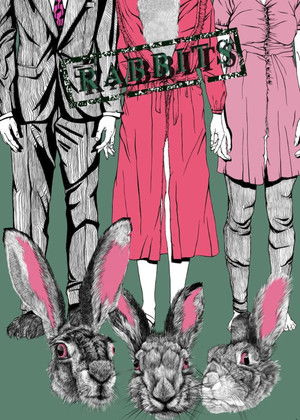
A story of a group of humanoid rabbits and their depressive, daily life. The plot includes Suzie ironing, Jane sitting on a couch, Jack walking in and out of the apartment, and the occasional solo singing number by Suzie or Jane. At one point the rabbits also make contact with their “leader”.
A man marked by an ambiguous though discernibly violent past returns to the scene of a ghastly crime he committed years prior, only to find that his perception of the events which transpired has been obscured by the festering delirium and guilt that accompanied them.
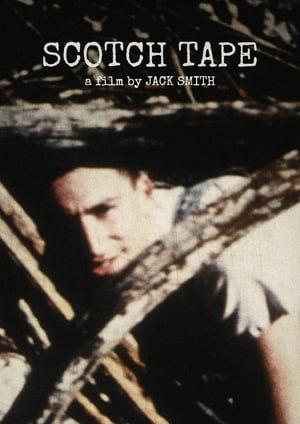
Shot in 1959, Scotch Tape is Jack Smith's first film -- a joyous, three-minute romp, in color, using Peter Duchin's rhumba "Carinhoso" for its soundtrack. Three young men merrily bop through the wreckage of razed buildings at the site of what would become Lincoln Center. Apparently, Scotch Tape was never edited and, instead, was cut in the camera by Smith, combining long shots and close-ups while filming mostly from overhead. The title comes from a small strip of scotch tape that was accidentally stuck on the camera and so is visible in the lower-right corner of the frame throughout the film.
We live with stories. And it's hard for us to give up on these stories, which provide us our identity, a way of understanding ourselves. Reflections from three successive generations are dusted off and presented as remaining fragments. An attempt to archive thoughts on familial history, narrative traditions, human perception and "the story" from known and unknown sources. "There is history behind it and the history becomes the story and the story becomes the pattern and the pattern becomes rigidity."
Fuego
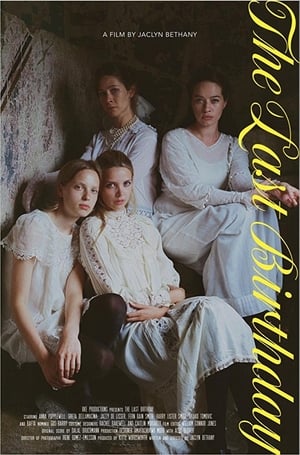
An experimental re-telling of the last days of the Romanov sisters.
A short experimental cutup film by Jon Moritsugu.
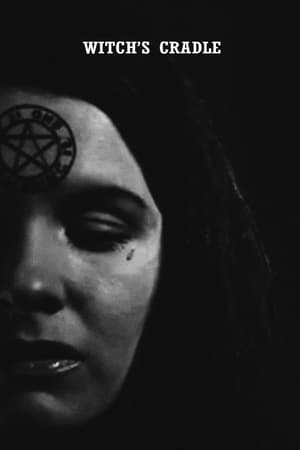
The surrealist film shows repetitive imagery involving a string fashioned in a bizarre, almost spiderweb-like pattern over the hands of several individuals, most notably an unnamed young woman and an elderly gentleman. The film also shows a shadowy darkness and people filmed at odd angles, an exposed human heart, and other occult symbols and ritualistic imagery which evokes an unsettling and dream-like aura. Considered an unfinished film.
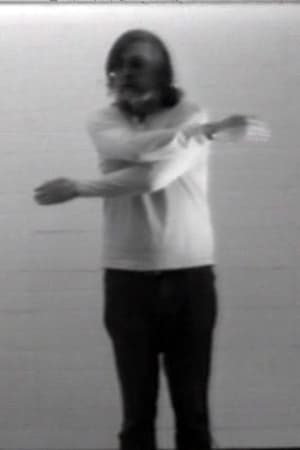
In an ironic reference to body art, process art and performance, Baldessari challenges definitions of the content and execution of art-making. Performing with deadpan precision, he moves his hands, arms and entire body in studied, minute motions, intoning the phrase "I am making art" with each gesture. Each articulation of the phrase is given a different emphasis and nuance, as if art were being created from moment to moment. This index of body movements is ironically offset by the repetitive monotony of the exercise.
color, silent, 8mm film
Goodbye Fantasy is about two bodies in relation to each other as they let go of multiple cinematic universes they occupy together. Transforming from a fantasy body to a dreaming body to a dying body, they enact different constellations of social and political power as they relate to each other within the tight construct of the frame.
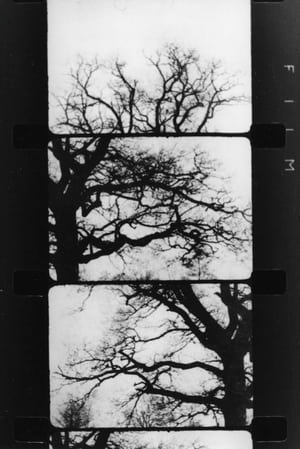
I have several English style windows and this and a tree in winter have caused me to think about Fox-Talbot’s window—his first image, perhaps. Carried out, as usual, with the technique—but perhaps it would be better to say the discipline—of the flicker, which is, “the undulation, trembling, quivering, flashing, sparkling weakly” of the dictionary, in short everything of the cinèsi fosforescentica. Drawn from a thin monograph (it’s worth saying from typographic ink where there had been silver salts) I tried to shake my window using his where there had been a tree in winter. Cross-dissolving between real and not-real, between fixed and animated images of his lively works, seemed to me to reconstruct what would have perhaps happened to Fox-Talbot, filming my window in winter.
Failed musician Vanessa comes home from her stale office job one evening to find a version of herself already inside her own house, and descends into a nightmare from which she struggles to awake.
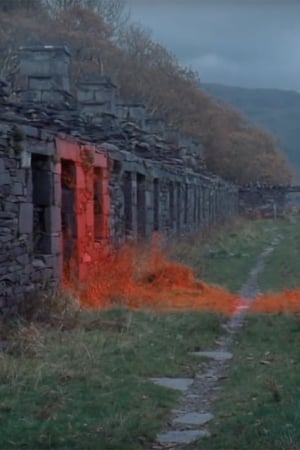
“I don’t believe in ghosts but I do believe places can be haunted by meaning. Places change, not always for the better and not always by natural, benevolent or politically sound means. A place can be charged with atmosphere because of what it has been through or what it has been. Phantom Brickworks is a collection of mostly improvised musical pieces, that for some years now, have provided me with a mental portal into places and times - some real, some imaginary, some a combination of both. Human beings are highly sensitive to the atmospheres of places, which can be enhanced or dramatically altered when you learn about the context of their history. Echoes and voices can sometimes be heard, in some way or another. Places sometimes have things to say.” — Bibio
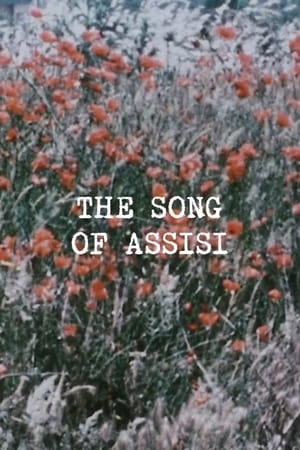
Filmed during Jonas Mekas’s visit to Assisi in 1967, this short documents his time in the city known for its spiritual associations. The footage was later incorporated into his 2003 compilation film Travel Songs (1967–1981).