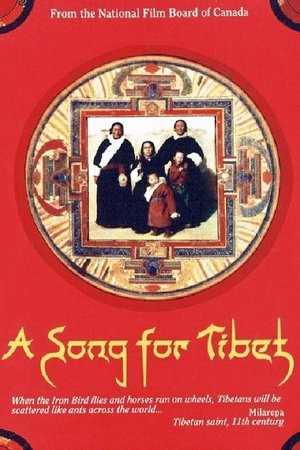
Maria Iliou documents the ethnic cleansing and violent expulsion of Greeks from the Ottoman Empire. In the first compulsory "exchange of populations" in the modern world, 1.2 million Greek Orthodox and 400,000 Muslims were forcibly relocated from Turkey to Greece and Greece to Turkey respectively.
Academy Award®-winning filmmaker Errol Morris confronts one of the darkest chapters in recent American history: family separations. Based on NBC News Political and National Correspondent Jacob Soboroff’s book, Separated: Inside an American Tragedy, Morris merges bombshell interviews with government officials and artful narrative vignettes tracing one migrant family’s plight. Together they show that the cruelty at the heart of this policy was its very purpose. Against this backdrop, audiences can begin to absorb the U.S. government’s role in developing and implementing policies that have kept over 1300 children without confirmed reunifications years later, according to the Department of Homeland Security.
This beautiful and poignant film was commissioned by TENI (Transgender Equality Network Ireland) and is a conversational piece which explores gender identity and transgender experiences in Ireland.
Both during and after pregnancy, yoga is a perfect way to firm your body, build strength, and gain flexibility. These two yoga practices, filmed in a serene garden overlooking the Pacific Ocean, are also a wonderful way to maintain emotional balance and reduce stress during the exciting and often hectic times surrounding the birth of a child. In the prenatal sequence you'll practice safe and simple movements intended to strengthen and tone your body at any stage of pregnancy, while providing relaxation that will help create a luminous space in which your baby will thrive. The postnatal sequence is designed to redefine your body, restore your energy, and help you reconnect to yourself and your own wellness.
Jakub presents an extensive ethnographical-sociological study of the life of the Ruthenians, filmed in the Maramuresh mountains in the north of Romania and in the former Sudetenland in Western Bohemia. The film was made over a period of five years during the time of both totalitarian regimes and was completed in 1992 after the revolution.
Documentary about the role of Native Americans in popular music history, a little-known story built around the incredible lives and careers of the some of the greatest music legends.
While her husband served a life sentence, paradoxically kept safe and morally uncontaminated, Winnie Mandela rode the raw violence of apartheid, fighting on the front line and underground. This is the untold story of the mysterious forces that combined to take her down, labeling him a saint, her, a sinner.
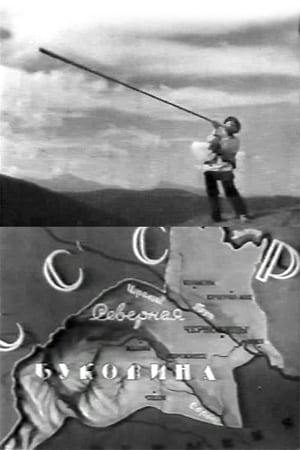
This documentary film is about one of Georgia's regions - Racha. The title of the film is taken from the name of one of Racha's high mountain villages. It tells about the poorest in society living in the mountains and the rise of the SSSR. The product of a remarkable collaboration between the first Georgian female filmmaker and the leading Georgian avant-garde artist David Kakabadze.
A road trip, over ten years, across the so-called Amexican border, a mythical boundary, both physical and cultural, that separates the United States of America from the United Mexican States; a journey in search of the multiple stories of those who inhabit it or are passing through: an audacious expedition that aims to paint a colorful fresco where politics, violence, visual poetry and frustrated ambitions cruelly coexist.
When Ariel was just 33, his legs were shredded by an industrial dough mixer in Mendoza, Argentina. He became a living embodiment of the ongoing duel between man and machine. From that point on, he began to rediscover the meaning of freedom: to rebuild his broken identity, keep his family together and design his own prosthetic legs. Following Ariel for 10 years from the time of the accident, director Laura Bari has created an intimate and metaphorical portrait of Ariel’s newfound transhumanity, juxtaposing his daily life with dreamlike inner worlds—and pushing the boundary between the real and the imaginary.
This feature documentary shines a light on a group of women who are passionate about their non-traditional job – trucking. Filmed in 1999, it follows the women all across Quebec as they do their job and address the big-ticket items in life: love, family, freedom, and solitude. Filled with humour and the contagious good spirits of the women involved.
Documentary feature about 11-time Jeopardy! champion and Internet iconoclast, Arthur Chu.
In 1988, Tilda Swinton toured round the Berlin Wall on a bicycle - starting and ending at the Brandenburg Gate - accompanied by filmmaker Cynthia Beatt. As Swinton travels through fields and historic neighborhoods, past lakes and massive concrete apartment buildings, the Wall is a constant presence.
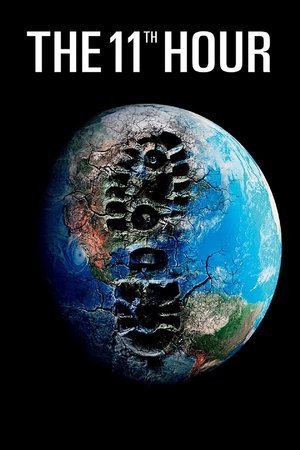
This short documentary is a celebration of life on planet Earth. Made from haunting visual images selected from 50 years of NFB productions, the film looks at human beings, their place on earth, and their deep interconnection with all other beings. Evocations of forces that threaten the planet and all its inhabitants also offer avenues for reflection.
London 1976: Between economic crises and the Silver Jubilee, something is brewing in the squats and basement clubs of West London: Punk. A promise, a new beginning. Punk meant self-empowerment, especially for the women in the scene. For the first time, women picked up guitar, bass and drums, formed bands and wrote their own songs.
John Wayne, Henry Fonda and James Stewart discuss working with John Ford
After casting painter and video artist Mania Akbari as the central figure of his groundbreaking Ten (2002), and then witnessing her outstanding debut as a feature film director in 20 Fingers (2004), Abbas Kiarostami urged her to direct a sequel to the film. In Dah be alaveh Chahar (10 + 4), though, circumstances are different: Mania is fighting cancer. She has undergone surgery; she has lost her hair following chemotherapy and no longer wears the compulsory headscarf; and sometimes she is too weak to drive. So the camera follows her to record conversations with friends and family in different spaces, from the gondola she had famously used in her first feature to a hospital bed.
Throughout the Islamic world, each year hundreds of women are shot, stabbed, strangled or burned to death by male relatives because they are thought to have “dishonoured” their families. They may have lost their virginity, refused an arranged marriage or left an abusive husband. Even if a woman is raped or merely the victim of gossip, she must pay the price. Crimes of Honour documents the terrible reality of femicide – the belief that a girl’s body is the property of the family, and any suggestion of sexual impropriety must be cleansed with her blood. We meet women in hiding from their families, a brother who describes his reasons for killing the sister he loved, and a handful of women who have committed themselves to the protection of young women in danger of losing their lives.
Nine fictitious documentaries and films reflect the mood of late 1970s Germany, particularly the two-month period in 1977 when a businessman was kidnapped by the RAF (Red Army Faction). The kidnap had been made to orchestrate the release of the original leaders of the RAF, aka the Baader-Meinhof.
In the 1920s, Angela Murray Gibson chose an unusual location to embark on a career in silent filmmaking: her tiny hometown of Casselton, North Dakota. She had previously helped Mary Pickford as an advisor and assistant director on The Pride of the Clan (1917), which Mary Pickford produced and starred in. She opened North Dakota's first movie studio, and she had the audacity to be a woman in an industry dominated by men.