Arson at a Planned Parenthood and the closing of a community clinic endanger the lives of women in Knoxville, TN. A teaching doctor reflects on what the post-Dobbs world means for her patients and her students, who are the next generation of reproductive care workers.
Lieber Herr Doktor
Intimate confessions, paired with experimental choreography outside a woman’s clinic in Memphis, offer a glimpse into post Roe v. Wade America.
At a public hospital in Nicaragua, Ob/Gyn Dr. Carla Cerrato must choose between following a law that bans all abortions and endangers her patients or taking a risk and providing the care that she knows can save a woman's life. In 2007, Dr. Cerrato’s daily routine took a detour. The newly elected government of Daniel Ortega, a former Marxist revolutionary who converted to Catholicism to win votes, overturned a 130-year-old law protecting therapeutic abortion. The new law entirely prohibits abortion, even in cases of rape, incest, or when a woman’s life is at stake. As Carla and her colleagues navigate this dangerous dilemma, the impact of this law emerges—illuminating the tangible reality of prohibition against the backdrop of a political, religious, and historically complex national identity. The emotional core of the story—the experiences and situations of the young women and girls who are seeking care—illustrate the ethical implications of one doctor's response.
Four people - Brittany, Hannah, Nick, and Ylonda - tell their stories about how access to abortion in their community helped them empower themselves to lead lives they want to live.
A film that delves into director Jean Carlomusto's family history by trying to find out if the rumors about her grandmother's death -- trying to rid herself of an unwanted pregnancy in 1939 -- are true.
French documentary campaigning for the liberalization of abortion and contraception, directed by Charles Belmont and Marielle Issartel in 1973.
The struggle of the Dutch women's movement in the 1970s for the preservation and improvement of abortion legislation. Protest meetings, actions by Dolle Mina, political debates in the Senate, the occupation of the Bloemenhove abortion clinic, discussions on abortion migration from Germany and Belgium, and the conflict between the women's movement and Minister Van Agt.
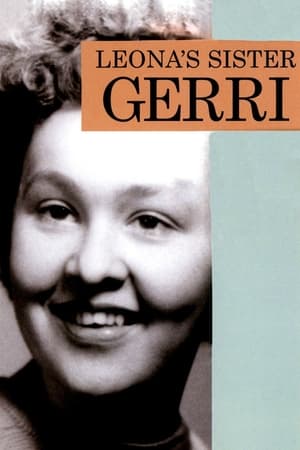
Millions have seen the photograph, and no one who has seen it will ever forget it. A naked woman, dead from a botched illegal abortion, lying on a motel room floor. The picture appeared in Ms. Magazine in April 1973, and quickly became a symbol for the abortion rights movement. LEONA'S SISTER GERRI tells the dramatic story of Gerri Santoro, a mother of two and the "real person" in the now famous photo. Should the media have used this image? What circumstances led to Gerri's tragic death? Powerfully addressing issues of reproductive rights and domestic violence, this video is a moving portrait of Gerri Santoro's life and society's response to her death.
Interviews from women involved in the 70's and 80's rock music industry. An examination of the people taking advantage of underage fans and calling for a "Me too" movement in the music world
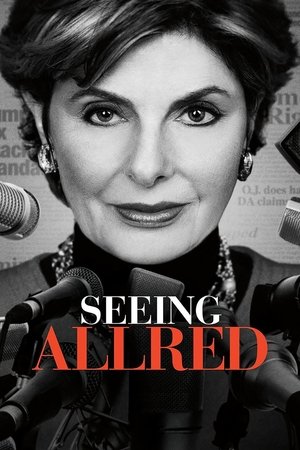
Gloria Allred overcame trauma and personal setbacks to become one of the nation’s most famous women’s rights attorneys. Now the feminist firebrand takes on two of the biggest adversaries of her career, Bill Cosby and Donald Trump, as sexual violence allegations grip the nation and keep her in the spotlight.
Almost 200 million women are "missing" in Asia - the result of targeted abortion of girls and dubious population policies. An investigative documentary about women who are not allowed to have daughters, about desperate attempts by men to find a wife somewhere, and about the abuse of women as pawns of politics and business.
Through intimate narrations and evocative imagery, women across the Dominican Republic reflect on their experiences with forced motherhood and clandestine abortion. What does it mean to exist as a woman in a country where abortion remains criminalized without exception?
IVG : Histoire(s) de combattantes
An intensely personal exploration of an explosive issue -- abortion in America. Wrenching first-person narratives from seven decades of women, each one facing an unplanned pregnancy -- and the dreadful decision that no one wants to make. Both pro-life and pro-choice, both out front on the picket line and inside the clinic, these women's stories turn politics into heart-searing drama: a pregnant 17-year-old and her pro-life mother whose conflict unfolds in front of the camera; a 22-year-old who became a pro-life protester when she learned that her mother nearly aborted her; an unhappy mother-of-two who's expecting a third when her marriage suddenly hits the rocks; a 71-year-old grandmother who still grieves for her mother, an early victim of illegal abortion. In this fusion of past and present, the history of abortion is the history of women -- told at a time in America when yesterday's back-alley abortions may be the only choice left for tomorrow.
As the Arizona Supreme Court argues on whether to reinstate an abortion ban that originated in 1864, As Long As We Can offers a glimpse into the day-to-day activities of this, for now, still functioning clinic.
Join Marlin Maddoux, host of the nationally syndicated radio news talk program Point of View, for an investigation into the multi-million dollar a year baby parts trafficking industry, which is one of the most lucrative businesses in operation today. Yet most Americans are unaware of its existence. Many have heard about the controversy surrounding fetal tissue research but have no idea how the tissue is obtained. Today, some are claiming that cures for a number of devastating diseases, including Alzheimer's, Parkinson's, diabetes and AIDS, are just around the cornerand that fetal tissue is desperately needed for research. But is it really?
Avortement, les croisés contre-attaquent
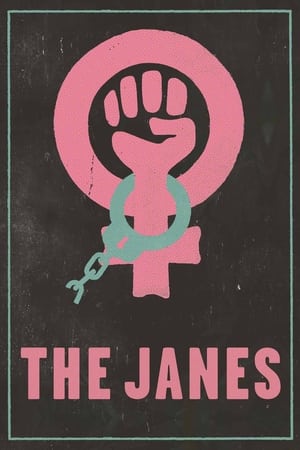
Defying the state legislature that outlawed abortion, the Catholic Church that condemned it, and the Chicago Mob that was profiting from it, the members of “Jane” risked their personal and professional lives to support women with unwanted pregnancies. In the pre-Roe v. Wade era — a time when abortion was a crime in most states and even circulating information about abortion was a felony in Illinois — the Janes provided low-cost and free abortions to an estimated 11,000 women.
"Clandestinas" is a documentary about the abortion situation in Brazil. Women share their experiences interrupting a pregnancy and actresses interpret that actual reports.