An Austrian director followed five successful African music and dance artists with his camera and followed their lives for a year. The artists, from villages in Ghana, Gambia and Congo, were the subjects of Africa! Africa! touring across Europe, but they have unbreakable roots to their homeland and their families. Schmiderer lovingly portrays his heroes, who tell their stories about themselves, their art and what it means to them to be African with captivating honesty. The interviews are interwoven with dance scenes and colourful vignettes set to authentic music.
This documentary will explore the Afro-Caribbean dance, ‘whining’ alongside the practice of twerking to analyze respectability politics, pressures to accommodate whiteness, and gendered criticism of sexual expression within the Black diaspora. Using archival footage of West African dance, expert opinion from dancing and gender studies professors, and the active participation of partygoers in a dance experiment, Watkins will paint the picture of the defiance, autonomy, and ancestral veneration intrinsic to these traditional movement styles.
A documentary on the legacy of ballet in Cuba that aired on PBS in Rochester, NY. Filmed on location in Havana, Cuba July – August, 2016. Featuring Laura Alonso, the history of the National Ballet of Cuba, and interviews with staff and dancers attending CUBALLET at or studying at The Center Prodanza of Cuba.
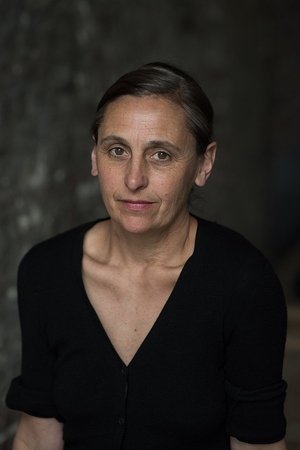
Pina Bausch created and performed Café Müller for her dance company Tanztheater Wuppertal. The dance was inspired by and based on her childhood memories of watching her father work at his café in Germany during and immediately following World War II. In this silent style featurette, Bausch shows a restaurant after closing, in which the ghosts of the departed customers stumble blindly into walls and onto chairs but fail to find one another.
Portrait of Lester Horton, a Los Angeles-based dancer, choreographer and teacher who trained many world-reknowned dancers and built the first American theater devoted permanently to dance. Former students and friends, including Bella Lewitzky, Alvin Ailey, and Carmen de Lavallade, help create a picture of Horton through interviews. Includes numerous dance excerpts.
For two hundred years, the Shakers have been America's most successful utopian society. While seeking harmony, order and perfection in every aspect of their lives, they built minimalistic furniture and buildings that influenced modern design. The Shakers wrote songs of exquisite beauty and danced to the point of ecstasy during their religious meetings. Inspired by this music and dance, choreographer Tero Saarinen created Borrowed Light, a dance piece about communal life and individual sacrifice. Shot in Finland and the United States, featuring interviews and excerpts from Borrowed Light, this documentary explore the cultural legacy of this religious group devoted to creating heaven on earth.
Alone, Eva Fahidi returned home to Hungary after WWII. At 20 years of age, she had survived Auschwitz Birkenau, while 49 members of her family were murdered, including her mother, father, and little sister. Today, at age 90, Eva is asked to participate in a dance theatre performance about her life's journey. This would be her first experience performing on a stage. Reka, the director, imagines a duet between Eva and a young, internationally acclaimed dancer, Emese. Reka wants to see these two women, young and old, interact on stage, to see how their bodies, and stories, can intertwine. Eva agrees immediately. Three women - three months - a story of crossing boundaries. Whilst the extraordinary moments of Eva's life are distilled into theater scenes, a truly wonderful and powerful relationship forms among the three women.
Alexis, a talented and proud student of the National Ballet School of Cuba, spends his life practicing chassé and entrechats with his girlfriend and dance partner Yelenia. However, when his family moves to Florida to be reunited with his sister, he must adjust his expectations and dreams to a radically new environment. Alexis, facing rejection and homesick for his native Cuba, feels lost and alone. He must find his way in the world of American ballet while remaining faithful to his roots.
The film presents thirteen rhythms of flamenco, each with song, guitar, and dance: the up-tempo bularías, a brooding farruca, an anguished martinete, and a satiric fandango de huelva. There are tangos, a taranta, alegrías, siguiriyas, soleás, a guajira of patrician women, a petenera about a sentence to death, villancicos, and a final rumba.
Profile of famed dance director Busby Berkeley's career, in particular "The Gang's All Here"
In Search of Beethoven offers a comprehensive documentary about the life and works of the great composer. Over 65 performances by the world's finest musicians were recorded and 100 interviews conducted in the making of this beautifully crafted film. Eleven interviews are included in the Extras and Six complete movements.
With an original staging of text and music, Orlando follows the trail of one of the greatest composers of the Renaissance: Orlando di Lasso (also known as Roland de Lassus). His life and masterful oeuvre continue to move people to this day. Although he was a European star at the time, di Lasso had to endure the indignities of his social status as a servant. This documentary explores the relationship between art and power, musically accompanied by the ensemble La Tempête.
Vita Dolce
The Unanswered Ives is the first film about Charles Ives (1874-1954), an American modernist composer, one of the first American composers of international renown. The 60-minute documentary sheds light on Ives' life and work in all its facets and inconsistencies. American singer and composer Frank Zappa included Charles Ives in a list of influences that he presented in the liner notes of his debut album Freak Out! (1966). Ives continues to influence contemporary composers, arrangers and musicians. Planet Arts Records released Mists: Charles Ives for Jazz Orchestra. Ives befriended and encouraged a young Elliott Carter. In addition, Phil Lesh, bassist of the Grateful Dead, has described Ives as one of his two musical heroes.
This intimate ethnographic study of Voudoun dances and rituals was shot by Maya Deren during her years in Haiti (1947-1951); she never edited the footage, so this “finished” version was made by Teiji Ito and Cherel Ito after Deren’s death.
A couple of dancers appear one morning in a High School. It's Monday and they announce to a group of youngsters that they have five days to get up on stage and dance. A short time but a big challenge. The dance compels these youngsters to break through their roles exactly at the time of their lives when the social roles are being forged. The handsome boy is no longer the most admired, the timid one takes a step forward. Wilfried van Popple and Amaya Lubeigt are the choreographers. Professional dancers who have decided now to work with people who have never danced before. This is the challenge: five days, a class of teenagers, a microcosm in which occurs a little big bang.
After constantly moving, two students finally find the opportunity to start a family by adopting a stray dog.
This VHS video includes two short documentaries by Elda Hartley. In the first, THE ART OF MEDITATION, Alan Watts gives us techniques and advice for meditating. Elda Hartley herself narrates the second film, MEDITATION: THE JOURNEY INWARD, which exposes viewers to different cultural approaches to meditation. Hartley then discusses how meditation enriches one's life, and what it can reveal to us.
Pina is a feature-length dance film in 3D with the ensemble of the Tanztheater Wuppertal Pina Bausch, featuring the unique and inspiring art of the great German choreographer, who died in the summer of 2009.
A look back at the violent conflict between the two leading figures of musical modernity, Arnold Schönberg and Igor Stravinsky, in the first decades of the 20th century. Although Arnold Schönberg and Igor Stravinsky both had a decisive influence on the fourth art, their creations remained diametrically opposed. While the Austrian developed the dodecaphonic method, placing the twelve notes of the chromatic scale at the heart of the composition technique to the detriment of tonality, his Russian rival based his practice on stylistic eclecticism. Their supporters formed two opposing camps, and the two composers - one the father of the Second Viennese School, the other of Neoclassicism - became, in the wake of their successes, the figureheads of a conflict that marked the history of music by its duration and intensity.