Errol Morris examines the incidents of abuse and torture of suspected terrorists at the hands of U.S. forces at the Abu Ghraib prison.
Survivors of violent crimes and prisoners incarcerated for murder connect to undergo astonishing transformations, liberating themselves from the debilitating constraints of trauma, and shattering preconceptions of "us and them."
The Big One is an investigative documentary from director Michael Moore who goes around the country asking why big American corporations produce their product abroad where labor is cheaper while so many Americans are unemployed, losing their jobs, and would happily be hired by such companies as Nike.
An absurd game of “finding happiness” is being played by local Latvian coyotes* and illegal immigrants on the Russian and the European Union border. It is a game with no winner – all participants are driven to play by the sense of despair. While one side leaves home and undertakes a perilous journey to the other side of the globe, hoping to spend the rest of their lives in a free country, the other side risks their freedom to earn a chance to stay right where they are, in their homeland. *coyote – someone who smuggles illegal immigrants
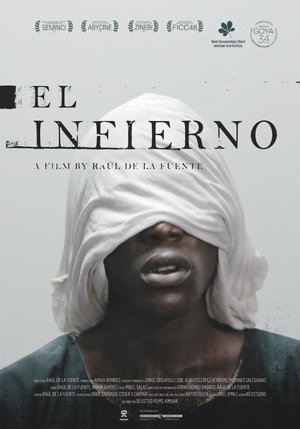
Chennu committed his first crime when he was 15 years old: being a street kid. And he entered hell: Pademba Road. The adult prison in Freetown. In hell, Mr. Sillah is in charge, and there is no hope. Chennu got out after four years. Now he wants to go back.
A documentary about juveniles who are serving life in prison without parole and their victims' families.
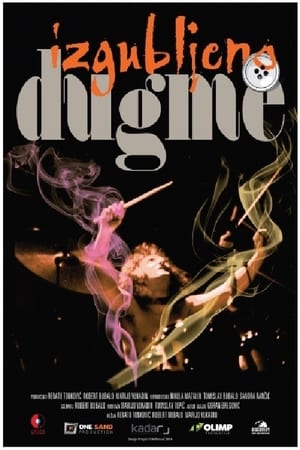
A documentary about Goran Ivandic 'Ipe', the drummer of most popular Yugoslav rock band of all time, Sarajevo-based "Bijelo dugme" (White Button). Ivandic's fatal jump from the balcony of hotel Metropol in Belgrade in 1994 sparked much controversy around his fate.
Frequent perpetrator Tony ends up in the Pieter Baan Center after yet another violent robbery. For seven weeks, a procession of behavioral researchers passes him by. They must ultimately come to a unanimous conclusion and then advise the judge: whether or not accountable; tbs or not. Psychiatrist: "What is the worst outcome for you?" Tony: "Tbs with compulsory care." The Pieter Baan Center is a detention center with the special task of investigating persons suspected of a serious crime. It is an independent investigation commissioned by the Ministry of Justice. In a seven-week process, the suspect's personality, the possible presence of a disorder and / or a mental illness and whether it can be linked to the crime are examined. Is there a chance of recurrence?
"El Rati Horror Show" is a documentary that portrays the dramatic story of Fernando Ariel Carrera, the case of an ordinary man wrongly sentenced to thirty years in prison - not by mistake but deliberately - through the manipulation of a judicial case in Argentina. The film takes as its central point the way in which Fernando Carrera's case was fabricated: the manipulation and alteration of evidence at the scene of the crime; the manipulation of all national media by Rubén Maugeri, key witness to the events and president of the Association of Friends of Commissary 34. On the other hand, it shows how Fernando Carrera leads his daily life in prison.
On June 3, 1973, a man was murdered in a busy intersection of San Francisco’s Chinatown as part of an ongoing gang war. Chol Soo Lee, a 20-year-old Korean immigrant who had previous run-ins with the law, was arrested and convicted based on flimsy evidence and the eyewitness accounts of white tourists who couldn’t distinguish between Asian features. Sentenced to life in prison, Chol Soo Lee would spend years fighting to survive behind bars before journalist K.W. Lee took an interest in his case. The intrepid reporter’s investigation would galvanize a first-of-its-kind pan-Asian American grassroots movement to fight for Chol Soo Lee’s freedom, ultimately inspiring a new generation of social justice activists.
The film focuses on Ernesto Rossi (1897 – 1967), who was imprisoned by the fascist regime between 1930 and 1943 for his political ideas. Exiled on the island of Ventotene, he co-authored the Ventotene manifesto.
In the documentary Last To Know political prisoners, sent to jail for openly opposing the East German regime that existed until the German reunification in 1990, talk about their times of trial and their lives today. Neither they, nor their families have come to terms with what happened.
Impressionistic glimpses of London life from early morning to rush hour.
The story of two young single mothers who join forces to make a new kind of family unit for themselves and their children.
Elementary Genocide is a documentary executive produced by award winning journalist/filmmaker Rahiem Shabazz. The documentary appeals to a wide general viewership by addressing the social, cultural, political and personal ramifications of how the federal government allots money to each state, to build prions based on the failure rate of 4th and 5th graders. In America, where half of the 4th grade is reading below grade level and more African-American males are in jail than are in college, Elementary Genocide serves as a striking reminder of a flawed system in need of repair.
World renowned journalist, and award-winning filmmaker Rahiem Shabazz presents the third installment of his docu-series Elementary Genocide: Academic Holocaust. The first two documentaries in the series; The School To Prison Pipeline and Elementary Genocide 2: The Board Of Education vs. The Board of Incarceration received critical acclaim and launched Shabazz as a political pundit and academic ambassador for the African American community. Elementary Genocide: Academic Holocaust adds more statistical proof of the scholastic inequalities faced by Original people around the country. The documentary revisits the importance of education and its impact on self-image, family structure, financial freedom, and the collective future of African/indigenous people in America and abroad.
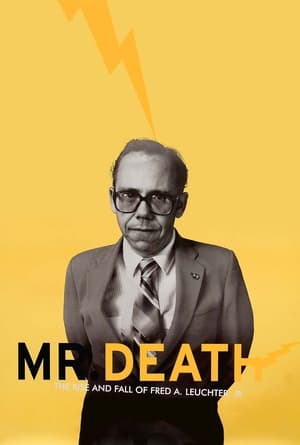
A portrait of the life and career of the infamous American execution device designer Fred A. Leuchter, Jr. Mr. Leuchter was an engineer who became an expert on execution devices and was later hired by holocaust revisionist historian Ernst Zundel to "prove" that there were no gas chambers at Auschwitz. Leuchter published a controversial report confirming Zundel's position, which ultimately ruined his own career. Most of the footage is of Leuchter, working in and around execution facilities or chipping away at the walls of Auschwitz, but Morris also interviews various historians, associates, and neighbors.
During the most celebrated cultural event on the island of Guam, USA (the annual Liberation Day Parade), a group of brave and determined youth come together to effect policy change on the use of alcohol and tobacco signage island-wide.
An intimate portrait of mothers and daughters and the effects of trauma, Jacinta follows a young woman in and out of prison as she attempts to break free from an inherited cycle of addiction, incarceration, and crime.
A look beyond the shock and inhumanity of prison rape to the intricate social hierarchy that keeps it alive. A filmmaker goes deep inside Alabama's infamous Limestone penitentiary to uncover the long-term causes and consequences of prison rape. With a startling lack of inhibition, five inmates reveal the workings of an elaborate inner society.