A documentary depicting Cuba/US relations through baseball.
Documentary on the life and career of Babe Ruth.
In 1987, a team of outsiders attempt to break a hallowed baseball record in a desperate bid for fame, fortune, and careers in the major leagues. Even if they succeed, no athlete can play forever — and what comes after the death of a dream?
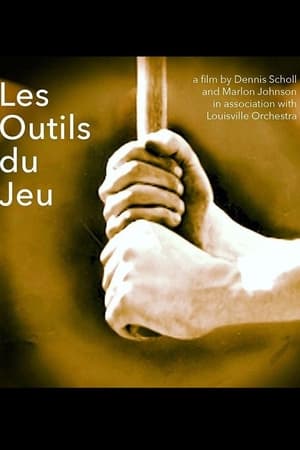
This non-narrative short film examines one of the great American icons: the Louisville Slugger baseball bat. The film was conceived by its co-directors, Marlon Johnson and Dennis Scholl, along with the Louisville Orchestra's conductor, Teddy Abrams, to be screened set to a live performance by the orchestra of Claude Debussy's "Jeux".
Acclaimed Florida novelist Randy Wayne White travels to Cuba with former pitchers Bill "Spaceman" Lee (Boston Red Sox) and Jon Warden (Detroit Tigers), and a band of baseball enthusiasts to find and revive the children's baseball league founded by American writer Ernest Hemingway in the days before Fidel Castro came to power.
A look back at Miggy's illustrious career.
A serial of short instructional films using footage of Babe Ruth to explain the fundamentals of playing baseball.
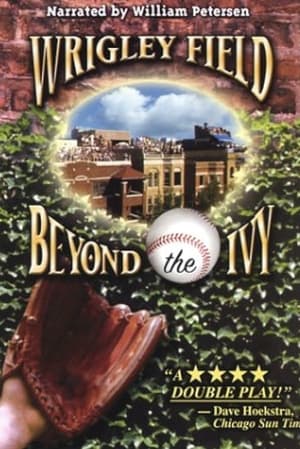
100 Years of Wrigley Field celebrates a century of the greatest moments and best personalities of the ballpark on Chicago's North Side.
Star-studded group featuring Barry Bonds, Randy Johnson, Chipper Jones, Tom Glavine and John Smoltz to bring viewers inside Maddux’s legendary career;
Babe Ruth set a record in 1927 by hitting 60 home runs in one season. 34 years later, Roger Maris broke that record. Another 37 years passed before that record was broken by Mark McGwire. Five days after McGwire's feat, Sammy Sosa broke the brand new record. And the race was on! Fans watched breathlessly as the record passed between the two men and time left in the season dwindled. Relive it all, from Ruth, to Maris, to the final days of the 1998 Sosa/McGwire slug-fest.
Born in 1918 in San Diego, Williams was a latchkey child from a broken home, raised by a mother more dedicated to the Salvation Army than to her two sons, and by a father who spent more time away from home than in it. Williams found salvation by doing the one thing he loved most: hitting baseballs. In his rookie season with the Red Sox, where he would spend his entire career as a player, Williams batted .327, socked 31 homers and led the league with 145 RBI. Over the next 21 years, despite losing five seasons of his prime to active service as a U.S. Marine Corps pilot, Williams hit 521 home runs, twice captured the Triple Crown, and became the oldest man ever to win a batting title. He finished his career with a .344 lifetime batting average, was the last man to hit over .400 in a full season, batting .406 in 1941, and was a first-ballot inductee into the Baseball Hall of Fame.
The Toronto Blue Jays — the defending champions — sleek, corporate, efficient — featuring an offensive arsenal that hit a collective 0.311 in the six-game series. The Philadelphia Phillies — a last-to-first success story — with their long hair, beards, and blue-collar work ethic — a softball team in pinstripes. This was a World Series that won't soon be forgotten. A six-game slugfest that sent pitchers scurrying to the showers. The heroes were named Dykstra, Molitor, Schilling and Alomar. The games were unforgettable. The sheer drama of Game Four — with its runs, hits, and duration — all records. The surgical precision of Curt Schilling's shutout in Game Five. And Joe Carter's incredible three-run blast to win Game Six — just the second time in history a home run has ended a World Series.
Montreal Expos star catcher Gary Carter visits Japan to learn about the customs and traditions of baseball in the Far East. He also encounters other "foreign" baseball players he once played with in the MLB.
Since Little League Baseball was founded in 1939, about 40 million kids have played the sport. The list includes future Hall of Famers like Carl Yastrzemski, Tom Seaver and Nolan Ryan, and hundreds of other future Major Leaguers. But of all the kids who ever played Little League, the best of the best was a boy you’ve probably never heard of: Art “Pinky” Deras. In the summer of 1959, he led the team from Hamtramck, Mich., to the Little League World Series title, and in the process, he put together a Little League season the likes of which we might never see again. His amazing story comes to life in “The Legend of Pinky Deras: The Greatest Little-Leaguer There Ever Was,” a new film from Blue Hammer Films. Pinky received a ton of national publicity back in 1959, but then he fell off the map. In the half-century since he lit the Little League world on fire, there have been no films about him, no magazine stories, not even a single newspaper article.
Records the highs and lows of a season that came close to winning the championship. Chronicles the 40-year love affair between a struggling blue-collar city and a perfectly matched blue-collar team.
An investigation into the downfall of the Montreal Expos, Canada's first Major League Baseball team — and who was ultimately responsible.
A unique and insightful documentary following the experiences of college baseball players as they compete in one of the most prestigious amateur leagues in the country, The Cape Cod Baseball League (CCBL). There are currently over 200 MLB players that have spent time in the Cape Cod League. Filmed over the summer of 2003, Touching The Game takes viewers behind the scenes of the CCBL, from host families and hot dog vendors, to fans and former players, now household names through their own Major League careers. Featuring extensive interviews, incredible aerial footage, and a local soundtrack, Touching The Game shows baseball in its purest form.
In late 2021, Cleveland’s baseball team was reborn as the Guardians. This documentary, directed by Lance Edmands, chronicles the saga of that name change, which has its roots in a forgotten legend named Louis Sockalexis, and the tragedy that enveloped his story more than a century ago.
In Fernando Nation, Mexican-born and Los Angeles-raised director Cruz Angeles traces the history of a community that was torn apart when Dodger Stadium was built in Chavez Ravine and then revitalized by one of the most captivating pitching phenoms baseball has ever seen. Nicknamed “El Toro” by his fans, Fernando Valenzuela ignited a fire that spread from LA to New York—and beyond. He vaulted himself onto the prime time stage and proved with his signature look to the heavens and killer screwball that the American dream was not reserved for those born on U.S. soil. In this layered look at the myth and the man, Cruz Angeles recalls the euphoria around Fernando’s arrival and probes a phenomenon that transcended baseball for many Mexican-Americans. Fernando Valenzuela himself opens up to share his perspective on this very special time. Even 20 years later, “Fernandomania” lives.
When the night of October 16, 2004 came to a merciful end, the Curse of the Bambino was alive and well. The vaunted Yankee lineup, led by A-Rod, Jeter, and Sheffield, had just extended their ALCS lead to three games to none, pounding out 19 runs against their hated rivals. The next night, in Game 4, the Yankees took a 4-3 lead into the bottom of the ninth inning, then turned the game over to Mariano Rivera, the best relief pitcher in postseason history, to secure yet another trip to the World Series. But after a walk and a hard-fought stolen base, the cold October winds of change began to blow. Over four consecutive days and nights, this unlikely group of Red Sox miraculously won four straight games to overcome the inevitability of their destiny. Major League Baseball Productions will produce a film in "real-time" that takes an in-depth look at the 96 hours that brought salvation to Red Sox Nation and made baseball history in the process.