In 1975, a seven-months pregnant Vietnamese refugee, Giap, escapes Saigon in a boat and, within weeks, finds herself working on an assembly line in Seymour, Indiana. 35 years later, her aspiring filmmaker son, Tony, decides to document her final day of work at the last ironing board factory in America.
Paper Dolls follows the lives of transgender migrant workers from the Philippines who work as health care providers for elderly Orthodox Jewish men and perform as drag queens during their spare time. It also delves into the lives of societal outcasts who search for freedom and acceptance.
So Yun Um’s debut feature is a moving portrait of two Korean American children of liquor store owners reconciling their dreams with those of their immigrant parents, against the backdrop of struggles for racial equity in Los Angeles.
Evaporating Borders is a poetically photographed and rendered film on tolerance and search for identity. Told through 5 vignettes portraying the lives of migrants on the island of Cyprus, it passionately weaves themes of displacement and belonging.
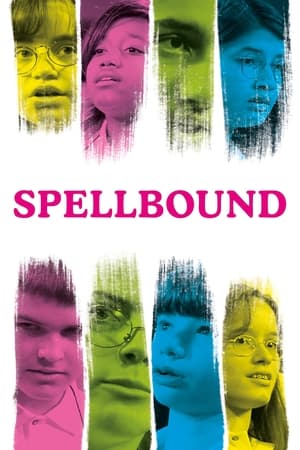
This documentary follows 8 teens and pre-teens as they work their way toward the finals of the Scripps Howard national spelling bee championship in Washington D.C.
An average of 60,000 people emigrated from Hong Kong each year in early 1990s. An absolutely personal and biased sampling of this diaspora from an insider/outsider perspective just before the 1997 handover. Based on the personal experiences of individuals from Hong Kong in 1990s, Diasporama is an experimental documentary that addresses issues of the diasporic condition. In a series of intimate interviews that explore the relationship of the personal and the political, Yau Ching confronts notions of nationhood, identity, and post-colonialism. Inserting her own face and voice as a form of mediation, the artist herself becomes one of the subjects.
A self-narrated portrait of a Polish immigrant in Winnipeg whose unglamorous job keeping streetcar switches working reveals dignity, resilience, and pride in everyday labor.
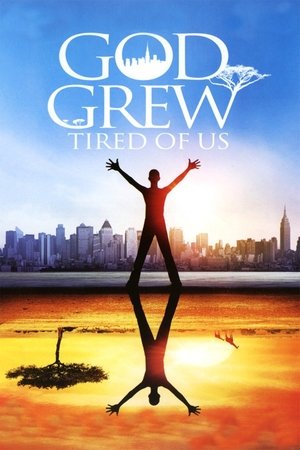
Many geneticists and archaeologists have long surmised that human life began in Africa. Dr. Spencer Wells, one of a group of scientists studying the origin of human life, offers evidence and theories to support such a thesis in this PBS special. He claims that Africa was populated by only a few thousand people that some deserted their homeland in a conquest that has resulted in global domination.
This film recreates the true story of Tom Sukanen, an eccentric Finnish immigrant who homesteaded in Saskatchewan in the 1920s and 1930s. Sukanen spent ten years building and moving overland a huge iron ship that was to carry him back to his native Finland. The ship never reached water.
Chinese for Affirmative Action is a recipient of the San Francisco Community Leadership Award for being "a champion against discrimination and for advancing systemic change for a racially just society. With its foundation firmly in the Asian and Pacific American community, its grassroots and policy efforts cross cultures to ensure equal opportunities for communities of color, reduce language barriers, and promote immigrant rights across the Bay Area." - San Francisco Foundation
A look at the Brazilian black movement between 1977 and 1988, going by the relationship between Brazil and Africa.
In 2011, as tens of thousands of migrants, Loss, and Madess Moussa arrived in Europe via Turkey. Required by EU law to remain in Greece, they only want one thing : to leave. Therefore earn the money needed to start is an obsession and all means are good. The film "The Adventure" follows the lives of these three Ivorians to Athens - their sense of enclosure, strategies to find money, failover illegally, attempts to start - and explores what is at stake, individually and collectively during migration: relations to other migrant communities, friendship, betrayal, solidarity, mafias and violence.
Filmmaker Christopher Quinn observes the ordeal of three Sudanese refugees -- Jon Bul Dau, Daniel Abul Pach and Panther Bior -- as they try to come to terms with the horrors they experienced in their homeland, while adjusting to their new lives in the United States.
This feature documentary takes us to the heart of the Jane-Finch "Corridor" in the early 1980s. Covering six square blocks in Toronto's North York, the area readily evokes images of vandalism, high-density subsidized housing, racial tension, despair and crime. By focusing on the lives of several of the residents, many of them black or members of other visible minorities, the film provides a powerful view of a community that, contrary to its popular image, is working towards a more positive future.
Rosa is from Croatia and lives in Switzerland, with her husband who depends on her care. She takes care of everything. Her children have grown up and want to leave home. Rosa stays behind alone.
Language of Mules is a poignant exploration of the haunting legacy of the Holocaust through the eyes and words of poet and author John Guzlowski. Born to Polish parents who survived the unimaginable horrors of Nazi concentration camps, Guzlowski's poems give voice to the stories passed down from his parents, stories of suffering, resilience, and survival. The film interweaves interviews with Guzlowski in his home in Virginia, with vivid poetic depictions of his parents' harrowing experiences: the brutality of the German soldiers, the daily horrors of camp life, physical torture, and enslavement in conditions that dehumanized those who endured them. With profound sensitivity and depth, Language of Mules becomes not just a retelling of history, but a meditation on the enduring impact of war on the human psyche.
Klaira presents a surprising vision of assimilation and a loving depiction of San Francisco. She and her grandparents explore how the experience of immigration changed their sense of self and altered the fabric of their relationship.
From humble beginnings in a small slate roofed village in Greece to the heyday of America's movie palaces, the Latchis Family built an empire of theatres throughout New England in the hard-scrabble years of the Great Depression. Their story is told through historically accurate footage, photographs and music from the Latchis family, local historical societies and national archives.
The story of Cuban refugees who risked their lives in homemade rafts to reach the United States, and what life is like for those who succeed.
Documentary that shows the changing attitude towards immigrant labor in The Netherlands. The documentary follows three immigrants that arrived in Holland 30 years ago to work in a bakery.