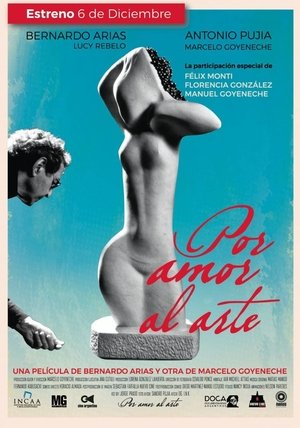
Bernardo has turned 90 and is working to realize a dream: to make a film about art. He spends countless hours writing the script. He understands it's an arduous and complex task: What is art? When is there art? What is the purpose of art? Antonio, his friend, decides to collaborate, lending his knowledge and experience to the project. Marcelo meets Bernardo through Lucy, his partner of over 60 years, and finds him deep in his work, immersed in the uncertainties, frustrations, and joys inherent in any creative process. Watching him work, something of Bernardo's dream awakens in Marcelo a desire, another dream. He offers his help, while also asking to be able to capture Bernardo's daily work with his own eyes, thus creating his film. A dream that gradually shifts from the work Antonio sculpts on Bernardo's camera to Marcelo's gaze.
"Unearths, the books we do not inherit" delves into the family memory of Maria Julia Blanco, its director. The unearthing of his father's student library - recovered in 2018 - is the starting point. Julia guides us through the province of Santa Fe following her family's story. Historian and bibliophile by choice, Julia takes books, which do not know what has happened on the surface, as a starting point to excavate family memory. Little by little it becomes evident that, in the remains of the books, both family history and Argentine history can be reread.
Using home videos from fans from across the globe and never-before-seen drone footage obtained during the victory parade in Buenos Aires, on streets dyed white and sky blue. The film invites viewers to immerse themselves in the world's most football obsessed nation, Argentina, to relive the emotional rollercoaster that was the country’s 2022 World Cup victory in Qatar and the record breaking celebrations that followed.
Based on a discursive analysis of historical right-wing forces in Argentina and around the world, the objective is to situate the current Argentine government in the context of a resurgence of reactionary thinking, as well as to warn of the country's potential direction.
El camino eterno
Poetic images emerge from everyday life, interweaving with narratives that recall traces of events from the last civic-ecclesiastical-military dictatorship in the city of La Plata.
Enrique Hubermann, homeopathic physician, travels in flight from a love. By a joke of fate, in that distant place he meets the woman he wants to forget, a beautiful young woman like a demon who manipulates men and triggers dangerous passions.
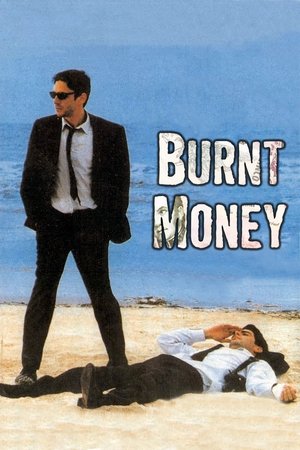
Set in Argentina in 1965, the story follows the tumultuous relationship between two men who became lovers and ultimately ruthless bank robbers in a notoriously famous footnote in the annals of crime history. After a large-scale hold-up that turns bloody, the two men must flee. It is not long before the police are surrounding the building they are in and they must confront their demons to survive.
A humorist from the 1950's is celebrating his birthday, so a group of artists come together to celebrate this very special event. This birthday proves how toxic the artistic environment can be.
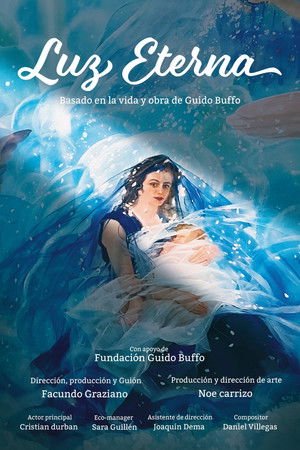
The life and work of Guido Buffo, an artist and scientist whose passion for knowledge and art is intertwined with his love story with Leonor. Through a journey through key moments in his life, the short film explores his vision of the interconnection between art and science, as well as his profound love for his wife and daughter, who inspire him to build an enduring legacy: his chapel in the Córdoba mountains.
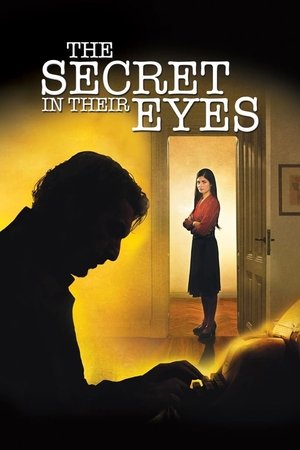
Hoping to put to rest years of unease concerning a past case, retired criminal investigator Benjamín begins writing a novel based on the unsolved mystery of a newlywed’s rape and murder. With the help of a former colleague, judge Irene, he attempts to make sense of the past.
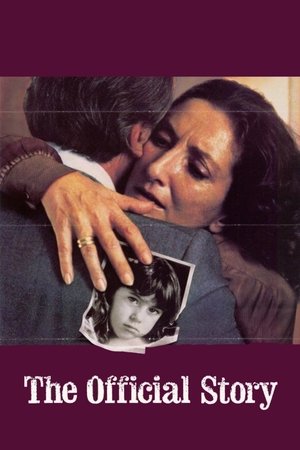
Buenos Aires, Argentina, 1983. In the last and turbulent days of the military dictatorship, Alicia, a high school history teacher, begins to ask uncomfortable questions about the dark origins of Gaby, her adopted daughter.
Sixteen-year-old Lola is studying for her resits when the possibility of a semester in Germany comes up. Lola wants to go, but her family, bogged down by her elder sister's psychiatric problems, don't want her to make the trip. The lack of stability and exhaustion in the ties with her family prompt Lola to go ahead with her idea and set out to find new experiences that make her see both herself and the circumstances that surround her with different eyes.
The story of "Vikingo", a rude motorcyclist whose rigid principles are honor and respect.
Pedro, an inexperienced conman, decides to rob a bank. When he tries to escape, the branch is surrounded by police. His hostage turns out to be Pablo, the husband of the daughter of the bank's owner. After Pedro and Pablo leave the crime scene, Pedro demands ransom. But the money never arrives, since Pablo's father-in-law decides not to pay and, to make matters worse, instead sends an assassin to kill off Pedro.
A famous TV weatherman, Miguel Flores, becomes public enemy number one when he fails to predict a terrible hailstorm. He is forced out of the big city, Buenos Aires, fleeing the capital for his birthplace of Córdoba. The result will be a voyage of rediscovery that is as absurd as it is human.
In this modern retelling of the Faust legend, a freelance photographer meets the enigmatic Mefi, who leads him, through a hole in the wall, to a room where a disembodied voice predicts stock prices.
In the 1920s Horacio Coppola studied modern languages, photography and film, set up the first cinema club in Buenos Aires, and travelled to Italy, France, Spain and Germany, where he trained with the Bauhaus photographer Walter Peterhans. After visiting Vienna, Budapest and Prague, still hotbeds of secessionist art, Coppola returned to Berlin and made the experimental film Traum (Dream, 1933) with the theatre director Walter Auerbach, a nice short influenced by the French & German surrealists.
Morán works as a clerk in a bank in Buenos Aires. He is as good as invisible to his colleagues. Over dinner with his colleague Román, Morán tells him that he stole exactly $650,000, which is exactly double what he would have made until his retirement. He plans to turn himself in, but not before offering Román to split the money if agrees to hide it for the duration of his incarceration.
Esa semana juntos