On call 24/7 for the past six years, three senior citizens have made history by greeting nearly one million U.S. troops at a tiny airport in Maine. Filled with unexpected turns, their uplifting and emotional journey demonstrates the meaning of community at a time when America needs it most.
A place of biological superlatives with a flora and fauna that have only just begun to be researched: Lord Howe Island, between Australia and New Zealand. This is the first documentary on what may be the most isolated nature reserve on the planet.
BROTHERS AT WAR is an intimate portrait of an American family during a turbulent time. Jake Rademacher sets out to understand the experience, sacrifice, and motivation of his two brothers serving in Iraq. The film follows Jake’s exploits as he risks everything—including his life—to tell his brothers’ story.
God's Girls describes life in a Sisters of Mercy convent in country New South Wales from the 1940's to present day. This courageous and clever film investigates the subtle complexities of change within a society that has been surrounded by mystery for hundreds of years. The stories from the women in the film reflect the often intricate paths of social, political and religious history, not only in Australia but also in the rest of the world.
There were two wars in Iraq--a military assault and a media war. The former was well-covered; the latter was not. Until now... Independent filmmaker, Emmy-award winningTV journalist, author and media critic, Danny Schechter turns the cameras on the role of the media. His new film, WMD, is an outspoken assessment of how Pentagon propaganda and media complicity misled the American people...
The Australians call the endless deserts in the interior of the continent the "dead heart". Here lies the town of Birdsville, 23 houses and a bar with a liquor license. The long-awaited telephone connection arrived in 1979, 90 years after it had been applied for. For one weekend, this place at the end of the world turns into a cauldron when 5,000 Australians, tired of civilization, invade for the annual horse race, the "Birdsville Cup". They come in buses, off-road vehicles, motorcycles and sports planes and have become a veritable plague. Because here, everyone can do what they've always wanted to do: for example, get drunk until they drop and never get up again. The collective mass drinking reaches its peak on Saturday night. By Monday morning, the fun is over. What remains is a village with 23 houses, a bar and a street littered with 80,000 empty beer cans.
American soldiers of the 2/3 Field Artillery, a group known as the "Gunners," tell of their experiences in Baghdad during the Iraq War. Holed up in a bombed out pleasure palace built by Sadaam Hussein, the soldiers endured hostile situations some four months after President George W. Bush declared the end of major combat operations in the country.
A conflicted gay man struggles to teach his younger self about the challenges of adult life. Searching for answers inside stories from his past, he must confront his nature and the man he will become. Documentary meets musical feature in this experimental coming of age drama about power and masculinity in modern day Australia.
Michael Moore's view on how the Bush administration allegedly used the tragic events on 9/11 to push forward its agenda for unjust wars in Afghanistan and Iraq.
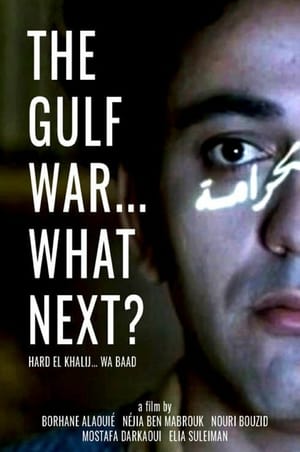
Morgan Spurlock tours the Middle East to discuss the war on terror with Arabic people.
takayna / Tarkine in northwestern Tasmania is home to one of the last undisturbed tracts of Gondwanan rainforest in the world, and one of the highest concentrations of Aboriginal archaeology in the hemisphere. Yet this place, which remains largely as it was when dinosaurs roamed the planet, is currently at the mercy of destructive extraction industries, including logging and mining. Weaving together the conflicting narratives of activists, locals and Aboriginal communities, and told through the experiences of a trail running doctor and a relentless environmentalist, this documentary, presented by Patagonia Films, unpacks the complexities of modern conservation and challenges us to consider the importance of our last truly wild places.
A year in the life of troubled Australian graffiti artist Justin Hughes.
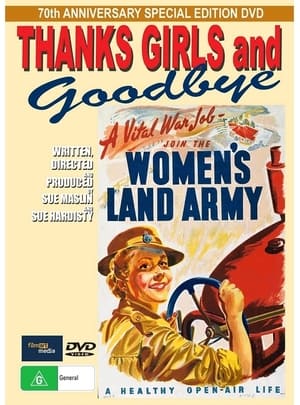
Documentary using archival footage, newsreels and contemporary interviews with women of the WW2 Australian Women's Land Army.
A chronicle which provides a rare window into the international perception of the Iraq War, courtesy of Al Jazeera, the Arab world's most popular news outlet. Roundly criticized by Cabinet members and Pentagon officials for reporting with a pro-Iraqi bias, and strongly condemned for frequently airing civilian causalities as well as footage of American POWs, the station has revealed (and continues to show the world) everything about the Iraq War that the Bush administration did not want it to see.
Eight men escape from the most isolated prison on earth. Only one man survives and the story he recounts shocks the British establishment to the core. This story is the last confession of Alexander Pearce.
Follows the deadly Australian bushfires of 2019-2020, known as ‘Black Summer’. Burning is an exploration of what happened as told from the perspective of victims of the fires, activists and scientists.
Aki's Imagination is imbued through Tobu Himeo aka the Floating Girls. As a Japanese born Australian artist, Aki Yaguchi moulds her artwork around the interplay between her heritage and being a women within a male dominated space.
Is American foreign policy dominated by the idea of military supremacy? Has the military become too important in American life? Jarecki's shrewd and intelligent polemic would seem to give an affirmative answer to each of these questions.
Exposing the dark underbelly of modern animal agriculture through drones, hidden & handheld cameras, the feature-length film explores the morality and validity of our dominion over the animal kingdom.
Suellyn thought the Department of Community Services (DOCS) would only remove children in extreme cases, until her own grandchildren were taken in the middle of the night. Hazel decided to take on the DOCS system after her fourth grandchild was taken into state care. Jen Swan expected to continue to care for her grandchildren but DOCS deemed her unsuitable, a shock not just to her but to her sister, Deb, who was, at the time, a DOCS worker. The rate of Indigenous child removal has actually increased since Prime Minister Kevin Rudd delivered the apology to the ‘stolen generations’ in 2008. These four grandmothers find each other and start a national movement to place extended families as a key solution to the rising number of Aboriginal children in out-of-home care. They are not only taking on the system; they are changing it…