National Theatre Live’s 2010 broadcast of Alan Bennett’s acclaimed play The Habit of Art, with Richard Griffiths, Alex Jennings, and Frances de la Tour, returns to cinemas as part of the National Theatre's 50th anniversary celebrations. Benjamin Britten, sailing uncomfortably close to the wind with his new opera, Death in Venice, seeks advice from his former collaborator and friend, W H Auden. During this imagined meeting, their first for 25 years, they are observed and interrupted by, amongst others, their future biographer and a young man from the local bus station. Alan Bennett’s play is as much about the theatre as it is about poetry or music. It looks at the unsettling desires of two difficult men, and at the ethics of biography. It reflects on growing old, on creativity and inspiration, and on persisting when all passion’s spent: ultimately, on the habit of art. One of the first five episodes also released on terrestrial TV on a 2009 BBC TV series titled "National Theatre Live".
Roberto Bolle smuggles himself as a stowaway on an ocean liner that of Hamburg gen New York sets sail. On board is also his lover Barbara Shadwell, whom he wants to marry, but who, at the request of her mother, the syrup millionaire Ceila Shadwell, should marry the oatmeal millionaire David.
In this worldwide bestseller, we watch four men over a period of more than thirty years: lawyer Jude, actor Willem, visual artist JB and architect Malcolm. The story is the history of their friendship, as they remain closely connected with each other during the rest of their lives. They develop their careers in the city where ambition and success are the indicators of a successful life: New York. Ivo van Hove adapts Hanya Yanagihara’s novel to theater and creates a penetrating performance.
For Shion, an elite student in the technologically sophisticated city No. 6, life is carefully choreographed. School, study, and the occasional visit with his friend and classmate Safu. One fateful day, however, he takes a misstep, sheltering an injured boy his age from a typhoon. Known only as Nezumi («Rat»), this boy is a VC – a fugitive living outside the computerized tapestry of city control – and helping him will throw Shion’s life into chaos and start him down a path to discovering the appalling secrets behind the superficial perfection of No. 6. ☆ The first theatrical play adaptation of the popular light novel series “No. 6”. ☆
Spanky and Alfalfa want to do a show based on the "Aladdin's Lamp" story with Darla in the cast, but Darla doesn't want to participate.
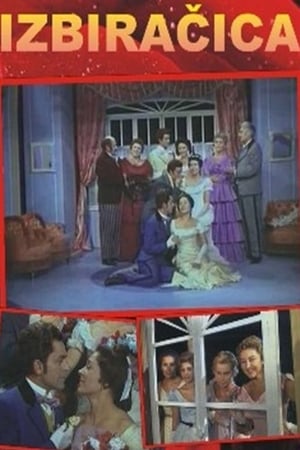
Bedřich Smetana's famous opera based on Karel Sabina's libretto, as performed by a rural ensemble, occasionally interrupted by Antonín Dvořák's Jakobín and, above all, situations from the lives of the ensemble members. Recording of the Studio Ypsilon theater production filmed on November 30 and December 7, 2014.
What if Konstantin Gavrilovich, from Anton Chekkov's famous play, did not commit suicide and was murdered instead? And who did it? Boris Akunin's take on The Seagull unfolds as a comedic murder mystery.
The Children's Theatre Company of Minneapolis re-imagines the classic fairy tale as a jazz musical set in New Orleans.
The family home is more than merely a building. It can be a destination of pilgrimage, an inherited investment, a repository of memory or even magic. And, for brother and sister Stephen and Billie, home is all they have. Mucking along in their decaying farmhouse, they're doing just fine. That is, until the arrival of an ex-clergyman uncle with an unscrupulous plan, a sister-in-law seeking a miracle, and a prodigal brother hell-bent on trouble.
A comedy known and loved by all, under the interpretation of the most famous actors of the Albanian National Theatre.
Hungry is the first in a three-play cycle introducing us to the Gabriels of Rhinebeck, New York. These three plays unfold in real time and track the lives of the Gabriels throughout the coming presidential election year. To the rhythm of peeling, chopping and mixing, Hungry places us in the center of the Gabriel’s kitchen. The family discusses their lives and disappointments, and the world at large and nearby. As they struggle against the fear of being left behind, the family attempts to find resilience in the face of loss.
Back in the kitchen of the Gabriel family, the country is now in the midst of the general election for President. In the course of one evening in the house they grew up in, history (both theirs and our country's), money, politics, family, art, and culture are chopped up and mixed together, while a meal is made around the kitchen table.
Eight months after we first meet the Gabriels, Patricia, the family matriarch, joins her children and daughters-in-law as they prepare a meal from the past and consider the future of their country, town and home. Paying tribute to the difficult year behind them, the Gabriels compare notes on the search for empathy and authenticity at a time when the game seems rigged and the rules are forever changing.
A successful couple with a beautiful daughter, gorgeous home and a mother-in-law and housekeeper that are both eccentric are all the ingredients necessary for a somewhat perfect yet always interesting family. But when Jennifer finds out that her husband Terrance has been cheating on her for years, the family is changed forever. Can Jennifer learn to forgive Terrance so their marriage can be saved, or is it too late to make amends?
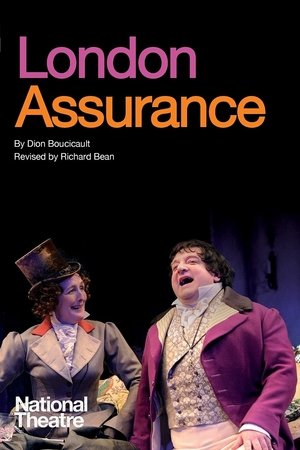
Grace has agreed to marry Sir Harcourt in return for his financial support of her family. At a house party in her father's place, Harcourt's son Charles also falls in love with Grace. When his father appears on the scene, he has to convince him that there is a case of mistaken identity and he is somebody else. Then Lady Gay Spanker, a married woman also visiting at the house, is persuaded by Charles to seduce his father and thus divert his attention from Grace. Much confusion and scheming ensues. One of the first five episodes also released on terrestrial TV on a 2009 BBC TV series titled "National Theatre Live".
A psychological study of scenes from married and unmarried life, verging on the grotesque. A play about mutual attraction and insurmountable resistance between the sexes, about infidelity, emotional exaltation and hostile aridity, false self-images and ambitions, and wounded vanity. TV recording of a theatrical performance by Prague's Činoherní klub.
Stage play centering around Ultraman Belial, Jugglus Juggler, Evil Tiga, Dark Zagi and Camearra after they are mysteriously resurrected in human form
A provocative and ironic pamphleteering documentary about the making of Christoph Schlingensief’s Nazi-'Hamlet’ (2001). Both a media event and a form of political action Schlingensief let ex-neo-Nazis play themselves. His provocation in so-called Nazi-free Switzerland was not appreciated and when he added fuel to the flames by calling for the local political party SVP to be banned, his media offensive made front-page news far beyond Switzerland.
Siegfeld Institute of Music Junior High. An educational institution established for the purpose of training Rohedelstein, the future candidates for the roles of Edels. Two transfer students from Germany are due to enrol in the Junior High. One is Stella Takachiho, whose heritage is descended from Siegfeld's own prestigious family. The other is Shiro Ogami, Stella's exclusive maid. With the pair's transfer comes a drastic change in the fates of fellow Junior High students Ryoko Kobato, Minku Umibe, and Kuina Moriyasu. Liu Mei Fan works hard to meet the expectations of Akira Yukishiro and Michiru Otori, who are searching for a stage girl to carry Siegfeld on their backs. The ones who must entrust it, and the ones who must be entrusted with it—the symbol of the noble king, "Regalia", will end up...
Weller Martin and Fonsia Dorsey, two elderly residents at a nursing home for senior citizens, strike up an acquaintance. Neither seems to have any other friends, and they start to enjoy each other's company. Weller offers to teach Fonsia how to play gin rummy, and they begin playing a series of games that Fonsia always wins. Weller's inability to win a single hand becomes increasingly frustrating to him, while Fonsia becomes increasingly confident. While playing their games of gin, they engage in lengthy conversations about their families and their lives in the outside world. Gradually, each conversation becomes a battle, much like the ongoing gin games, as each player tries to expose the other's weaknesses, to belittle the other's life, and to humiliate the other thoroughly.