In the Year of Hip Hop takes a retrospective look at the Slovenian hip hop/rap music scene. Boris Petkovič explores in great detail the evolution of a music style which, from the very start, has intimately reflected the social situation of its artists. Hip hop has always absorbed the "vibes" of the place where it is taking root, and Slovenia is no exception. According to Petkovič, in today's Slovenia, rap is the one and only form of music that discusses the state of our society and of human relationships without any inhibitions. If rap is not your cup of tea, this film can make you change your mind.
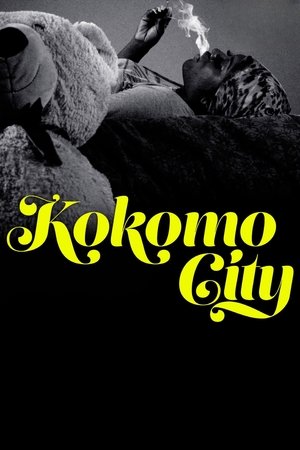
Chris Colombo, 44, the son of slain mob boss Joseph Colombo, is on home confinement while he's out on bail for federal racketeering charges. The film follows Colombo on some unsavory outings when he is supposed to be on family outings or running errands.
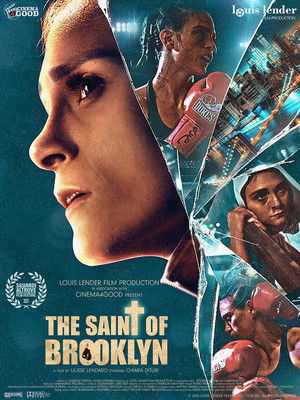
Xiara Trujillo is a precocious seven-year-old who moved from the Bronx to Maryland with her mom, Aracelli Guzman, four years ago. Though she seems happy hanging out and playing with her pal Melissa, Xiara becomes defensive and emotional when talking about her father, Harold Linares. As we see and learn, Harold is in jail serving a ten-year sentence for weapons possession; Xiara seems to blame his incarceration on her mother, whom she says "kept calling the police." Xiara, who has always been extremely close to her father, acts out with her mother.
Trailblazing double bassist Orin O'Brien never wanted the spotlight, but when Leonard Bernstein hired her in 1966 as the first female musician in the New York Philarmonic, it was inevitable that she would become the focus of much interest and fascination. Now 87 years old and recently retired, Orin looks back on her remarkable life and career, insisting that a fuss should not be made, much preferring to play a supporting role to the family, students, friends, and colleagues that surround her.
The story of hip hip behind the iron curtain.
Before there was Disneyland, there was Coney Island. By the turn of the century, this tiny piece of New York real estate was internationally famous. On summer Sundays, three great pleasure domes--Steeplechase, Luna Park and Dreamland--competed for the patronage of a half-million people. By day it was the world's most amazing amusement park, by night, an electric "Eden".
When the night of October 16, 2004 came to a merciful end, the Curse of the Bambino was alive and well. The vaunted Yankee lineup, led by A-Rod, Jeter, and Sheffield, had just extended their ALCS lead to three games to none, pounding out 19 runs against their hated rivals. The next night, in Game 4, the Yankees took a 4-3 lead into the bottom of the ninth inning, then turned the game over to Mariano Rivera, the best relief pitcher in postseason history, to secure yet another trip to the World Series. But after a walk and a hard-fought stolen base, the cold October winds of change began to blow. Over four consecutive days and nights, this unlikely group of Red Sox miraculously won four straight games to overcome the inevitability of their destiny. Major League Baseball Productions will produce a film in "real-time" that takes an in-depth look at the 96 hours that brought salvation to Red Sox Nation and made baseball history in the process.
On the evening of Sept. 7, 1996, Mike Tyson, the WBC heavyweight champion, attempted to take Bruce Seldon’s WBA title at the MGM Grand in Las Vegas. At this point in his career, Tyson’s fights had become somewhat of a cultural phenomenon, where the ever present hype of the professional boxing scene would come face to face with the worlds of big business, Hollywood, and hip hop. Sitting ringside was controversial rapper Tupac Shakur. Shakur and Tyson were friends, a feeling of kinship linked them as each rose to stardom from poverty only to be thrown in prison. Following Tyson’s victory, Shakur and “Iron Mike” were to celebrate at an after party, but the rap star never arrived. Shakur was brutally gunned down later that night, and the scene in Las Vegas quickly turned from would-be celebratory revelry to ill fated and inopportune tragedy.
In 1982, the Raiders and owner Al Davis captivated black and Latino fans with swagger and charisma that matched the rapidly changing city.
Universal State of Mind
Neculai, Aurel and Raj all left their homes in Romania for the same reason - to seek a better life for their family. Now, in Britain, with their loved ones depending on them, they survive by creating sand sculptures on London’s streets.
A 1980 documentary on the historic Brooklyn neighborhood.
Banksy is the world's most infamous street artist, whose political art, criminal stunts and daring invasions have outraged the establishment for over two decades. Featuring rare interviews with Banksy, this is the story of how an outlaw artist led a revolutionary new movement and built a multi-million dollar empire, while his identity remained shrouded in mystery.
Studio 54 was the epicenter of 70s hedonism - a place that not only redefined the nightclub, but also came to symbolize an entire era. Its co-owners, Ian Schrager and Steve Rubell, two friends from Brooklyn, seemed to come out of nowhere to suddenly preside over a new kind of New York society. Now, 39 years after the velvet rope was first slung across the club's hallowed threshold, a feature documentary tells the real story behind the greatest club of all time.
A documentary depicting the life of American boyband Brockhampton while making their Saturation album series.
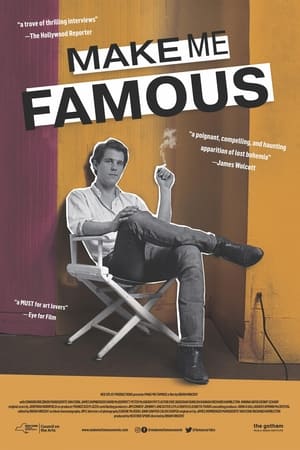
A rare behind-the-scenes view of the exploding New York “underground” in the late sixities, a turbulent time and place that was to change American culture forever. A German TV crew, led by journalist Gideon Bachmann, explores the epicenter of the sixties revolution in art, music, poetry and film and interviews the main players in the “New American Cinema,” that was born on the streets of New York. Against a backdrop of cultural upheaval in all of the arts and growing political agitation against the Vietnam War, Bachman interviews the most prominent figures in “underground film,” including Jonas Mekas, Shirley Clarke, the Kuchar Brothers and Bruce Connor, and visits the most notorious location in the New York art world of the era - Andy Warhol’s Factory - to conduct an interview with the genius of Pop Art himself.
This film follows Dwixatary, an experimental hip hop rapper from Cikarang, navigating life shaped by poverty and personal loss. After dropping out of school and losing his father, music becomes his only space for survival and self-expression. Through Dwixatary’s journey and the voices of other Indonesian rappers, the film exposes the harsh realities of the underground hip hop scene—limited opportunities, economic struggle, and the long distance between process and success. As rare opportunities emerge and disappear, the story questions whether holding on to artistic belief remains possible when life demands certainty.
West Coast Theory is the story of how digital revolution has changed our creative life. The scope of the film goes beyond the music production and beatmaking in LA, and concern as well filmmaking, photography, graphic design.
With the help of record label 88rising, we look through the eyes six different artist from six different backgrounds, all within Asia, as they share their thoughts on the recent rise of hip-hop throughout the region.
Nefertiti's Daughters is a story of women, art and revolution. Told by prominent Egyptian artists, this documentary witnesses the critical role revolutionary street art played during the Egyptian uprisings. Focused on the role of women artists in the struggle for social and political change, it spotlights how the iconic graffiti of Queen Nefertiti placed her on the front lines in the ongoing fight for women's rights and freedom in Egypt today.