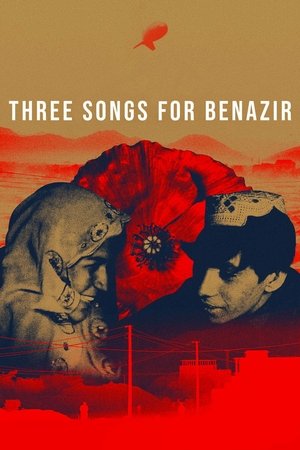
The story of Shaista, a young man who—newly married to Benazir and living in a camp for displaced persons in Kabul—struggles to balance his dreams of being the first from his tribe to join the Afghan National Army with the responsibilities of starting a family. Even as Shaista’s love for Benazir is palpable, the choices he must make to build a life with her have profound consequences.
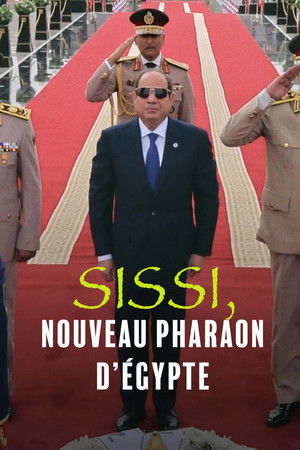
Egypt, nicknamed "the mother of the world" by its people, is unrecognizable. Gigantic construction sites have sprung up in the desert at an exponential rate, including roads, bridges, and megaprojects on the Mediterranean coast. This new Egypt is an illusion: in 10 years, the population has sunk into unprecedented poverty. The regime shows no mercy to the poor. Abdel Fattah el-Sisi, the new pharaoh, and his army have set up a pyramid-shaped financial system, built on subsidies from major international institutions—including the European Union—and foreign investment. The most populous nation in the Arab world finds itself on the brink of collapse.
Animari and Zlatko's mission is to help children from disadvantaged backgrounds get the best possible care and education. Will they manage to find funding to welcome more children and to start a high school?
Successful model Samira Hashi makes an emotional return to Somalia, one of the most dangerous places in the world and the place she was born. Civil war broke out in 1991, 10 days after Samira's birth, but two years later her family managed to flee the country and she grew up in the UK.Now, as Samira and the war both turn 21, she's going back for the first time to visit the people and places she left behind. The contrast with her safe and glamorous life in London could not be starker as she experiences firsthand the war's effect on a generation of young people growing up in conflict.
This documentary is a portrait of Point St. Charles, one of Montreal’s notoriously bleak neighbourhoods. Many of the residents are English-speaking and of Irish origin; many of them are also on welfare. Considered to be one of the toughest districts in all of Canada, Point St. Charles is poor in terms of community facilities, but still full of rich contrasts and high spirits – that is, most of the time.
Explores the lives of Sara, Gigi and Giovanna, three Latino transvestites who for years have lived on the streets of Manhattan supporting their drug addictions through prostitution. They made their temporary home inside broken garbage trucks that the Sanitation Department keeps next to the salt deposits used in the winter to melt the snow. The three friends share the place known as "The Salt Mines".
Documentary film about four families in Pori, Finland, all struggling with unemployment and poverty.
J and Jacky are good friends who attend the same school. J is from a single-parent family, and will be taken care by Jacky’s family whenever his mother has to return to Mainland to renew her visa; such kind of story is not an isolated case. These families have been uprooted for a “better future” in Hong Kong, but is this “future” that the children really long to have? A Chinese saying: “How does one understand the joy of fish, if one is not a fish?” Will the adults really understand what the children want?
A look at the rampant HIV epidemic rate in Swaziland.
Chennu committed his first crime when he was 15 years old: being a street kid. And he entered hell: Pademba Road. The adult prison in Freetown. In hell, Mr. Sillah is in charge, and there is no hope. Chennu got out after four years. Now he wants to go back.
After the waning of the protests in Sanrizuka, Ogawa Pro started questioning the future of the collective and looking for other subjects to film. Following the method developed in the previous films, the filmmakers moved to the slum of Kotobuchi in the port city of Yokohama, where more than 6000 people were struggling to get by without any means of survival, exposed to industrial accidents and diseases. The result is one of the most moving films produced by the collective, a series of beautifully filmed portraits, voicing the silenced stories and songs of a group of people living in this community. Credit: ICA London
Documentary following Serbian football coach Zoran Đorđević as he helps form South Sudan's first national football team.
Peter Watkins' global look at the impact of military use of nuclear technology and people's perception of it, as well as a meditation on the inherent bias of the media, and documentaries themselves.
The story of unemployment in New Zealand and In A Land of Plenty is an exploration of just that; it takes as its starting point the consensus from The Depression onwards that Godzone economic policy should focus on achieving full employment, and explores how this was radically shifted by the 1984 Labour government. Director Alister Barry's perspective is clear, as he trains a humanist lens on ‘Rogernomics' to argue for the policy's negative effects on society, as a new poverty-stricken underclass developed.
Life on the breadline in the 1930s was hard enough, but times were desperate when you fell beneath it. Hunger marches organised by the National Unemployed Workers' Movement drew attention to the cause, but this left-wing collective picked up a cine-camera. The fictional story at the heart of the film is somewhat melodramatic, but the authentic surroundings give its message realism and weight.
Filmmakers Alan and Susan Raymond spent three months in 1976 riding along with patrol officers in the 44th Precinct of the South Bronx, which had the highest crime rate in New York City at that time.
In the mountains of Northern Thailand lies a boarding school. The students come from different tribes in the area and live together with their Thai teacher, grow their own crops and cook their own meals while continuing their education. The biggest question on their mind, having spent all their lives in the mountainside, is where the rivers running down the hills end. If they pass the final exams their reward is a trip to the end of the river, to the ocean itself. The children are poor, some orphans, and most of them only speak their tribe's language, but all try their best to pass the exams to be able to take the long-awaited trip. This trip is not only a journey from the children's villages to the ocean but also a journey that symbolizes the change from childhood to adulthood.
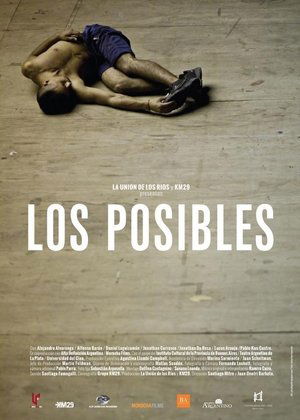
Santiago Mitre co-directs his first movement following The Student together with choreographer Onofri Barbato. Although it would have been more accurate to say “his first film-story-adventure-movie-great movie following The Student”, the word movement fits perfectly in Los posibles, the most overwhelmingly kinetic work Argentine cinema has delivered in many, many years. The film deals with the adaptation of a dance show directed by Onofri together with a group of teenagers who came to Casa La Salle, a center of social integration located in González Catán, trying to find some refuge from hardship. Already entitled Los posibles, the piece opened in the La Plata Tacec and was later staged in the AB Hall of the San Martín Cultural Center. Now, it dazzles audiences out of a film screen, with extraordinary muscles and a huge heart: Los posibles is a rhapsody of roughen bodies and torn emotions. Precise and exciting, it’s our own delayed, necessary, and incandescent West Side Story.
An exploration —manipulated and staged— of life in Las Hurdes, in the province of Cáceres, in Extremadura, Spain, as it was in 1932. Insalubrity, misery and lack of opportunities provoke the emigration of young people and the solitude of those who remain in the desolation of one of the poorest and least developed Spanish regions at that time.
Megacities is a documentary about the slums of five different metropolitan cities.