Pélagos, voyage au large de la Méditerranée
Homme et Dauphin : Mode d’emploi
A peculiar personal journey along the shores of the Mediterranean Sea, the inland sea that bathes the beaches of three continents, passing through the port of Marseille, the Rock of Gibraltar, Algeria and Syria; an artistic and experimental collage made up of thoughts, memories and emotions.
Video diary from behind the scenes of 2002's "Cruise of the Gods."
Jellyfish blooms are making headlines around the world. This is due to the damage they cause to tourism, fishing and our health. How can these creatures, which are over 98% water and have no shell, skeleton or brain, expand so rapidly? Although this is a normal stage in the life cycle of these gelatinous animals, we have to admit that blooms have become much more frequent and massive in recent decades. We're even witnessing jellyfish populations appearing in more and more regions where fish have been replaced by them, such as off the coast of Namibia, in the Black Sea, in the Sea of Japan and in certain areas of the Baltic Sea. What causes this? Why has the role of jellyfish in the ocean been underestimated, even though they outlived the dinosaurs? Are jellyfish on their way to dominating the oceans as they once did? What if they were to be the only ones left?
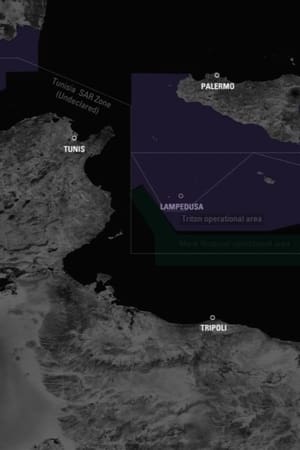
A migrant boat has been stranded in the Mediterranean Sea for 30 hours. As authorities ignore calls for help, the Sea-Watch Crew, an NGO, launches an urgent search.
La Corse, belle et méditerranéenne
Les Maisons De La Mer
Die Flotte der Römer
A journey in search of adventures, unexplored shores, empty waves in the mediterranean most secluded places living with almost zero carbon footprint. This is a surf-film about our small Ocean, the cradle of civilization and a reflection on living a simple lifestyle in symbiosis with nature. The boats together with the Onde Nostre Crew traveled the Mediterranean Sea following Ulisse's journey with surfers, sailors, free divers, musicians, artists.—Luca Merli
The Stella Maris Berria is a tuna vessel destined for scrapping. However, Iñigo Mijangos and Iñigo Gutierrez, two members of the NGO Salvamento Marítimo Humanitario, have an unusual idea: to transform the fishing boat into a rescue boat to save refugees drowning in the Mediterranean Sea. That is how Aita Mari was born.
Italie, les îles romantiques
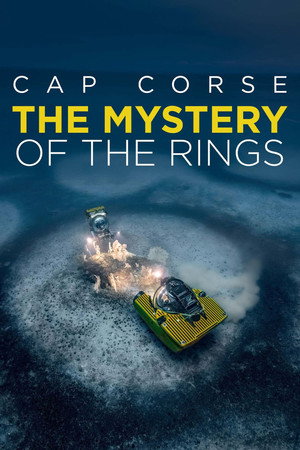
Explore the mysterious giant rings of the Mediterranean, buried at a depth of 120m, with the world-famous Laurent Ballesta, world-renowned diver and his team, to understand the origin of these unique and unknown formations.
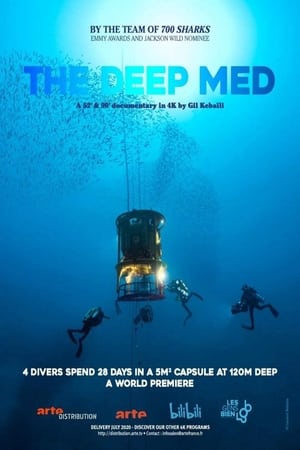
The Mediterranean. Because people have been travelling there for thousands of years, it is believed to be without secrets. And yet, far below its surface, lie vast unexplored territories, luxurious gardens worthy of the finest tropical coral reefs. These natural wonders are inaccessible to the traditional diver, in a twilight zone, between 60 and 120 m, where there’s less than 1% of sunlight. If diving at such depths is always a challenge, staying there is a fantasy, a utopia that becomes reality in Planet Mediterranean. In the tradition of Commander Cousteau and his "houses under the sea," the team of diver-photographer Laurent Ballesta is undertaking a new world-record setting mission in complete freedom and without time limit.
In April 2015, two shipwrecks in the central Mediterranean resulted in over a thousand deaths. The first, on 12 April, occurred when an overcrowded boat was approached by a large commercial vessel. Less than a week later, on 18 April 2015, a similar incident led to over eight hundred deaths after an overcrowded vessel collided with a cargo ship that had approached to rescue its passengers. Both incidents are in part the result of changing EU policies toward at-sea rescue, particularly the retreat of state rescue operations and a resulting onus on commercial vessels to fill the ‘rescue gap’.
For eight centuries, between the 9th and 1st century BC, the Etruscans, inhabitants of the Italian peninsula, were one of the most powerful peoples of the Mediterranean basin, and when they disappeared they left behind impressive necropolises, vestiges of sanctuaries and even entire cities. How did they attain such power? How far did they extend their dominion and influence? What were the causes of their decline?
Mobula, la légende des diables
With the help of diver and biologist Laurent Ballesta, a scientific expedition explores three sunken Italian volcanic sites in the Mediterranean.
Mimmo Villari is 29 years old in 1975, lives in Calabria, has a dusty guitar in the attic and the sacred fire of music that once burned his stomach is now turning into embers. In that period the first experiences of pirate radio arose in Italy. Mimmo is thrilled by the rumors about it and wastes no time: he builds himself an FM transmitter and thus sets up Radio Perla del Tirreno, the first pirate radio station in Bagnara Calabra. The voices of the radio reflect on politics, philosophy, civic education, creating a discourse that is the portrait of a society and an era.
Jacques Cousteau's 1942 plunge into the Mediterranean sea