Live and Let Live is a feature documentary examining our relationship with animals, the history of veganism and the ethical, environmental and health reasons that move people to go vegan.
Scientists dive deep on the mysterious and unusual predatory behavior of orcas attacking great white sharks, and the disappearance of the other sharks after these attacks.
The Antwerp Zoo covers a fair extent of ground, and was already in 1910 generally considered as an important one. A large number of views of birds and animals were taken and hand coloured. In those days, the monkey house was in for much attention. People found that the various comic incidents added a touch of whimsicality.
Why do migratory birds take on the hardships of a long flight year after year? The documentary accompanies migratory birds with breathtaking aerial images of their journeys from a "bird's eye view" in the service of science. The camera helicopter crosses the dangerous Strait of Gibraltar together with storks and accompanies them in the air all the way to Tanzania and Kenya.
Set in the mountains of northeast Italy, this film may be considered an observational documentary about rural life. Although this is undeniably the case, at the same time Under the cold stars can hardly be considered a documentary: the microcosm on which it focuses appears to be a reflection of a broader reality and perhaps a way to deal with the themes of man’s existence and his relationship with animals, nature and, most importantly, with time. As written by Franco Piavoli "it is a film which essentially relies on images and sound, where words themselves are sound and the music of life, of the relentless flow of time."
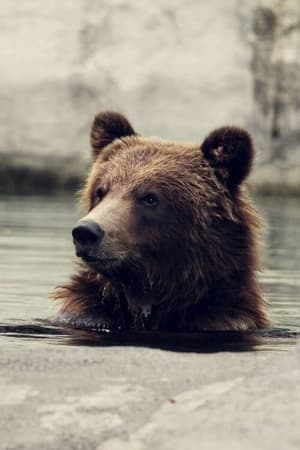
Seul au milieu des ours
A documentary series about the life of wild animals.
Planète animale 2 : Survivre
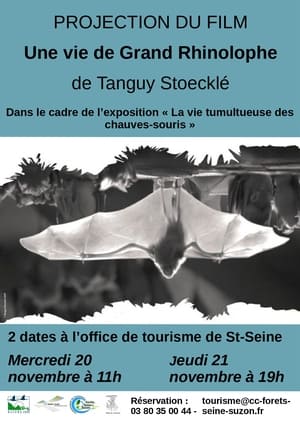
There is a fabulous colony of Greater Horseshoe Bats in the heart of the Camargue. This species of bat is one of the most amazing. A true little clown equipped with the very latest biological technologies, the Greater Horseshoe Bat is as rare as it is mysterious. "The life of a Greater Horseshoe Bat" invites you to share the life of a young female and her mother, for better or for worse...
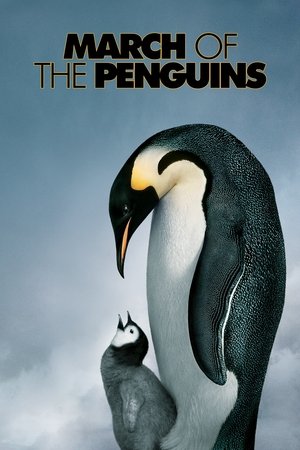
Every year, thousands of Antarctica's emperor penguins make an astonishing journey to breed their young. They walk, marching day and night in single file 70 miles into the darkest, driest and coldest continent on Earth. This amazing, true-life tale is touched with humour and alive with thrills. Breathtaking photography captures the transcendent beauty and staggering drama of devoted parent penguins who, in the fierce polar winter, take turns guarding their egg and trekking to the ocean in search of food. Predators hunt them, storms lash them. But the safety of their adorable chicks makes it all worthwhile. So follow the leader... to adventure!!
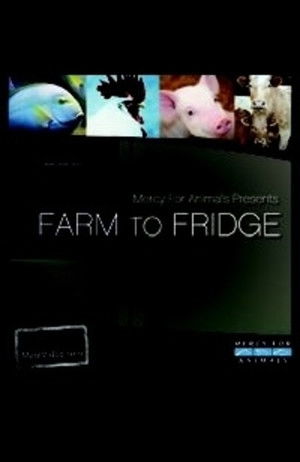
Narrated by Academy Award nominee James Cromwell, this powerful film takes viewers on an eye-opening exploration behind the closed doors of the nations largest industrial poultry, pig, dairy, and fish farms, hatcheries, and slaughter plants - revealing the often-unseen journey that animals make from Farm to Fridge. Using arresting images covertly recorded on hidden camera, this provocative film puts into focus the harsh reality faced by farmed animals - creatures granted no federal protection from abuse during their lives on factory farms.
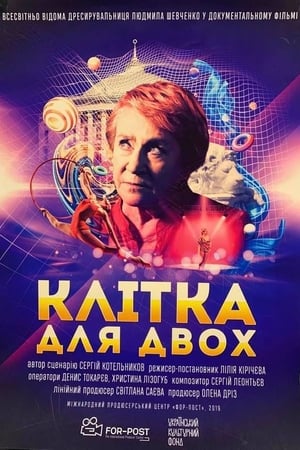
Documentary offers a look at the historical development, establishment and artistic transformations of the Ukrainian Circus as a cultural phenomenon of the 20 century.
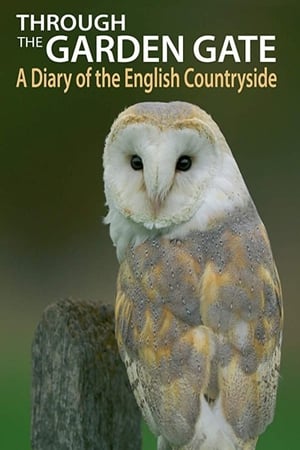
After a career filming across five continents, EMMY and BAFTA winning wildlife cameraman Stephen de Vere returns to the English countryside, to explore the hidden world beyond the garden gate. From playful fox cubs to the barn owl tending to her chicks, explore the extraordinary world waiting beyond the garden gate. The film is a personal view, giving an insight into what it’s like being a wildlife cameraman and reminding us that you don’t have to travel to all corners of the world to get close to nature.
The Secrets of Life series (1934-50) may not conform to modern expectations of nature filmmaking, inclined as it is towards giving cute fluffy creatures human names and characteristics. But it couldn't be accused of shielding kiddies from the harsher realities of the food chain, as this exercise in ruthless Darwinism demonstrates to unintentionally hilarious effect. A more than usually eccentric narrator introduces us to the newborn bunny quartet of Donald, James, Charles and Clifford, but as the film's title gives away, "the boys" aren't all long for this world as they face an assault course of hungry owls, predatory badgers, shotgun-happy gardeners and aerial bombardment (no harm in a little anti-Nazi detour, this is 1942 after all). (from http://player.bfi.org.uk/film/watch-once-we-were-four-1942/)
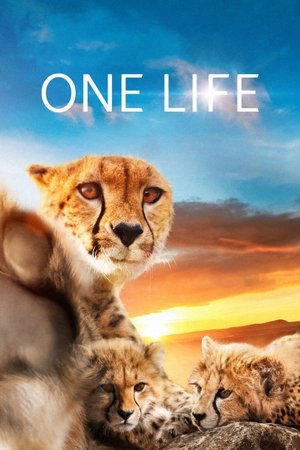
One Life captures unprecedented and beautiful sequences of animal behaviour guaranteed to bring you closer to nature than ever before, as well as a second disc packed full of never before seen extras including an exclusive making of featurette narrated by Daniel Craig.
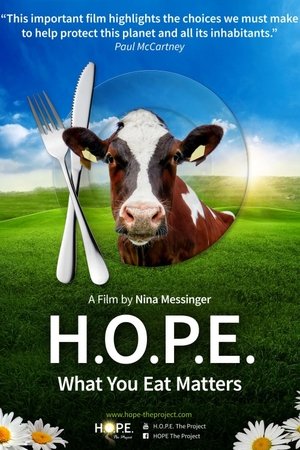
"H.O.P.E. What You Eat Matters" is a life-changing documentary uncovering and revealing the effects of our typical Western diet on our health, the environment and animals. Featuring Jane Goodall, T. Colin Campbell, Caldwell B. Esselstyn, Vandana Shiva, Melanie Joy and many other experts, the film has a clear message: By changing our eating habits, we can change the world!
Shu Hin, a four year old panda, narrates her and her twin brother's story as they move from a Japanese zoo to a panda reserve in China and make new panda friends.
Only twenty-five years ago, the first evidence of self-medicating behaviour among animals was reported among chimpanzees. On the basis of this pioneering research, led by the American Michael Huffman, a new science was founded: "zoopharmacognosy", or the study of animal pharmacopeia. Animals are apparently able to treat themselves actively, to detect natural substances that can provide a remedy for health problems, or to prevent them. The primatologist Michael Huffman explains how he discovered that chimpanzees can heal their diseases with medicinal plants from their environment. The scientist then comments on other very surprising examples: Birds that disinfect their nests by filling them with aromatic plants with repellent properties, a rodent that covers its coat with toxic sap as a poisonous defence against predators and elephants that place mud plasters on their injuries. Some therapeutic behaviours may even be transmitted socially among certain species.
Attempting an ethical perspective on the meat industry. Various people who work in the industry have their say. Can they justify killing animals?
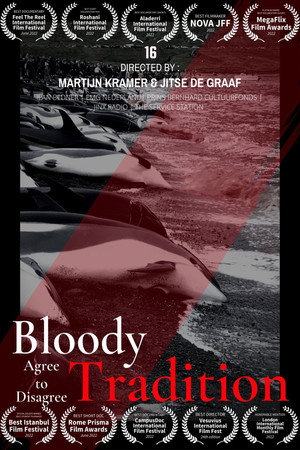
In September 2021, 1500 white-sided dolphins were slaughtered in Skálabotnur. This documentary navigates both waters to paint a complicated picture between those who defend this tradition and those who condemn it.