Extravíos
LIKE is an IndieFlix Original documentary that explores the impact of social media on our lives and the effects of technology on the brain. The goal of the film is to inspire us to self-regulate. Social media is a tool and social platforms are a place to connect, share, and care … but is that what's really happening?
Pink Tokyo
After seven years in prison, a female student in Tehran is hanged for murder. She had acted in self-defence against a rapist. For a pardon, she would have had to retract her testimony. This moving film reopens the case.
Notes on Summer is a 2023 short movie shot in Italy and France. It is up to you to grasp the meaning, because the meaning is always different, nevertheless, I want to dedicate this film to all those who already know what to do even before starting their holidays.
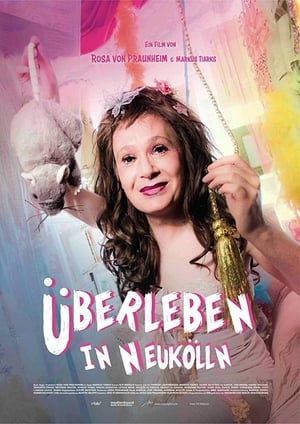
Shelley is a timid elderly lady who is competing in the Miss Senior USA pageant. Immersion in an extravagant world that also touches on the universal need for visibility, beauty and being included.
Filmmaker Sophie Dros enters into a dialogue with strong women in a powerfull document about being a woman in the Netherlands today. Inspired by Simone de Beauvoir's essay The second sex, filmmaker Sophie Dros (winner of the NFF Debut Competition 2017) talks to four women and a group of young girls. Together they go in search of universal stories; about dealing with expectations, empathy and connection, desires, fear, need for confirmation and losing control.
A 64 year old cardboard collecting grandmother and a Brazilian bodybuilder reveal the identity of Macau through the pointillist minutiae of their life experience, emotional strength, and driving passions.
Through a powerful visual metaphor, Camille Vigny gives a first-person account of the domestic violence she suffered. The images and text interact with remarkable precision to convey the devastating impact of the cataclysm. It's a political gesture, brimming with courage, an icy cry that takes your breath away.
"Africa Light" - as white local citizens call Namibia. The name suggests romance, the beauty of nature and promises a life without any problems in a country where the difference between rich and poor could hardly be greater. Namibia does not give that impression of it. If you look at its surface it seems like Africa in its most innocent and civilized form. It is a country that is so inviting to dream by its spectacular landscape, stunning scenery and fascinating wildlife. It has a very strong tourism structure and the government gets a lot of money with its magical attraction. But despite its grandiose splendor it is an endless gray zone as well. It oscillates between tradition and modernity, between the cattle in the country and the slums in the city. It shuttles from colonial times, land property reform to minimum wage for everyone. It fluctuates between socialism and cold calculated market economy.
It’s 2020 and Minsk, the capital city of Belarus, is overflowing with anti-government protests. A dreamy figure – Mara – takes us on a journey alongside the protesting crowds. Mara’s symbolic presence is a stark contrast to the harsh reality of the street. There is a determination to Mara, but also a fragility – as if her persona reflects the collective mental state of the protesters witnessing their dream for freedom turn into a nightmare.
The war in the Ukraine has changed the way many European countries view Russian politics. Suddenly it became clear how dependent countries had become on Russian gas imports for decades and what Vladimir Putin was up to. However, no country needs more gas than Germany. It was only after Russia's invasion of the Ukraine that the German government realized that Russia had long used gas as a weapon to impose its will on states. The instrument created for this purpose is the natural gas production company GAZPROM. So how did Germany become so dependent on Russian gas? The documentary shows how, over several decades and several changes of government, a broad alliance of politicians and business representatives did everything possible to secure Germany's energy supply with cheap Russian gas, while the Kremlin's foreign policy became increasingly aggressive and the warnings of experts went unheeded.
The Philippines remains the only nation without legalized divorce. Through the perspectives of a controversial priest, a women's rights advocate, and a child of a separated couple, this documentary explores whether the legalization of divorce in the country would be for better or worse.
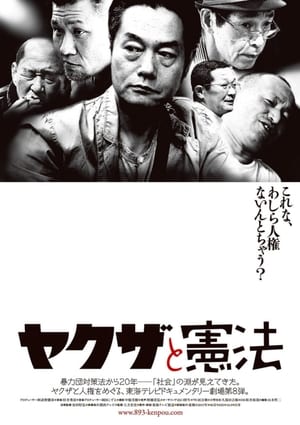
Since the enactment of the Anti-Boryokudan Act and Yakuza exclusion ordinances, the number of Yakuza members reduced to less than 60,000. In the past 3 years, about 20,000 members have left from Yakuza organizations. However, just numbers can’t tell you the reality. What are they thinking, how are they living now? The camera zooms in on the Yakuza world. Are there basic human rights for them?
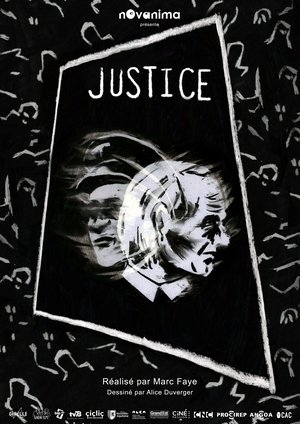
Justice
Embargo sur l'Iran
The tragedy of Eva-Marree, deprived of her children for prostitution then killed by their father. In a convincing indictment, director Ovidie denounces the abuse of power by a supposedly protective Swedish state.
An attempt to engage with the historical, mythical and the contemporary worlds of the city of Pushkar
The film does not have a plot per se; it mixes documentary footage, along with standard movie scenes, to give the audience the mood of Germany during the late 1970s. The movie covers the two-month time period during 1977 when a businessman was kidnapped and later murdered by the left-wing terrorists known as the RAF-Rote Armee Fraktion (Red Army Fraction). The businessman had been kidnapped in an effort to secure the release of the original leaders of the RAF, also known as the Baader-Meinhof gang. When the kidnapping effort and a plane hijacking effort failed, the three most prominent leaders of the RAF, Andreas Baader, Gudrun Ensslin, and Jan-Carl Raspe, all committed suicide in prison. It has become an article of faith within the left-wing community that these three were actually murdered by the state.
Shot during three seasons, Kenuajuak's documentary tenderly portrays village life and the elements that forge the character of his people: their history, the great open spaces and their unflagging humour. Though Kenuajuak appreciates the amenities of southern civilization that have made their way north, he remains attached to the traditional way of life and the land: its vast tundra, the sea teeming with Arctic char, the sky full of Canada geese. My Village in Nunavik is an unsentimental film by a young Inuk who is open to the outside world but clearly loves his village. With subtitles.