Based on real near-death experiences, the afterlife is explored with the guidance of New York Times bestselling authors, medical experts, scientists and survivors who shed a light on what awaits us.
Iggy Pop reads and recites Michel Houellebecq’s manifesto. The documentary features real people from Houellebecq’s life with the text based on their life stories.
In the vast expanse of desert East of Atlas Mountains in Morocco, seasonal rain and snow once supported livestock, but now the drought seems to never end. Hardly a blade of grass can be seen, and families travel miles on foot to get water from a muddy hole in the ground. Yet the children willingly ride donkeys and bicycles or walk for miles across rocks to a "school of hope" built of clay. Following both the students and the teachers in the Oulad Boukais Tribe's community school for over three years, SCHOOL OF HOPE shows students Mohamed, Miloud, Fatima, and their classmates, responding with childish glee to the school's altruistic young teacher, Mohamed. Each child faces individual obstacles - supporting their aging parents; avoiding restrictions from relatives based on traditional gender roles - while their young teacher makes do in a house with no electricity or water.
The Bridge is a controversial documentary that shows people jumping to their death from the Golden Gate Bridge in San Francisco - the world's most popular suicide destination. Interviews with the victims' loved ones describe their lives and mental health.
Lies can kill. Transgender Nuclear Suicide Sojourner is an exploration of propaganda, lies, and the overwhelming urge to end it all.
This short film offers a children's guide to anger management.
James Franco interviews three experts on the poet Hart Crane, whose life was the subject of his feature The Broken Tower (2011).
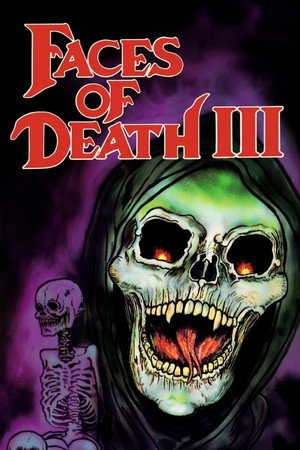
What question has plagued mankind more than the mystery—and terror—of death? This forbidden pursuit has driven Dr. Frances B. Gröss to the brink of madness, but in his obsession, he has amassed a uniquely comprehensive collection of films that depict life in its final, grueling moments. From the savagery of cold-blooded murder to the perverse realities of war, tragic accidents, and the everyday lives of those who collect, dissect, and bury the dead, this descent into morbidity lays bare a truth that all of us will one day face.
The documentary team follows two happiness agents in their forties who spend a month and a half on the road twice a year, going door-to-door with their questionnaires in isolated villages in the Himalayas. The filmmakers undertake to provide an intimate insight into the daily lives and desires of Bhutanese people, and also seek the answer to the universal question of whether happiness can really be measured. Gross National Happiness promises a heart-warming journey into a mysterious, fairytale-like world, which is the exact opposite of the social order dominated by consumption and desires.
As a teenager in the '90s, Soleil Moon Frye carried a video camera everywhere she went. She documented hundreds of hours of footage and then locked it away for over 20 years.
This documentary follows 8 teens and pre-teens as they work their way toward the finals of the Scripps Howard national spelling bee championship in Washington D.C.
Documentarians Justine Shapiro and B.Z. Goldberg traveled to Israel to interview Palestinian and Israeli kids ages 11 to 13, assembling their views on living in a society afflicted with violence, separatism and religious and political extremism. This 2002 Oscar nominee for Best Feature Documentary culminates in an astonishing day in which two Israeli children meet Palestinian youngsters at a refugee camp.
A portrait of Highlights Magazine following the creation of the cultural phenomenon's 70th Anniversary issue, from the first editorial meeting to its arrival in homes, and introducing the quirky people who passionately produce the monthly publication for "the world's most important people,"...children. Along the way, a rich and tragic history is revealed, the state of childhood, technology, and education is explored, and the future of print media is questioned.
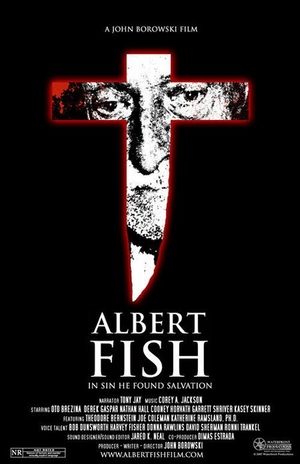
Satan in the Suburbs tells the shocking story of a grisly ritualistic murder in the quiet bedroom community of Northport, Long Island in the summer of 1984. The killing, it soon emerged, was linked to a teen satanic cult. Perhaps more disturbing than the details of the murder itself was the revelation of a conspiracy of silence among the town's teenagers, many of whom had been aware of the, e killing in the two weeks before an anonymous call finally tipped off local police. 17- year-old Ricky Kasso was arrested and confessed to the crime; five days later, he hung himself in his holding cell. Kasso's friend Jimmy Troiano also. confessed, but was acquitted after jurors learned that he was beaten by local police. The murder shocked the local community and reverberated nationally, with some uninformed observers rushing to scapegoat rock music as the cause.
Structured as a labyrinth-like game and inspired by Jorge Luis Borges, Aleph is a travelogue of experience, a dreamer's journey through the lives, experiences, stories and musings of protagonists spanning ten countries and five continents.
On May 8, 1989, Sports Illustrated ran an article about Ultimate frisbee… about a team with no name hailing from New York City that was about to change the sport forever. From its 1968 New Jersey birth to its unanimous 2015 recognition by the International Olympic Committee, FLATBALL circles the globe to showcase four decades of world-class Ultimate and goes even further: to a set of fields in the Middle East to understand and demystify the unique spirit of the game.
A documentary with some fictional scenes that focuses the attention, more than on hospitalized children, on the human dynamics that are established in their families. Shot in the Oncohematology ward of an Italian hospital, the movie follows the life of some young patients being treated, alternating interviews with their relatives and hospital staff.
Jöran has a bipolar disorder, which makes him vulnerable to depression, mania and psychosis. He can sympathize well at the moment, but that has been different in the past. Jöran delves into his dark past and talks to the people who experienced his illness up close. How do you deal with this disorder and the misunderstood behavior that comes with it? And how do you break the taboo that still exists on disease pressure?
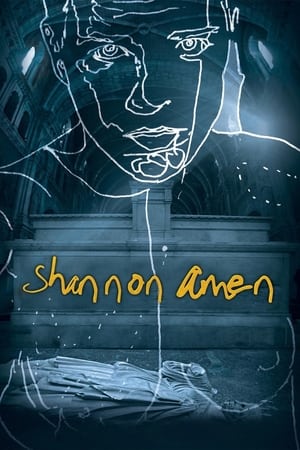
A documentary about the singer/songwriter Vic Chesnutt
In just sixty years, South Korea went from being one of the poorest countries on the Asian continent to having the 12th largest economy in the entire world. Every year, it is measured that Korean students have some of the highest test scores and a higher rate of acceptance into Ivy League schools compared to all other nations. But on the flip side, South Korea also has one of the highest suicide rates in the developed world, the highest gender pay gap of all developed countries, and the highest plastic surgery rate per capita. Always expected to receive top scores and constantly bombarded by media and messages that seem to demand nothing short of visual “perfection,” how do these individuals come to accept and learn to love themselves as they are?