Rose the rabbit seeks her way home in this poetic story of reclamation, recovery, and reconciliation.
The most popular breakdancer in ex-Yugoslavia, Hamit Djogani, better known as Djole Djogani, made a documentary about his life and collaboration with the biggest stars of regional music scene. With rich documentary material and recordings from private archives, Djogani gathers close associates again and creates an interesting story that testifies to a specific time in the 1990s.
In Germs, female stereotypes, pseudoscience and promised happiness clash with violent consequences.
Image analysis in slow motion. Distortion and reversed reality perspective.
At the beaches of Aracaju(Brazil), popsicle sellers believe in the myth of a girl dressed in white called Eva Maria.
A description of some parts of the world - explored, visited, documented, imagined. An abstract attempt at finding them again. The title refers to geographer and civil servant of the Republic of Venice Giovanni Battista Ramusio (1485-1557).
A man at the feet of a seated woman, who looks like a big doll, licking her whole body.
Sitting on the floor in a narrow room, a man coughing and spitting blood.
A film crew gathers in a hotel near Wuhan to resume production of a film that was interrupted ten years earlier, but an unexpected event once again disrupts the preparations.
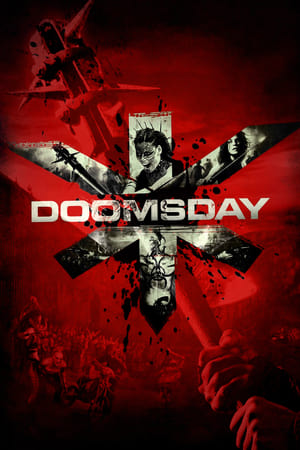
The lethal Reaper virus spreads throughout Britain—infecting millions and killing hundreds of thousands. Authorities brutally and successfully quarantine the country but, three decades later, the virus resurfaces in a major city. An elite group of specialists is urgently dispatched into the still-quarantined country to retrieve a cure by any means necessary. Shut off from the rest of the world, the unit must battle through a landscape that has become a waking nightmare.
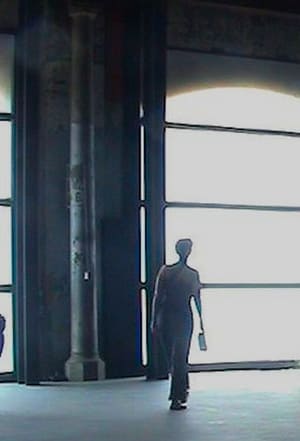
This experimental "film" consists of an empty room with a bare lightbulb, and windows covered with a translucent material, for a duration of 24 hours. It is not necessary for visitors to stay for the entire duration - they can come and go as they please. Created by Anthony McCall, it is based on the architectural framing of time and light. It came at the end of a series of works in which McCall was stripping back cinema to its absolute minimum - light, time, and human experience/perception.
Korean student Jean, who moved to New York during the COVID-19 pandemic, has struggled to mingle with people in this society. The rise in anti-Asian hate crimes has contributed to her feeling unwelcome. Through her Korean-American classmate Isaac, she reexamines her life and embraces her new home.
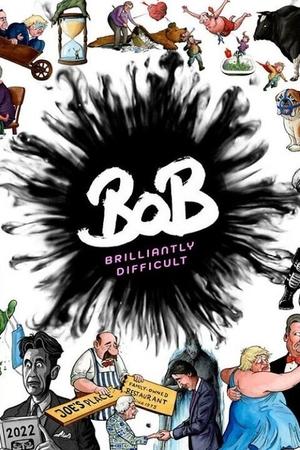
This is the story of Bob Moran, the ethical British cartoonist who lost his job at the Telegraph during the Covid-19 crisis for being too honest. Tune in to learn more about Bob and what led him to become one of the few political cartoonists crossing the lines that need to be crossed.
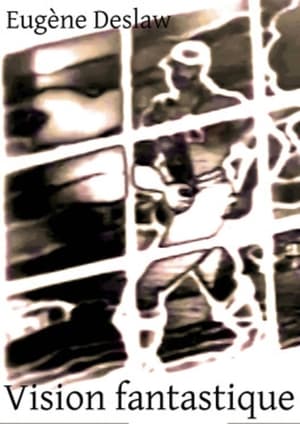
Footage filmed in Spain, subjected a new visual effects process. Deslaw devoted himself to the discovery of a new machine that enabled film to be developed while using a new method called solarisation.
Já Não Sou Eu Quem Vive
This film describes a psychological state "kin to moonstruck, its images emblems (not quite symbols) of suspension-of-self within consciousness and then that feeling of falling away from conscious thought. The film can only be said to describe or be emblematic of this state because I cannot imagine symbolizing or otherwise representing an equivalent of thoughtlessness itself. Thus the actors in the film, Jane Brakhage, Tom and Gloria Bartek, Williams Burroughs, Allen Ginsberg, Peter Olovsky and Phillip Whalen are figments of this 'Thought-Fallen Process', as are their images in the film to find themselves being photographed."
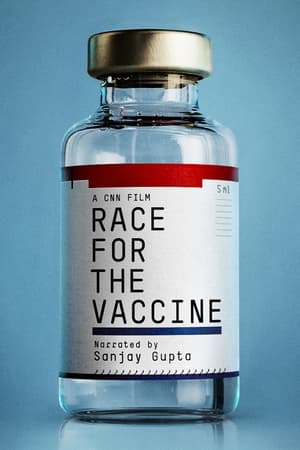
As news of the coronavirus broke around the globe, a small group of scientists jumped into action to tackle one of the greatest medical challenges of our time: to create a vaccine against a virus no one had ever seen before, and to do so in record time, during a deadly, global pandemic.
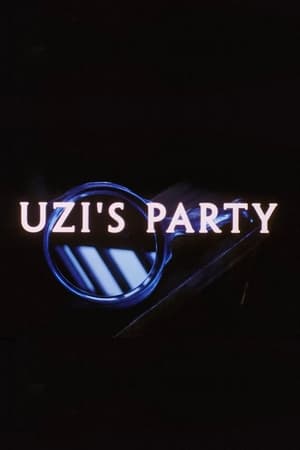
Five teenage girls gather for a party. Tensions mount as the guests exchange makeovers and hurl accusations. Tears in the bathroom lead to a ghostly kiss. In a circle around the Ouija board, they invoke a spirit. Their faces float in blackness. Five pairs of painted nails caress the planchette as it moves, swirling pale arms behind it. Our host becomes possessed. The characters overlap. Which of these women is not herself? Uzi's Party is a short experimental narrative written, directed and edited by Lyra Hill. All five characters are played by her sister Johanna Hill. Uzi's Party was filmed entirely in-camera on 16mm film, by means of intricately plotted multiple exposures and a cast of thirteen body doubles.
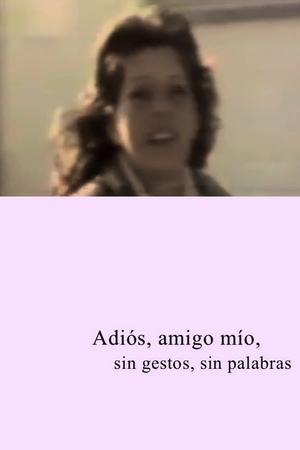
The title comes from Sergei Yesenin's last poem before comiting suicide. Using Virginia Woolf's last letters as a base, this film is meditation on the power of the word and its undertsanding and the the last moments before saying "goodbye".
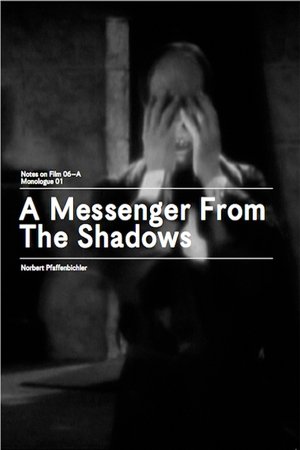
Thanks to his myriad film roles, Lon Chaney is known as “the man of a thousand faces,” and you could say that the early horror era never beheld a figure more intriguing. Yet because of his numerous transformations, his face never became as iconic as that of, say, Boris Karloff. Accompanied by a soundtrack from Bernhard Lang, this “re-imagination of shots” taken from Chaney´s forty-six surviving films offers a beguiling excursion into the history of film. The director reveals surprising associations, while highlighting the enduring magic of works which are now more or less forgotten.