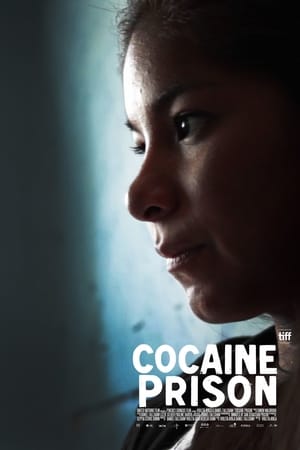
Indigenous chief Juma Xipaia fights to protect tribal lands despite assassination attempts. Her struggle intensifies after learning she's pregnant, while her husband, Special Forces ranger Hugo Loss, stands by her side.
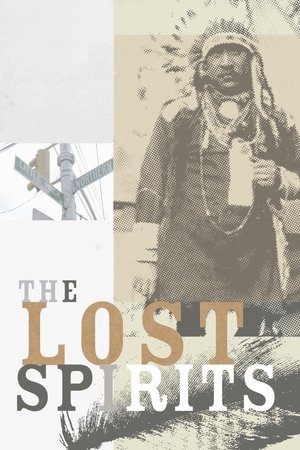
Documentary chronicling the government relocation of 10,000 Navajo Indians in Arizona.
An IMAX 3D camera chronicles the effort of 7 astronauts aboard the Space Shuttle Atlantis to repair the Hubble Space Telescope.
The story of four women suffering from anorexia and bulimia in South Florida.
Internationally known director Carla Garapedian follows the rock band System of a Down as they tour Europe and the US pointing out the horrors of modern genocide that began in Armenia in 1915 up though Darfur today.
Unblinking and unsettling, this documentary lays bare a mysterious process that goes on all around us - what happens to people who die with no next of kin.
Several years ago Bawren Tavaziva was an unemployed teenager dancing on the streets of Zimbabwe's townships to earn enough money to eat. Today, his UK-based contemporary dance company, Tavaziva Dance, performs at London's premier dance venues.
A human story about a socially responsible company, “Dr. Bronner’s Magic Soapbox” documents the complicated family legacy behind the counterculture’s favorite cleaning product — Bronner’s son, 68-year-old Ralph, endured over 15 orphanages and foster homes as a child, but despite difficult memories, is his father’s most ardent fan.
A documentary filmmaker follows a model for several years, chronicling her rise from a fresh face to one that adorns billboards and magazines around the world. Go behind the scenes and chronicle the glitzy world of high fashion modeling, from photo shoots with celebrated photographers to runway shows in New York, Milan, and Paris.
Hossein and Shaima have loved each other since childhood. As teenagers they were separated by war. They meet again in Kabul in the late 90s. Poverty forces Hossein to fight in the war. A shell splinter leaves him paralyzed. Shaima is sold into marriage with a man 40 years her senior and falls pregnant. Since Shaima's husband still owes half the dowry to her father he brings her back into the constraining patriarchal fold of the family, where she lives with her 5-year-old daughter. This situation doesn't prevent the two from seeing each other, even though this means going against their families' hard rules. In constant fear of revenge on the part of the male members of both families, they struggle to hold on to their love.
Nóouhàh-Toka’na, known as swift fox in English, once roamed the North American Great Plains from Canada to Texas. Like bison, pronghorn and other plains animals, Nóouhàh-Toka’na held cultural significance for the Native Americans who lived alongside them. But predator control programs in the mid-1900s reduced the foxes to just 10 percent of their native range. At the Fort Belknap Indian Community in Montana, members of the Aaniiih and Nakoda tribes are working with the Smithsonian’s National Zoo and Conservation Biology Institute and other conservation partners to restore biodiversity and return Nóouhàh-Toka’na to the land.
40 international directors were asked to make a short film using the original Cinematographe invented by the Lumière Brothers, working under conditions similar to those of 1895. There were three rules: (1) The film could be no longer than 52 seconds, (2) no synchronized sound was permitted, and (3) no more than three takes.
K2 is widely seen as the world's harshest mountain. Yet many indigenous porters make a living in its extreme conditions, carrying provisions for foreign climbing expeditions. Often risking their lives, they receive minimal pay for their efforts. Against a backdrop of breathtaking natural beauty, this doc explores the courage and sacrifice of the men who call the 'Savage Mountain' their home.
The sound of metal creaking as if something is about to break. An old pickup truck adapted to carry passengers crosses the La Guajira desert in Colombia. With the wind come voices that merge among the passengers who travel there. A Wayuu woman returns to her territory, accompanied by her family, after years of exile due to a paramilitary massacre. A cyclical journey where the time layers of the territory touch and the border between the living and the dead is diluted.
This glasnost-era documentary, which incorporates footage from films from the 1920s through the 1980s, looks at the history of women in Russian cinema through the eyes of Russian women directors, actors, and scriptwriters. The film’s title refers to a WWII slogan about women doing the work of absent men in the fields and at home. Featuring Kira Muratova, Natalia Ryazantseva, Inna Churikova, Nonna Mordyukova, and others.
Ten years in the making, Strange Powers is an intimate documentary portrait of songwriter Stephin Merritt and his band the Magnetic Fields. With his unique gift for memorable melodies, lovelorn lyrics and wry musical stylings that blend classic Tin Pan Alley with modern sounds, Stephin Merritt has distinguished himself as one of contemporary pop's most beloved and influential artists.
The North of Cauca is the region of Colombia most affected by the internal armed conflict since 1940. There is an orchestra of ancestral music composed of young indigenous people of the Nasa ethnic group who, with their instruments, their voice and their poetry, remember Maryi Vanessa Coicue, Sebastian Ul and Ingrid Guejia, three of the hundreds of indigenous children who have died because of this eternal and useless war between leftist guerrillas, armed groups of the extreme right, drug traffickers and the Colombian State.
The Boxing Day Tsunami in 2004 was the most devastating natural disaster in modern times, killing 228,000 people across 13 countries in just a few hours. AFTER THE WAVE tells the untold story of this epic forensic operation in Thailand to identify and return home the bodies of over 5,000 victims, both locals and holidaymakers from around the world. Led by a crack Australian team, the best forensic specialists from around the world were in a race against time to give back every victim their identity. Creating forensic history, the international team’s mantra from the outset was ‘we will take them home’, a seemingly impossible ambition but one that almost succeeded. In this film forensic science intersects with powerful stories of survival and loss, attempting to make some sense out of a tragedy so bewilderingly complete that nearly a decade out it still seems far-fetched to most of us.
A documentary that takes an alternative approach to dealing with the global warming crisis.
Rainer Werner Fassbinder reflects on the various stages of his career, discusses how his motives behind filmmaking evolved up his film Despair.