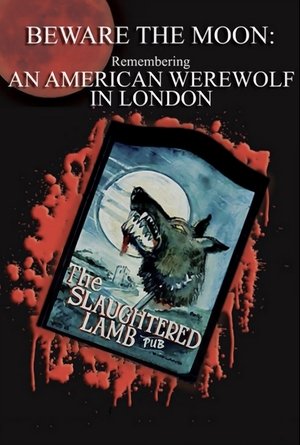
Host Paul Davis takes a trip through some of the iconic backdrops of John Landis' 1981 werewolf classic An American Werewolf In London. The original cast and crew tell the story of how the film was made over a quarter of a century ago featuring rare footage and never before seen photos.
Grieving his sister's death, Xen meets Aana, a dark arts practitioner offering vengeance. Drawn into a world of ritual and retribution, Xen must navigate the blurred lines between justice and revenge, deciding how far he'll go for power and retribution.
Setlist: 01 – People = Shit 02 – (sic) 03 – Get This 04 – Unsainted 05 – Disasterpiece 06 – Before I Forget 07 – The Heretic Anthem 08 – Psychosocial 09 – The Devil in I 10 – Prosthetics 11 – Vermilion 12 – Custer 13 – Sulfur 14 – All Out Life 15 – Duality 16 – Spit It Out 17 – Surfacing
In this film, four key witnesses, who live in Algeria today, as full-fledged Agerians, show us what this colonization was really like, so "beneficial" that they themselves perceived it as the oppression of one people by another. Three of them, who today would be called "pieds noirs," in other words, those Europeans to whom France, the occupying power, gave the best land, taken from the indigenous populations, work, and exclusive rights, not shared by the entire population, lived rather well compared to the majority of the "natives." The fourth was far from all that and lived in Argentina. Annie Steiner, Felix Colozzi, Pierre Chaulet, and Roberto Muniz explain to us what led them to show solidarity with the struggle of the weak, the humiliated, and to risk their freedom and their lives by committing to liberate Algeria.
Shortly after the fall of the Salazar dictatorship, in the early days of PREC, one of the first land occupations in the liberated country took place in the village of Quebradas (near Rio Maior). It was the first Basista occupation of that period. Soon after recovering the "land that was ours and was stolen from us", the workers elected a committee and formed a co-operative. There's a sense that the class struggle has reached its peak. …PELA RAZÃO QUE TÊM! is a rare case of a re-enactment documentary, in which the peasants themselves reenact the remarkable events of this claim, just after 25 November, when many of these operations were being reversed.
The author's view of the events of the history and modernity of Russia is a continuation of the journalistic cycle, which began with the film "You can't live like that".
Horizon visits state-of-the-art laboratories and uses CGI to recreate the science-fiction-worthy weather experienced on other planets.
A film about dreams and ambitions in the Belarus through the eyes of the younger generation. An insight into the recent history of Belarus and the growing movement for change in 'Europe's last dictatorship'.
Correspondance Mélodrame
Documentary produced by Falange and edited in Berlin, in response to the international success of the Republican production "Spain 1936" (Le Chanois, 1937).
With a unique vision that perseverance through the extraordinary leads to progress, Samsung enlisted Academy Award-winning filmmaker Morgan Neville to showcase the inspiring story of Olympic hopefuls from diverse countries who are defying barriers.
Chronicle of the judicial process for the murder of 16-year-old student Paúl Guañuna, committed by police officers in 2007. The fight of a father and thousands of young people against racism, authoritarianism and impunity.
Lila Biro is a remarkable character who witnessed Rossellini in India, played a key role in the cutting of key titles of the French New Wave, and was a close collaborator of the Hungarian émigré painter, Atila Biro. For me, however, she’s also the star witness in a crime against film grammar: the jump cut. The editing style of Jean-Luc Godard’s Breathless is now legendary, but I’ve always wondered what it must have been like in the cutting room when that revolutionary editorial decision was made. Thanks to Lila, that moment is vividly brought to life.
The true story of the rise of a Japanese businessman from Los Angeles named Eishy Hayata from an Airline engineer into the legend of the Emerald world -- the Emerald Cowboy
Africa's giant rats – the size of a cat – can be trained to detect land-mines by smelling them. Giant rats are clever and they learn fast. Their sense of smell is better than a dog's, they have more stamina, and they're a lot cheaper to train. This documentary follows "Miss Marple", who was born in a training lab and who goes through a year's training before being sent on her first mission to Mozambique. A shorter version (43 minutes) screened at festivals in 2009 but was never widely released.
Documentary revealing the shocking story of how Richard Spencer was subjected to years of abuse at the hands of his wife Sheree. This is the disturbing tale of the suffering that Richard endured, with compelling footage of the abuse captured on camera and in audio recordings, as well as written testimonials.
The vast east African savannah is the only place in the world where "big cats" -- lions, leopards and cheetahs -- can be seen in a single location. The abundant source of food is the reason why these cats, which reign at the top of the food chain, can survive. The endless grassland gives them life. This is the story of the animals on the savannah, the more than one hundred species of herbivores such as gazelles and buffalos, and the big cats standing at the top of the ecosystem
Backyard barbecue with the Jackass cast and crew
Somewhat crazy semi-documentary by director Joe D'Amato is a strange series of Burlesque performances from around the globe. Actress and dancer Amanda Lear hosts these mostly musical numbers designed to get people on stage.
Shoshana