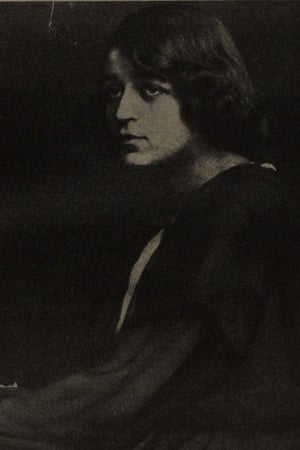
Loie Fuller, in her 1920 feature-length film Le Lys de la vie, […] explored the new technique for poetic ends, creating fleeting, dreamlike images that "freed" the medium from "illusionism" and imbued it with fantasy. A 17 minutes fragment is held at the Cinémathèque française.
This mostly lost film is often confused with director Paul Wegener third and readily available interpretation of the legend; Der Golem, wie er in die Welt kam (1920). In this version of the golem legend, the golem, a clay statue brought to life by Rabbi Loew in 16th century Prague to save the Jews from the ongoing brutal persecution by the city's rulers, is found in the rubble of an old synagogue in the 20th century. Brought to life by an antique dealer, the golem is used as a menial servant. Eventually falling in love with the dealer's wife, it goes on a murderous rampage when its love for her goes unanswered.
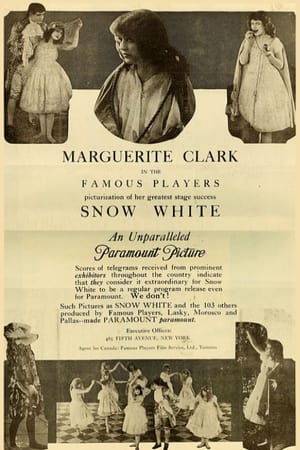
Snow White, a beautiful girl, is despised by a wicked queen who tries to destroy her. With the aid of dwarfs in the woods, Snow White overcomes the queen.
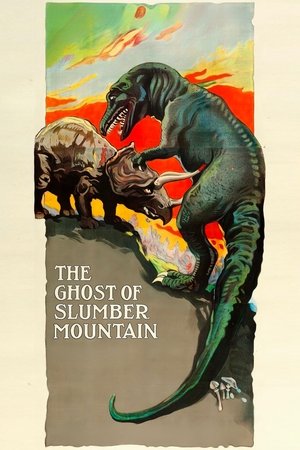
In a dream Uncle Jack looks through a magic telescope owned by the ghost of a hermit and sees what life was like millions of years ago, including a battle between prehistoric monsters.
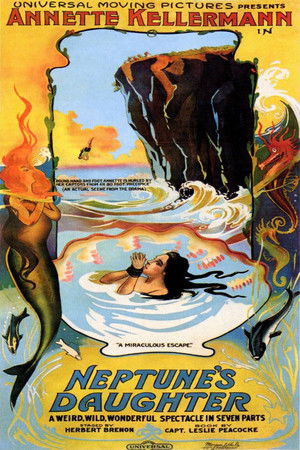
The daughter of King Neptune takes on human form to avenge the death of her young sister, who was caught in a fishing net. However, she falls in love with the king, the man she holds responsible.
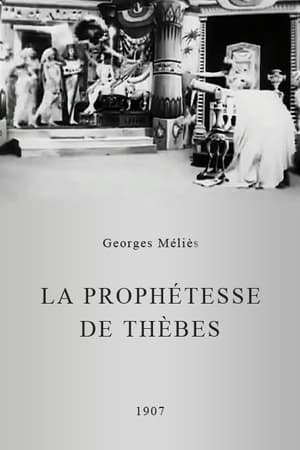
Partially lost film. One of the kings of ancient Thebes enters the abode of an astrologer and demands that he be told his future. The former utterly refuses to forecast the coming events of his sovereign, even under the pain of death; but he brings forth a priestess who possesses the powers of divination. This priestess is introduced in a wonderful way: a throne is brought forward, and then a box from which the pieces of a statue are removed and piled up in regular order; the statue suddenly becomes animated. The king implores the latter to foretell his life. She commands him to look through a telescope toward the side of the room. A vision appears. (Moving Picture World)
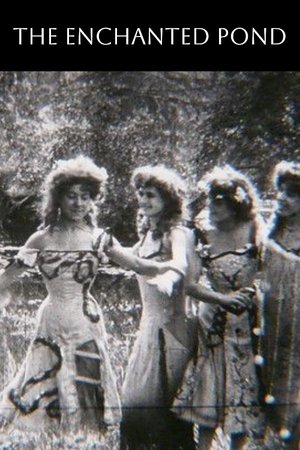
In an outdoor setting, a magician makes pond nymphs and frog people appear out of water and thin air.
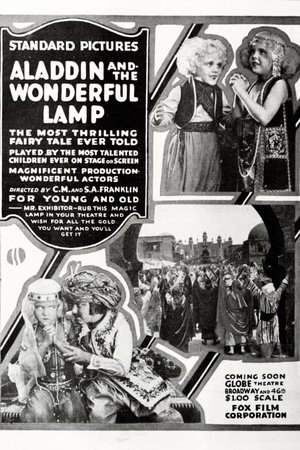
In Bagdad, Princess Badr al-Budur, the daughter of the Sultan, falls in love with Aladdin, the son of a poor tailor, and rejects the suit of evil alchemist al-Talib, her father's choice. Al-Talib consults his Evil Spirit, who advises him to find the magic lamp hidden in an underground cave. Unable to get it himself, al-Talib hires Aladdin, who secures the lamp but keeps it when he realizes al-Talib's wickedness. With wealth obtained through wishes, Aladdin courts the princess. After the lamp changes hands between al-Talib and Aladdin, al-Talib steals it and abducts the princess to the desert. Aladdin follows with only a gourd of water. Suffering from thirst and exhaustion, Aladdin nearly succumbs, but the horsemen of the Sultan, who learned of his daughter's abduction, ride up and rescue Aladdin.
Ali Baba, a poor Turkish wood chopper, discovers that a robbers' cave, concealed in the mountains that surround his house, opens to the magical phrase, "Open Sesame." Learning that the cave is filled with stolen treasure, he takes home as much as he can carry, but his greedy brother forces him to reveal the cave's location. After gaining admittance to the cave, Ali Baba's brother is seen by the thieves and killed. Meanwhile, Ali Baba falls in love with Morgianna, a slave girl forced to dance in the local inn, and by securing her freedom, he wins her love and loyalty. The leader of the band of robbers suspects that Ali Baba knows the secret of the treasure cave, and in the guise of an oil merchant, he visits Ali Baba with his forty thieves concealed in oil jars. When Morgianna discovers the robbers, she fills the jars with boiling oil, thereby killing them all. Ali Baba defeats the robber chief in combat and then marries his beautiful Morgianna.
Fragments retrieved from Archives 76 & 77 have recently been digitized. They appear to document a divine corpus with no known equivalent in mythological, historical, or religious records. The exact origin of these materials remains unclear. No official trace has been found in any consulted database to date. Independent researchers are currently investigating their content.
Artist Standish using his wife Mary as his model finishes a painting of the Madonna. When the Connoisseur and the Parishioner inspect the picture, the Connoisseur tells Standish that the model was a one-time paramour. Buying the painting they depart. Standish confronts Mary, who tells him that she believed herself legally married to the Connoisseur. Unbelieving he ejects her and their baby son. Penniless Mary leaves her boy on the steps of a monastery. Years later before becoming a monk the boy is sent to see the world. Wandering into a café he is seduced by Beauty as the other inmates of the place, Lust, Rum, Avarice and Passion dance around him. The proprietor enters; it is Mary. Recognizing the crucifix, she left with him as a baby she persuades him to go back without revealing her identity. After he becomes a priest Mary, now a bedraggled old woman enters his church. She recognizes him and just before she dies her son gives her absolution.
A 1924 film directed by John Francis Dillon.
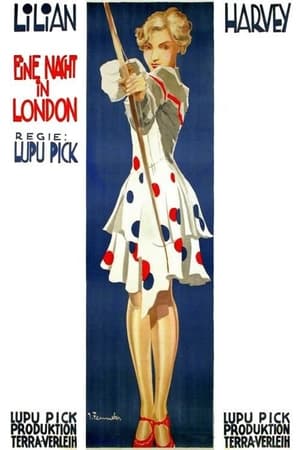
A prince makes a socialite think she spent the night in his room.
In a futuristic city sharply divided between the rich and the poor, the son of the city's mastermind meets a prophet who predicts the coming of a savior to mediate their differences.
A peasant girl goes to great lengths to protect her child in 19th century Vienna. The film is considered lost, and only four minutes of footage are known to remain.
A lottery win of $5,000 forever changes the lives of a miner turned dentist and his wife.
A melodrama about a painter who is infected with syphilis, refuses treatment, turns to the use instead of narcotics, and withers away.
Nancy Carroll stars in Manhattan Cocktail as Babs, a college coed who dreams of becoming a famous actress. Joining up with her campus chums Fred (Richard Arlen) and Bob (Danny O'Shea), likewise aspiring thespians, Babes heads to Broadway with stars in her eyes. The winsome threesome are quickly disillusioned by the heartless machinations of nasty producer Renov (Paul Lukas) and his harridan wife (Lilyan Tashman). Before the plot proper gets under way, the audience is regaled with a cute "mythological" prologue, featuring the same three leading actors. Manhattan Cocktail was a silent picture, except for two brief musical numbers showcasing Nancy Carroll.
To the Hills Again in Spring
Bread is a socially engaged drama which follows the fate of a woman struggling to pull herself out of poverty as she’s ruthlessly exploited by a string of men.