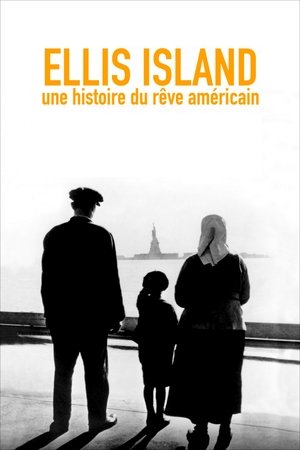
"Ellis Island Tales" - From 1892 to 1924, nearly 16 million emigrants from Europe passed through Ellis Island, a small block of land where a transit center was built, near the New York Statue of Liberty. "Ellis Island Tales, Stories of Wandering and Hope" - the book is composed of three major parts. Georges Perec and Robert Bober visited Ellis Island and with the help of texts and documents, restored what everyday life was about what some called "the island of tears".
Kamenná sláva
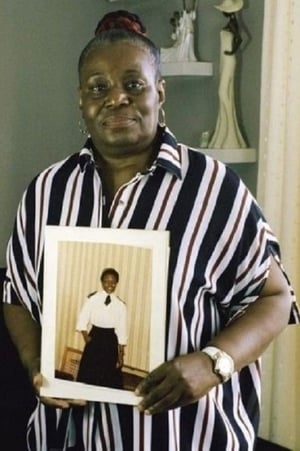
A Liberian refugee SAM REAYAH and his family have been separated for five years and live in uncertainty waiting for family reunion. While Sam and his younger daughter Ruth continue their lives in Buduburam Refugee camp in Ghana, his wife Decontee and his older daughter Joyce have already started a life in Rochester, USA. The film explores the idea of home. Sam's family had a home in Liberia, but they had to give it up. They were forced to build homes elsewhere. They built a home in Ghana. They build a home in The United States. They built homes together, they build homes separate of each other. But which home does the heart want?
A film essay contrasting the modern metropolis with its "golden age" from 1830-1930, with the participation of some of New York's leading political and cultural figures. Made at a time when the city was experiencing unprecedented real estate development on the one hand and unforeseen displacement of population and deterioration on the other. Empire City is the story of two New Yorks. The film explores the precarious coexistence of the service-based midtown Manhattan corporate headquarters with the peripheral New York of undereducated minorities living in increasing alienation.
Amie Siegel’s film installations often reveal the hidden narratives behind architecture and design, investigating the mechanisms by which objects, materials, and spaces accrue meaning and value. The Architects examines the processes of architectural creation, using the artist’s signature slow, parallel tracking shots to offer insight into the inner workings of multiple architecture firms, slicing through them laterally like an architect’s section plan... Siegel not only punctures the myth of the singular “master architect” but also poses questions around creative autonomy, the sociopolitics of labor, and the circulation of capital. (Source: MoMA)
Big Time gets up close with Danish architectural prodigy Bjarke Ingels over a period of six years while he is struggling to complete his largest projects yet, the Manhattan skyscraper W57 and Two World Trade Center.
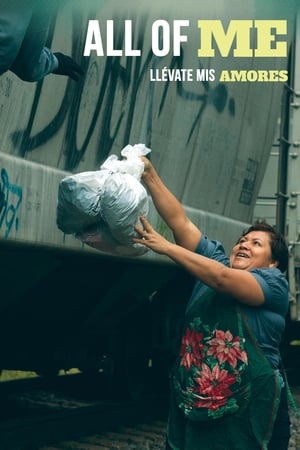
"Take my love" is a documentary film about "Las Patronas", a group of women who daily cook, pack and throw food to the migrants riding the "Beast" train.
When a young woman is shot by an undocumented immigrant on Pier 14 in San Francisco, the incident ignites a political and media furor that culminates in Donald Trump’s election as President of the United States. In the eye of this storm, two public defenders fight to reveal the truth.
The little-known story of Ukrainian children torn from their homes in the crush between the Nazi and Soviet fronts in World War II. Spending their childhood as refugees in Europe, these inspiring individuals later immigrated to the United States, creating new homes and communities through their grit, faith and deep belief in the importance of preserving culture.
An extraordinary journey through the material that makes up our habitat: concrete and its ancestor, stone. Victor Kossakovsky raises a fundamental question: how do we inhabit the world of tomorrow?
A core group of architects embraced the West Coast from Vancouver to LA with its particular geography and values and left behind a legacy of inspired dwellings. Today, architects celebrate the influence established by their predecessors.
Oskar Kokoschka : Portraits européens
On the tiny island of Martha's Vineyard, where presidents and celebrities vacation, trophy homes threaten to destroy the islands unique character. Twelve years in the making, One Big Home follows one carpenters journey to understand the trend toward giant houses. When he feels complicit in wrecking the place he calls home, he takes off his tool belt and picks up a camera.
The city of Ordos, in the middle of China, was build for a million people yet remains completely empty. Ordos is not so much a place but a symbol of babylonic hype. But nothing will change - as long as people believe.
A computer screen, images from the four corners of the world. We cross borders in one-click while another trip’s story reach us in bits, through text messages, chats, phone conversations, and an immigration office’s questionnaire. It’s the journey of Shahin, a 20-year-old Iranian boy who, fleeing his country alone, lands in Greece, then winds his way to England where he claims asylum.
Egypt's only modernist architect Hassan Fathy (1900-1989) was committed to ecology and sustainability in his architecture. This film takes us with slow steps, in still images, to two villages he created. Fathy's historically grounded, forward-looking designs prompt us to reflect on the past as well as contemplate new solutions for the future.
Berlin’s brutalist heritage is under fire. The city’s powerful Charité hospital wants to destroy a brutalist icon of the Cold War era: The infamous former animal research laboratory called the Mäusebunker. Meanwhile, a dedicated group of politicians, preservationists, architects, gallerists, and students fight for an adaptive reuse of these magnificent, uncompromisingly unique structures. Who will win? No matter the outcome, you’re left with the impression that preservation can be brutal.
No understanding of the modern movement in architecture is possible without knowledge of its master builder, Mies van der Rohe. Together with documentation of his life, this film shows all his major buildings, as well as rare film footage of Mies explaining his philosophy. Phyllis Lambert relates her choice of Mies as the architect for the Seagram building. Mies's achievements and continuing influence are debated by architects Robert A.M. Stern, Robert Venturi, and Philip Johnson, by former students and by architectural historians. Mies is seen in rare documentary footage.
Artistic director of the National Theater Eric de Vroedt writes and directs a performance about his own mother Winnie, who passed away in 2020. This piece, titled The Century of My Mother, is a family story about the migration from the Dutch East Indies to the Netherlands. It is De Vroedt's way of examining the relationship with his mother and not having to say goodbye to her yet: 'I can let her live on stage, but when the curtain falls, when the play is completely finished, then she is really dead'.
HOMME-RELAIS spotlights Juan Manuel, a doctor turned community leader who, amid migration grief and integration challenges, guides immigrant men through a life-changing program: forging resilience, belonging, solidarity, and hope.