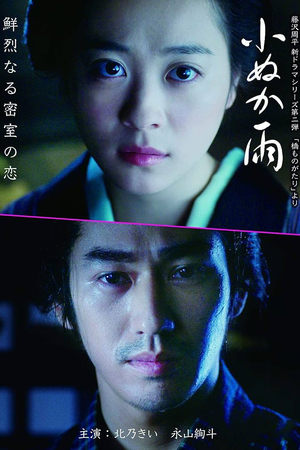
The third part of the series of films based on the Japanese epic novel Nanso Satomi Hakkenden by Kyokutei Bakin.
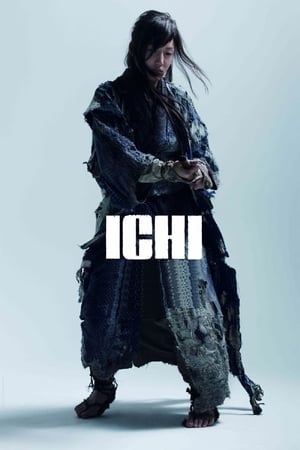
When an artist dies, the official cause of death is judged to be a stroke, but his daughter suspects foul play. She recruits the services of an assassin, who by chance encounters an old friend...
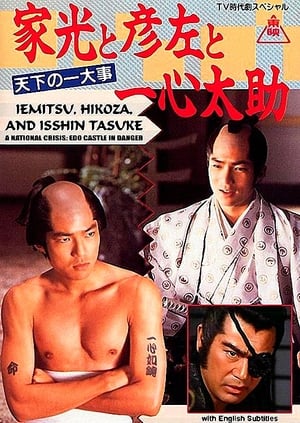
Japan's greatest jidaigeki star, Mifune Toshiro is Shogun's Advisor Okubo Hikozaemon who must be coaxed out of retirement to save Shogun Iemitsu from danger. The elderly Hikozaemon has been belittled of late and has seemingly lost the will to live, much less the desire to assert himself and make Iemitsu listen to reason. The plot thickens when a lovely young woman enters the picture. Can she change Hikozaemon's mind, and thus alter the path of Japanese history? No longer a young man, can Hikozaemon gain the shogun's ear, and succeed in warning him of the evil plot to overthrow him?
Kakizaki Yuji’s period film is not like the jidaigeki films we are used to. While it deals with themes of seppuku, duty, and loyalty to one’s masters and the shogun, we see very little in terms of action. Instead, the film focuses on the inner thoughts and struggles of the protagonist—who is ordered to perform a ritual suicide—his wife, and their entire household, all leading up to the final moment.
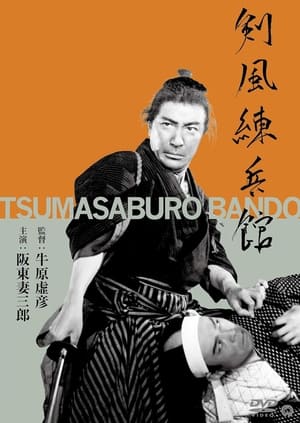
A jidaigeki film on Banzuiin Chōbei produced in 1940 and directed by Yasuki Chiba.
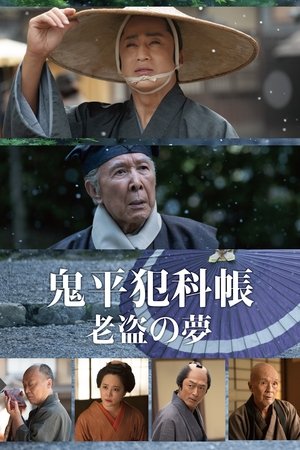
Takahagi Sutegoro is highly skilled at casing locations for thieves so that he can sell detailed floor plans to them. He suffers an injury to his leg while trying to help a parent and a child being threatened by samurai. Heizo jumps in and chases the samurai away. Feeling indebted to Heizo, Sutegoro decides to become his spy. Now, together they will try to stop scheming Myogi Danemon’s gang of merciless thieves...
Japan, 1785. Jūzaburō, a famous thief who refuses to kill innocent people, is betrayed, ambushed, and left for dead.
The 40th and final "Tengu Kurama" feature starring Kanjuro Arashi.
Follows the final days of the shogunate and Shinsengumi's Vice-Comander Hijikata Toshizo along with his fellow anti-imperialist group.
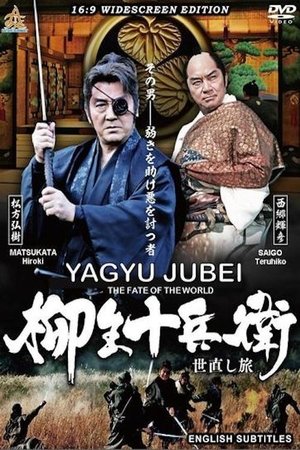
The fate of Tokugawa’s world hangs in the balance as Yagyu Jubei is sent on a mission to discover what happened to 10 of the shogun’s spies that never returned. Matsukata Hiroki, one of the last surviving members of the Golden Age of Japanese Cinema proves that he has not lost a step as he portrays an older and wiser Yagyu Jubei in a movie that brings the best of samurai filmmaking into the 21st century. Summoned from semi-retirement by Shogun Iemitsu, Jubei is asked to take to the road and investigate a clan rumored to be preparing explosives for a rebellion. With help from a beautiful female ninja they head into the Shirakawa domain where the fighting skills of both are tested time and again as they strive to destroy a conspiracy that could bring a new Warring States Era. In the 1960's Yagyu Jubei was the signature role of the great Konoe Jushiro, father of Matsukata Hiroki. This brings the character full circle.
One samurai is ordered to kill another by their master in punishment.
Naosuke, a servant of Okajima Yasoemon, devoted himself to his master. One day, his master Okajima Yasoemon, lost his face in front of people. It was a revenge by Oono, a karo (minister) who lost his chance to earn money by selling a fake antique to the lord. Okajima told the lord it was fake. Okajima endured Oono's humiliation. But, his servant Naosuke, could not. But what could he do? Oono is superior of his master. Naosuke would not hesitate to lay down his life for his master. But killing Oono would ruin his master. He wanted to clear his master's disgrace. What to do?
In feudal Japan, during a bloody war between clans, two cowardly and greedy peasants, soldiers of a defeated army, stumble upon a mysterious man who guides them to a fortress hidden in the mountains.
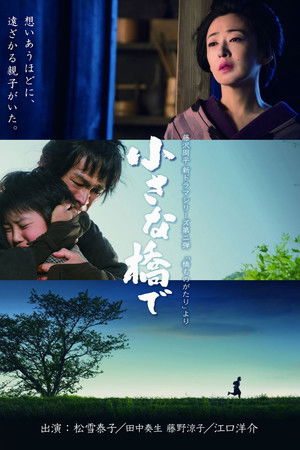
Kotani Zenzaemon, a ronin who has a side job making brushes in a tenement house in the back alley, is watching Omine, who lives with him, from Kichizo, a resident of the same tenement house and a boatman. is asked to Kichizo and Mine have eloped and got married, but she feels empty in her boring daily life, and she wants to take a break by crossing the bridge over the river. On the other hand, Kichizo forbids him from crossing the bridge, fearing that his whereabouts will be known to others. Zenzaemon superimposes the appearance of these two people on the appearance of his former self and his wife, whom he killed himself.
The Color Print of Edo is a 1939 black and white Japanese silent film with benshi accompaniment directed by Kazuo Mori. It is a cheerful period drama, sprinkled with comical scenes and tells the story of a loyal and handsome Edo period servant who fights to help his older brother marry the woman he loves. The star of this film, Utaemon Ichikawa, gained enormous popularity for his portrayal of a cheerful and chivalrous man.
Returning to their lord's castle, samurai warriors Washizu and Miki are waylaid by a spirit who predicts their futures. When the first part of the spirit's prophecy comes true, Washizu's scheming wife, Asaji, presses him to speed up the rest of the spirit's prophecy by murdering his lord and usurping his place. Director Akira Kurosawa's resetting of William Shakespeare's "Macbeth" in feudal Japan is one of his most acclaimed films.
Aspiring to an easy job as personal physician to a wealthy family, Noboru Yasumoto is disappointed when his first post after medical school takes him to a small country clinic under the gruff doctor Red Beard. Yasumoto rebels in numerous ways, but Red Beard proves a wise and patient teacher. He gradually introduces his student to the unglamorous side of the profession, ultimately assigning him to care for a prostitute rescued from a local brothel.
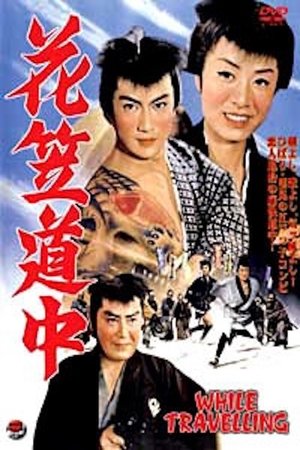
In this film, Hibari plays a dual role as brother and sister. The story involves a journey to Hanagasa for an incognito Lord (Kotaro Satomi) to overthrow an attempted usurpation of his domain, while being harassed by vassals of the usurper (Kensaku Hara). There's also a mysterious ronin played by Jushiro Konoe. The songs are seamlessly woven into the narrative and don't overwhelm the action. While the plot is derivative it is good example of its type and quite enjoyable. Note that there are some flashback sequences in black and white.
The news that the fifth Shogun Tsunayoshi was seriously ill caused a fierce struggle for the post of sixth shogun between the Mito faction and the faction of Chief Adviser Yanagisawa Yoshiyasu. Two mysterious love stories develop against the background of a violent conspiracy that arose because of a strange painting in the sand. And then the empty-headed ronin Morio Jushiro will flash his enchanted sword in this unique, thrilling story full of unexpected twists. Adapted from the novel "Sunae Jubaku: Asahishinbunsha" by Seji Hajime.
In the 9th year of the Tempo era, after a long sea voyage, Moritaya Seizo returned to Hirado, who earned huge amounts of gold by piracy. Along the way, he picked up Ichinojo Kaneko, a Ronin who survived the disaster at sea. Seizo and Orin, the daughter of merchant Yohei, are in love with each other and want to get married. However, Kashiwakura Gaiki, the samurai of the domain, wants to kill Seizo for the sake of his son Shozaburo, who is in love with Arin, and Kurando Matsuura, the owner of the castle, wants to seize all the gold for himself...