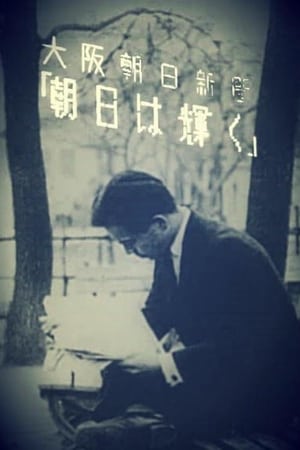
The Morning Sun Shines is a fiction-documentary film by Kenji Mizoguchi and Seiichi Ina. The film is a combination of a drama about a reporter, and documentary footage about newspaper production. Only 25 minutes of footage has survived.
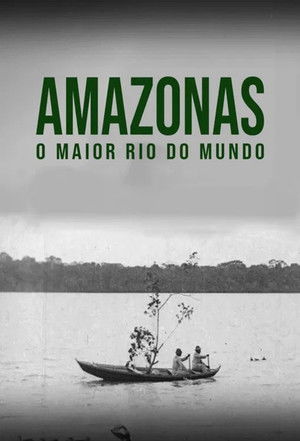
Documentary by Portuguese Silvino Santos, about the Amazon, its flora, fauna, its inhabitants and among other wonderful images from the beginning of the 20th century with alternating close-up shots of caimans, jaguars and tropical flora with footage of Indigenous rituals--including some of the earliest known moving images of the Indigenous Witoto people--and longer sequences showcasing the region’s extractive industries: rubber, the Brazil nut, timber, fishing, even the egret feathers that were a staple of women’s fashion at the time.
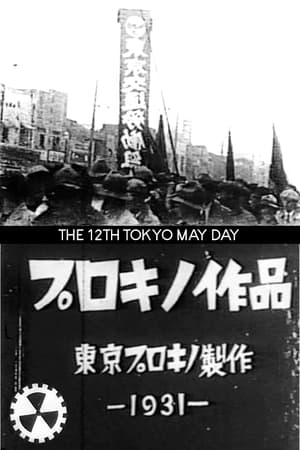
On May 1st, unions all over Japan celebrate May Day, the international day for workers. Workers gather together at parks and hold demonstrations and parades. May Day has its origins in a strike that occurred in the United States on May 1, 1886, a strike that called for an eight-hour workday. Prokino recorded the May Day every year from 1927 to 1932. Among these films, this work is the only one that has survived. However, only its first part has survived. The original film depicts the march to the Ueno Park where the rally was dismissed. Iwasaki Akira coordinated the entire Tokyo Prokino organization as it photographed the 1931 May Day celebrations. They shot in both 16mm and 35mm (other 35mm productions were planned, but this is the only one that achieved completion). A 16mm print was circulated around the countryside by mobile projection units, and a 35mm print was shown at Soviet film nights in Tokyo and Osaka.
The surviving 14 minutes of the original documentary about the Villas Boas expedition to the Amazonian tribes in Brazil.
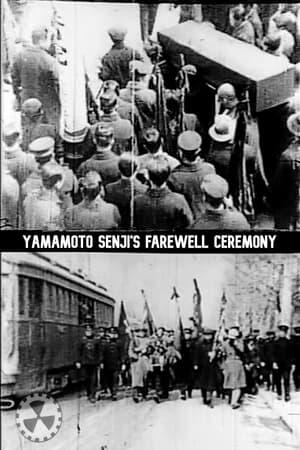
Yamamoto Senji fought against the Peace Preservation Law in the Diet. On March 5, 1929 he was assassinated by the right wing. A farewell ceremony was held near the University of Tokyo. Prokino's Tokyo Branch shot the procession.
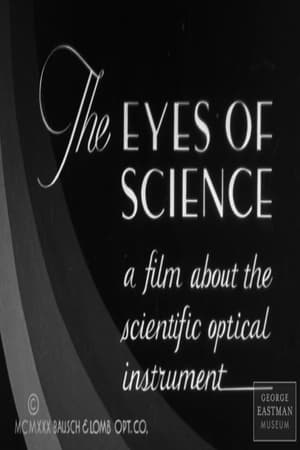
The optical company Bausch & Lomb of Rochester, New York, contracted Watson and Webber to create this corporate industrial film to showcase the company’s extensive catalog of lenses and other optical instruments, displaying their practical applications in industry and everyday life. The Eyes of Science easily straddles the fields of avant-garde and industrial filmmaking, making both a fascinating object of form and style, as well as a highly educational, entertaining, and informative piece of film and industrial history. Originally 45 minutes.
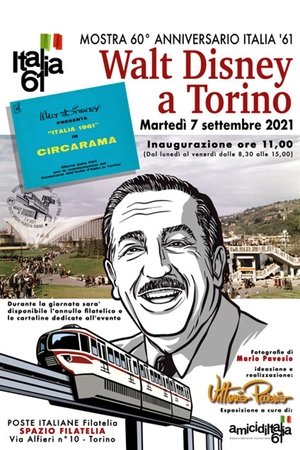
In 1961 Turin celebrated the centenary of the Italian unity with a large exposition which lasted from May till October of that year. One of the most popular exhibits was the 28 minute documentary ITALIA ´61 IN CIRCARAMA which was produced by the Walt Disney company and sponsored by the Italian automobile manufacturer Fiat. The spectacular views of this Cinerama tour of Italy (filmed with nine cameras) impressed more than two million visitors during the entire duration of that Turin Expo.
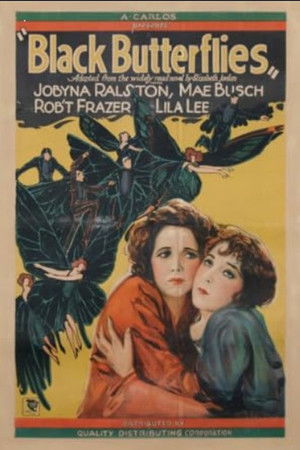
A prince makes a socialite think she spent the night in his room.
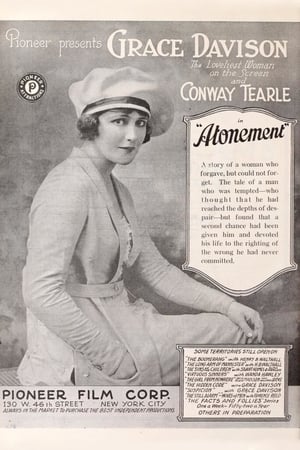
A 1924 film directed by John Francis Dillon.
The serial detailed the experiences of Kathlyn Hare, the pretty daughter of an explorer. Kathlyn resided in a mythical India, fighting off unwanted advances from a handsome native, Umballah, when not battling an endless array of ferocious jungle fauna.
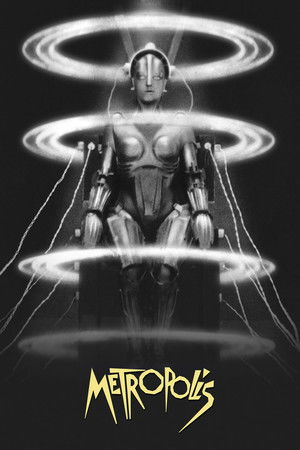
In a futuristic city sharply divided between the rich and the poor, the son of the city's mastermind meets a prophet who predicts the coming of a savior to mediate their differences.
Arima Neko
A lottery win of $5,000 forever changes the lives of a miner turned dentist and his wife.
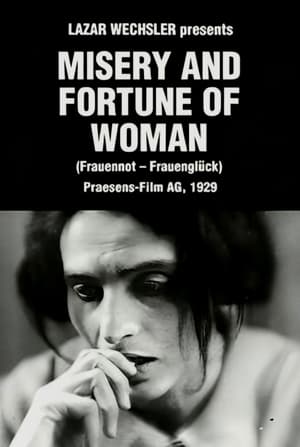
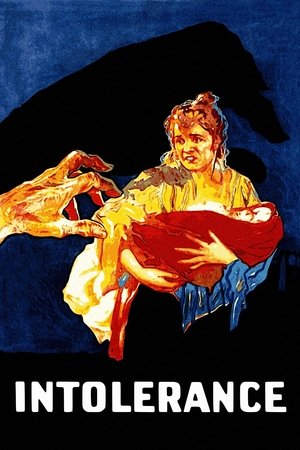
A peasant girl goes to great lengths to protect her child in 19th century Vienna. The film is considered lost, and only four minutes of footage are known to remain.
A couple of boy gangs in Budapest constantly fight over the neighborhood turf.
Philandering husband George Montfort purchases railroad tickets for a weekend tryst in the mountains with his latest paramour. When his wife Yvonne finds the tickets, George hastily explains that they were bought as an anniversary present for her. Yvonne doesn't believe George, but she decides to use her ticket anyway, while George remains behind in Paris on "business."
Bettina was justified in being indignant because her employer, a married man, makes love to her. She tells her beau, Raymond, about it and he vows to get square with the old masher and teach him a lesson. He tells Bettina to send word to her boss that she is sick and obliged to remain at home for a few days, but she will send a substitute.
In Bagdad, Princess Badr al-Budur, the daughter of the Sultan, falls in love with Aladdin, the son of a poor tailor, and rejects the suit of evil alchemist al-Talib, her father's choice. Al-Talib consults his Evil Spirit, who advises him to find the magic lamp hidden in an underground cave. Unable to get it himself, al-Talib hires Aladdin, who secures the lamp but keeps it when he realizes al-Talib's wickedness. With wealth obtained through wishes, Aladdin courts the princess. After the lamp changes hands between al-Talib and Aladdin, al-Talib steals it and abducts the princess to the desert. Aladdin follows with only a gourd of water. Suffering from thirst and exhaustion, Aladdin nearly succumbs, but the horsemen of the Sultan, who learned of his daughter's abduction, ride up and rescue Aladdin.
Jerry Martin quits his dull job as a bank clerk and falls in with a band of hobos. He takes on the guise of Bachelor, the "king of the market," and finds himself pursued by dangerous men who are after the real Bachelor. *Only fragments are known to exist. Preserved by the Academy Film Archive in 2010.
A boy named Tuk and his dog Zhuk have a vegetable garden, but their harvest is in danger from Pig and Fox who are looking for a quick profit.