The filmmakers and lead actors of The Remains of the Day (1993) discuss how they came to make the film, and the subtle power of its execution.
A chronicle of the production problems — including bad weather, actors' health, war near the filming locations, and more — which plagued the filming of Apocalypse Now, increasing costs and nearly destroying the life and career of Francis Ford Coppola.
Documentary that follows events after the fall of Slobodan Milosevic, while looking back on the previous fifteen years, tracing his rise to power. Personal testimony alternates with analysis of a disintegrating society.
An hour-long discussion between Fritz Lang and Jean-Luc Godard in which they discuss a variety of art forms, the role of the cinema, their collaboration together, and much more. (Filmed in 1964 but released for TV in 1967.)
Four lives that could not be more different and a single passion that unites them: the unconditional love for their cinemas, somewhere at the end of the world. Comrades in Dreams brings together six cinema makers from North Korea, America, India and Africa and follows their efforts to make their audiences dream every night.
Omnibus: François Truffaut
A behind-the-scenes documentary about director Michelangelo Antonioni as he's shooting his segment of The Three Faces, a vehicle for Soraya, the former empress of Persia. Featuring interviews with Monica Vitti, Tonino Guerra and more.
Nagisa Oshima interviews Akira Kurosawa, leading him to share his thoughts about filmmaking, his life and works, and numerous anecdotes relating to his films and his various film activities.
Paparazzi explores the relationship between Brigitte Bardot and groups of invasive photographers attempting to photograph her while she works on the set of Jean-Luc Godard's film Le Mépris (Contempt). Through video footage of Bardot, interviews with the paparazzi, and still photos of Bardot from magazine covers and elsewhere, director Rozier investigates some of the ramifications of international movie stardom, specifically the loss of privacy to the paparazzi. The film explains the shooting of the film on the island of Capri, and the photographers' valiant, even foolishly dangerous, attempts to get a photograph of Bardot.
In the late sixties, Spanish cinema began to produce a huge amount of horror genre films: international markets were opened, the production was continuous, a small star-system was created, as well as a solid group of specialized directors. Although foreign trends were imitated, Spanish horror offered a particular approach to sex, blood and violence. It was an extremely unusual artistic movement in Franco's Spain.
Actress Sally Field looks at the dramatic life and successful career of the superb actress Barbara Stanwyck (1907-90), a Hollywood legend.
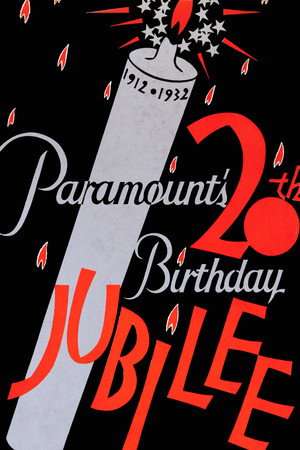
The House That Shadows Built (1931) is a short feature, roughly 48 minutes long, from Paramount Pictures made to celebrate the 20th anniversary of the studio's founding in 1912. It was a promotional film for exhibitors and never had a regular theatrical release and includes a brief history of Paramount, interviews with various actors, and clips from upcoming projects (some of which never came to fruition). The title comes from a biography of Paramount founder Adolph Zukor, The House That Shadows Built (1928), by William Henry Irwin.
Documentary short film depicting the filmmaking activity at the Paramount Studios in Hollywood, featuring dozens of stars captured candidly and at work.
Famous Spanish film critic Alfonso Sánchez talks about his personal life, his work and Anouk Aimée. A sentimental tribute to one of the most relevant figures on the Spanish film scene.
A thirty-three-minute documentary featuring interviews with director Pier Paolo Pasolini, actor-filmmaker Jean-Claude Biette, and Pasolini friend Ninetto Davoli.
The intricate history of UFA, a film production company founded in 1917 that has survived the Weimar Republic, the Nazi regime, the Adenauer era and the many and tumultuous events of contemporary Germany, and has always been the epicenter of the German film industry.
A funny walk through the life story of Billy Wilder (1906-2002), a cinematic genius; a portrait of a filmmaker who never was a boring man, a superb mind who had ten commandments, of which the first nine were: “Thou shalt not bore.”
Documentary about Nicholas Ray's film "In a Lonely Place" (1950).
In 1967, Canadian documentarian James Beveridge traveled to Kolkata to film director Satyajit Ray at work. The resulting program, produced for the American public television series “The Creative Person,” features interviews with Ray, several of his actors and crew members, and film critic Chidananda Das Gupta.
Documentary about the making of Lars von Trier's 1991 film.