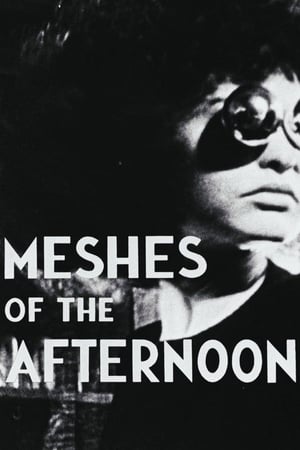
A woman returning home falls asleep and has vivid dreams that may or may not be happening in reality. Through repetitive images and complete mismatching of the objective view of time and space, her dark inner desires play out on-screen.
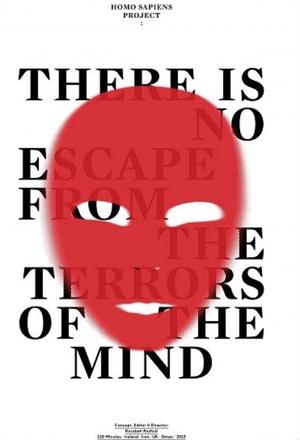
There is no escape… From one side of the globe to the other, there is no escaping the faces, the visions, the ever-watchful camera. There is no escaping the mask, there is no escaping the resonating echoes of images and sounds that cross each other over time. There is no escaping the cinema. There is no escaping the terrors of the mind. “A mysterious loner, perhaps a poet, journeys through a series of uncanny surrealistic landscapes with an unclear purpose. His adventure is divided into three sections. The main theme of this experiment is to compare the eerier qualities of different landscapes and interpose the characters within them, elaborating the project’s ongoing preoccupation with extracting sinister moods from ordinary settings. In a way, these can be seen as experimental horror films in which an atmosphere of dread is evoked and sustained without the expected narrative trappings.”
An anthology of one-minute films created by 51 international filmmakers on the theme of the death of cinema. Intended as an ode to 35mm, the film was screened one time only on a purpose-built 20x12 meter public cinema screen in the Port of Tallinn, Estonia, on 22 December 2011. A special projector was constructed for the event which allowed the actual filmstrip to be burnt at the same time as the film was shown.
August 2019. Frank recognizes his own story of twenty years ago in a recently published book. He remembers Marie, with whom he had a relationship before she moved to the United States and disappeared from his life. Frank sets out in search of her and finds himself in a USA petrified by a heat wave and lost in suspicion and political paranoia. He heads into the desert in pursuit of Marie.
Within a single space, the director treats the sorrows of two people married to each other.
A short experimental cutup film by Jon Moritsugu.
How do we represent the ideas of gender? This short reflects about this topic, as we see an unidentified character, suited up, and with a paper bag over his head, walking down the hallway of its high school.
Number Two’ is an audio visual work which materializes the definite possibilities of sight and the existence of light in space with the drama in between image and sound as a reaction . It treats the surface of the film itself as a digital artefact that forms an image with a human intervention .It can be seen as an enlargement of a moment in time where form and space breaks inside an indefinite reality .
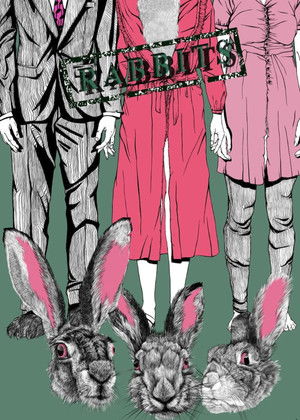
A story of a group of humanoid rabbits and their depressive, daily life. The plot includes Suzie ironing, Jane sitting on a couch, Jack walking in and out of the apartment, and the occasional solo singing number by Suzie or Jane. At one point the rabbits also make contact with their “leader”.
This film tell us about intricate attitudes in male collectives on navy. The film bore in poetical form with respect for differently minded heroes.
Attempts to showcase how the creation of art directly correlates to the perception we have of ourselves and the life around us as shown through the eyes of a struggling family.
A space occupies it, awaiting to be unlocked by a freeing action or notion. What lies ahead is its determination.
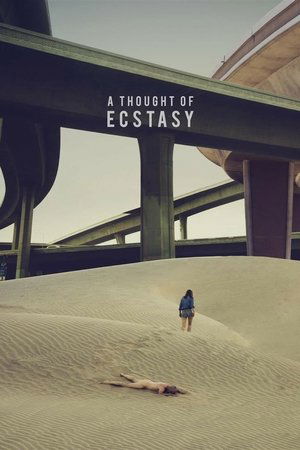
Two young men and two girls on a moonlit night confess to each other in their strange fantasies and loves that go beyond the usual standards.. The impetus to making the film was the book of the same name by the Russian religious philosopher Vasily Rozanov, who died 100 years ago. His treatise was devoted to the study of sexuality and its denial in Christianity. The film was made in the style of experimental films of the 1920s with a non-linear narration full of strange surrealistic images. He is black and white and devoid of dialogue. Filmed on film 16 mm of firm "Svema", released in the USSR. This added to his exoticism. The image was put to the music of Alexander Scriabin “The Poem of Ecstasy” (1907).
A girl gets in a car accident and wanders through the woods, encountering all kinds of nightmarish things.
F.M. discovers that different sonic frequencies induce different patterns of behaviour in listeners, first in his own studio but later in the local "H-Burger" restaurant where the passive muzak appears to be wiping people's emotions.
A woman is plagued by her overactive imagination.
This film was made with the help of a diary, video tapes and a roll of film found in the Lahemaa forest. The owner has been reported missing
Three showgirls playfully mock the audience for attending a projection of an art film.
A lonesome man at the threshold of death finds himself trapped in a place called the Endless.
NYC’s genre-bending Temporary Distortion mines the worlds of Japanese ghost stories and J-Horror in Americana Kamikaze. Inside one of Temporary Distortion’s signature box structures, an East-meets-West psychological horror story unspools, complete with vengeful spirits, impossible physical manipulations, elliptical storylines, nightmarish cinematography and stunning visuals. Temporary Distortion has been making new works that seamlessly blend theater, cinema and installation since 2002. Their work has been presented in the US, Canada, France and Austria.