Megacities is a documentary about the slums of five different metropolitan cities.
An exploration —manipulated and staged— of life in Las Hurdes, in the province of Cáceres, in Extremadura, Spain, as it was in 1932. Insalubrity, misery and lack of opportunities provoke the emigration of young people and the solitude of those who remain in the desolation of one of the poorest and least developed Spanish regions at that time.
DREAMING NICARAGUA is a film about HOPE. It's about love for the dignity and courage of the human spirit that, even immersed in uttermost tragic conditions, fights for a better life, and in this case, with a friendly SMILE. DREAMING is a sensitive and lyrical portrayal of four children living in extreme poverty in Nicaragua. The film takes us beyond their hardships and gives voice to the youngsters, who are surprisingly funny, hopeful, and optimistic. A traveling art teacher provides a safe arena for our four unlikely protagonists to express their innermost thoughts. When painting, the kids momentarily escape the stresses of their reality into a world of dreams and ideas, a stark contrast to their lives outside: a vicious cycle of hunger, child labor, and violence. Despite the extreme circumstances, the children and their families face their lives with an inspiring unity, strength and humor.
A headstrong young girl in Afghanistan, ruled by the Taliban, disguises herself as a boy in order to provide for her family.
Between the city and the countryside, the subtle and modern forms of slavery unfold. A girl waits for the pick-up truck that will transport her to the city. Once there, amidst a never-ending row of walls and fences, she peeks into the entrance to a school. Lined up and in uniform, those girls are not the ones Carmen will join.
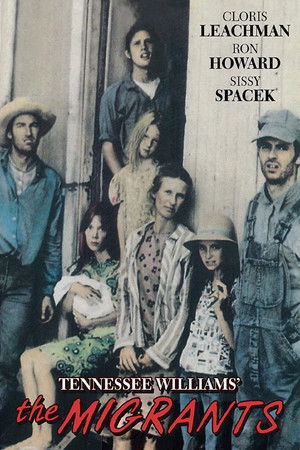
A look at the lives of migratory farm workers, focusing on one family.
The Fall of the I-Hotel brings to life the battle for housing in San Francisco. The brutal eviction of the International Hotel's tenants culminated a decade of spirited resistance to the razing of Manilatown. The Fall of the I-Hotel works on several levels. It not only documents the struggle to save the I-Hotel, but also gives an overview of Filipino American history.
When a worker is found murdered on the construction side, the investigation swiftly turns from things criminal to the political circumstances surrounding the building itself. Widespread corruption and neglect by the builder himself are seen to have brought the situation about. Much of the movie is filmed using hand-held cameras, and the majority of the dialogue is in the difficult-to-understand and very slangy Spanish dialect of Mexico City's bricklayers.
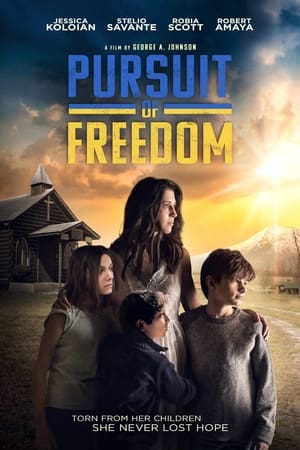
Sarah Jordan, an American living in London in 1984, is married to the son of a wealthy British industrialist. She encounters Nick Callahan, a renegade doctor, whose impassioned plea for help to support his relief efforts in war-torn Africa moves her deeply. As a result, Sarah embarks upon a journey of discovery that leads to danger, heartbreak and romance in the far corners of the world.
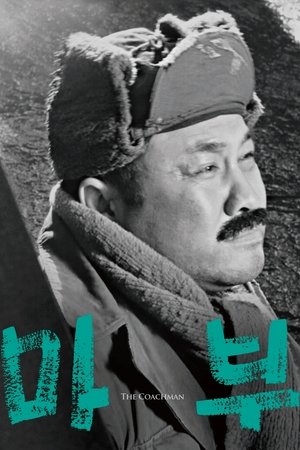
A man tries to raise his two sons and two daughters under some of the most adverse conditions known to man. The father operates a horse-drawn cart, but in a city that is modernizing after the destruction of the Korean War, automobiles are making carts obsolete. The children are experiencing difficulties as well. The eldest son has flunked the bar exam twice and is not hopeful of passing it a third time to become a lawyer. The eldest daughter is mute and married to an abusive husband. The younger daughter tries to pose as a rich university student to move up in life. The youngest son has a penchant for petty theft.
Simple Italian postman learns to love poetry while delivering mail to a famous poet; he uses this to woo local beauty Beatrice.
Told almost entirely without spoken words, this film unfolds in the language of its subjects: Guatemalan Sign Language. In a country where more than 850,000 Deaf people receive little institutional support, silence becomes both a barrier and a form of connection. Through classrooms, homes, and everyday life, the film observes a community building its own means of understanding and belonging. Among those leading the way are Melkin, Dairy, and Jonathan, the teachers, students, and leaders within Guatemalan Deaf Ministries, where the language of hands has become the language of hope.
A poor fisherman and his girlfriend live in a small boat under an open sky for decades. Based on a true story.
A wealthy, self-absorbed Rome socialite is racked by guilt over the death of her young son. As a way of dealing with her grief and finding meaning in her life, she decides to devote her time and money to the city’s poor and sick. Her newfound, single-minded activism leads to conflicts with her husband and questions about her sanity.
A teenaged girl witnesses her widowed mother's attempt to sustain her family.
Born a lower-caste girl in rural India's patriarchal society, "married" at 11, repeatedly raped and brutalized, Phoolan Devi finds freedom only as an avenging warrior, the eponymous Bandit Queen. Devi becomes a kind a bloody Robin Hood; this extraordinary biographical film offers both a vivid portrait of a driven woman and a savage critique of the society that made her.
The armies of Fascist Italy conquered Addis Ababa, capital of Abyssinia, in May 1936, thus culminating the African colonial adventure of the ruthless dictator Benito Mussolini, by then lord of Libya, Eritrea and Somalia; a bloody and tragic story told through the naive drawings of Pietro Dall'Igna, an Italian schoolboy born in 1925.
Stuck in a mining town near Vladivostok in 1947 amongst Soviet exiles and Japanese POWs (Japanese prisoners remained in Siberia for years after the war had ended), the kids have to come up with something to keep them busy. Two friends, Valerka and Galia, play some peculiar, very dangerous games of their own amid the man-made wasteland of Suchan.
In the city of Yokosuka, Kinta and his lover Haruko, both involved with yakuza, brave the post-occupation period with a goal to be together.
Successful model Samira Hashi makes an emotional return to Somalia, one of the most dangerous places in the world and the place she was born. Civil war broke out in 1991, 10 days after Samira's birth, but two years later her family managed to flee the country and she grew up in the UK.Now, as Samira and the war both turn 21, she's going back for the first time to visit the people and places she left behind. The contrast with her safe and glamorous life in London could not be starker as she experiences firsthand the war's effect on a generation of young people growing up in conflict.