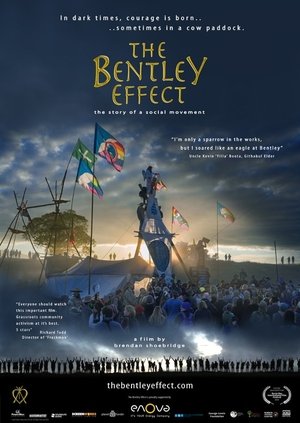
When the Northern Rivers of NSW community found their home being threatened by gas field industrialization, a critical mass of citizens from all walks of life responded to the call.Told through the eyes of the "Protectors" over a five-year period and inter-cut with fresh insight from some of the world's leading social commentators, this feature documentary captures and celebrates what is described as the non-violent 'Eureka Stockade' of our time.
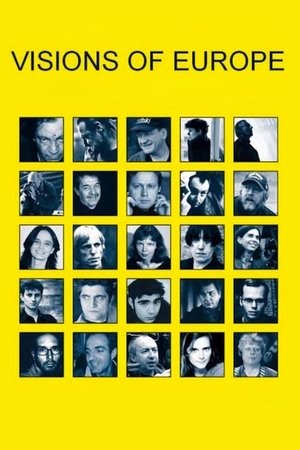
Twenty-five films from twenty-five European countries by twenty-five European directors.
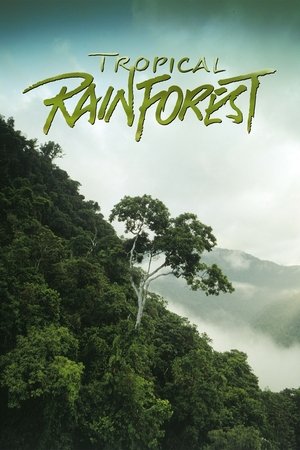
The story of the evolution of tropical rain forests, their recent and rapid destruction, and the intense efforts of scientists to understand them even as they disappear. This film gives viewers a better appreciation of the importance of tropical rain forests on a global scale.
One hour documentary about a special group of pacific islanders. The Lapita Navigators. The proud forefathers of many cultures in the tropical Pacific. They are losing their homes and crops because of sea level rise. Their livelihood and culture are dramatically threatened as the islands they live on are flooding day by day. By chance, a sailor, Steve Goodall, came across them on his travels and discovered they knew nothing about the current forecasts for sea level rise. Once informed they asked for his help. The outcome and conclusion of this story will be told in the context of an event celebrating their living culture, a culture at a cross roads of great importance for all of us.
Made for screening at the U.S. Pavilion at the 1974 World's Fair in Spokane Washington, USA, which had a Native-American environmental theme, MAN BELONGS TO THE EARTH depicts the history of air, water, and earth pollution, and how environmentalists are trying to solve these problems using various technologies.
This documentary film follows farmers and activists fighting together to stop the Indiana Enterprise Center, a mega-sized industrial park planned west of South Bend, Indiana
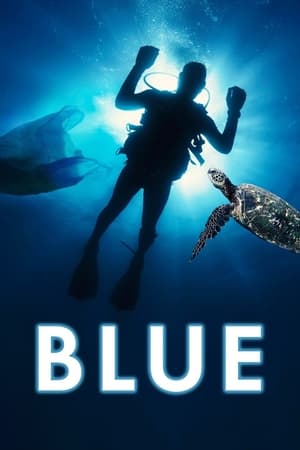
From space, our planet appears as a tiny blue dot in the vastness of space. Blue, because 99% of all living space on Earth occurs in the Ocean. But the seas are under threat. The industrialization that has occurred in the oceans over the last century mirrors the events that triggered mass extinctions on land. As we learn of the ecological crimes occurring worldwide, we also uncover the shocking truths happening on our own shorelines.
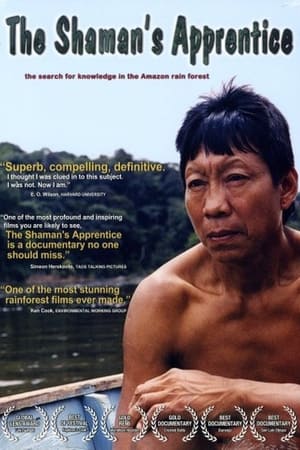
“El Río” aims to illustrate the unique relationship between the indigenous people of the Peruvian Amazon and their land. By drawing attention to and discussing the differences between western ideologies and those found in the Amazon, the documentary increases awareness of the emotional and spiritual effects of environmental resource depletion.
“Let’s Do It!” is a story about how a national cleanup campaign in a small European country grew into an ambitious global environmental movement. The idea spread far and wide, bringing about new wave of civic activism in many countries. However, even good initiatives can hit rough spots. The important thing is not to lose hope. This documentary captures the passion to change the world over the course of 10 years, culminating in World Clean-Up Day in 2018. The movie also showcases how grass-root initiatives can grow and subside and how some ambitions can be defeated only to give rise to even more ambitious ones.
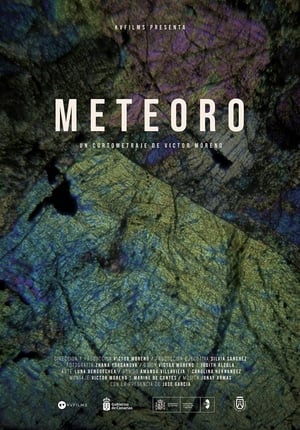
A mysterious rumble splits the sky and reverberates in the middle of the forest. A man delves into its depths to discover its origin and answer the questions presented by the universe.
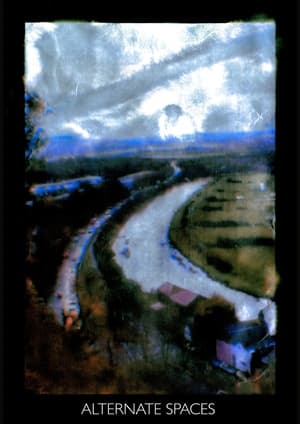
A short documentary on the River Ouse, following it downstream from Lewes to Newhaven, meditating on the surrounding area.
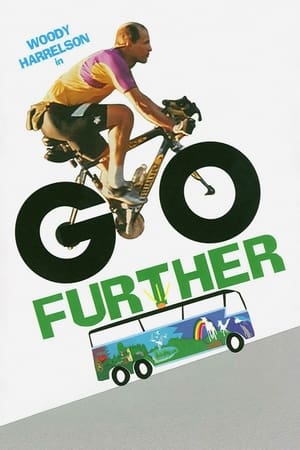
"Go Further" explores the idea that the single individual is the key to large-scale transformational change. The film follows actor Woody Harrelson as he takes a small group of friends on a bio-fueled bus-ride down the Pacific Coast Highway. Their goal? To show the people they encounter that there are viable alternatives.
It's death on an unimaginable scale, when a majority of Earth's species quickly die out. It's called "mass extinction," and it's happened at least five times before. Cataclysms, such as supervolcanoes or asteroids, are thought to cause these events, but some experts believe a manmade mass extinction could be next. Is our planet in trouble? And if so, is there anything we can do to stop the next catastrophic annihilation? Experts are traveling the world, performing groundbreaking scientific detective work to answer these very questions.
In this sequel to the award-winning You’ve Been Trumped, director Anthony Baxter once again follows American billionaire Donald Trump and a cast of other greedy characters who want to turn some of the Earth’s most precious places into golf courses and playgrounds for the super rich. From the historic site of Dubrovnik to the ancient sand dunes and rolling green hills of the seaside town of Balmedie, these tycoons bully local residents, influence governments, ignore local referendums and even meddle in national environmental policies to acquire their latest trophies. With in-depth interviews and Baxter’s expert storytelling, we learn just how devastating these golf courses can be to the surrounding countryside and water tables. In this funny, inspiring and at times heartbreaking David and Goliath story for the 21st century, the locals don’t give in easily. But will their fight be enough to protect their land and traditional way of life?
From the UFC Octagon in Las Vegas and the anthropology lab at Dartmouth, to a strongman gym in Berlin and the bushlands of Zimbabwe, the world is introduced to elite athletes, special ops soldiers, visionary scientists, cultural icons, and everyday heroes—each on a mission to create a seismic shift in the way we eat and live.
Toad People introduces audiences to the stories of people like Steve Clegg who make up a community-led movement to save this threatened species. In different parts of the province, people from all ages and walks of life come together to do whatever it takes to help toads survive. They stop road traffic, collect toads in buckets and carry them across the road, build toad tunnels. In the Kootenays, Debbie Pitaoulis is fighting to protect the toad habitat from logging. The film follows these individuals’ passion for the natural world, their fighting spirit, perseverance but also their struggles, demonstrating that people do not need to be environmental activists or scientists to take action, they just need to be citizens who care.
A documentary on Paul Watson, who takes the law into his own hands on the open seas, confronting, by any nonviolent means necessary, the hunters who indiscriminately slaughter whales, seals and sharks, along with complicit governments and environmental organizations. Written by Anonymous "Pirate for the Sea" is a biographical film of Captain Paul Watson, the youngest founding member of Greenpeace Canada. He organized early campaigns protesting the killing of seals, whales, and dolphins. Greenpeace ejected him for being too much of an activist. Starting his own organization, the Sea Shepherd Conservation Society, he went on to sink illegal whaling ships, stopped Canadian seal hunts for ten years, permanently halted sealing in British Isles, killing of dolphins on Iki Island, Japan, etc. This documentary witnesses his latest campaigns and explores the personal and environmental history of this controversial marine conservationist. Written by R.C.
Humanity’s ascent is often measured by the speed of progress. But what if progress is actually spiraling us downwards, towards collapse? Ronald Wright, whose best-seller, “A Short History Of Progress” inspired “Surviving Progress”, shows how past civilizations were destroyed by “progress traps”—alluring technologies and belief systems that serve immediate needs, but ransom the future. As pressure on the world’s resources accelerates and financial elites bankrupt nations, can our globally-entwined civilization escape a final, catastrophic progress trap? With potent images and illuminating insights from thinkers who have probed our genes, our brains, and our social behaviour, this requiem to progress-as-usual also poses a challenge: to prove that making apes smarter isn’t an evolutionary dead-end.
Off-grid is not a state of mind. It is not about being out of touch, living in a remote place, or turning off your mobile phone. Off-grid simply means living without a connection to the electric and natural gas infrastructure. From 2011 to 2013 Jonathan Taggart (Director) and Phillip Vannini (Producer) spent two years travelling across Canada to find 200 off-gridders and visit them in their homes. -
Olla a pressió: Aiguamolls en perill