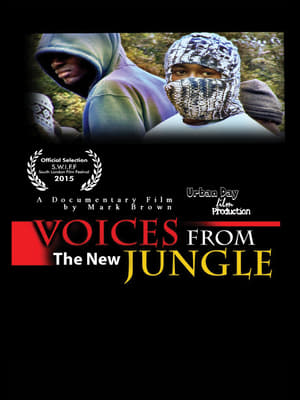
We follow Roach, a 17-year-old ex-junkie and squeegee punk living on the streets of Toronto and Montreal. As part of the filmmaking process, he's been given a camera to document his world. The footage he gets is urgent, because there's a war against squeegee kids. This documentary is from the point of view of the kids themselves, in order to provide alternative voices. Roach's camera is positioned behind "enemy" lines: living in derelict buildings, squeegeeing for money, being hunted by police.
The way of life for people living along the tropic of Capricorn in Queensland 1965. Farming and mining are the main industries in this area of Australia and the only way to get around is by road train, train or plane. The hard way of life for these people is portrayed in this film.
In unison
For Ababacar and Mbaye - two Senegalese immigrants who met and established a great friendship in Buenos Aires - the challenge goes beyond adapting to the customs and living conditions in Argentina, or dealing with the indifference and racism they suffer on a daily basis: both came to an instance of their lives in which they must define a course, and in turn accept that their identities and needs have become more complex. The decision to leave their country was driven by the urgent objective of financially supporting their families, but the stay in Buenos Aires crossed them with new people, new ways of seeing things, and even an economic situation different from that which they found at home. Their different ways of seeing things allow them to see in each other a different version of themselves.
This documentary focuses on immigrant teens between the ages of 12 and 17 who share the story of their migration and their adaption to life in Canada through theatre. Young but wise, these children describe their experiences with emotion and authenticity.
Bobbing around on Mediterranean waters aboard the Ocean Viking, aid workers from the French relief service SOS Méditerranée gaze at the horizon. Is that a rubber dinghy in the distance, or is it garbage? The organization sails up and down the Libyan coast looking to pick up refugees in boats. On board is a 30-strong team ready to offer help and support refugees with their asylum applications.
Leaving her girlfriend Kat in the car Rajinder enters her house to announce to her parent's she is gay. But before she can tell them her parents make an announcement of their own.Should she do as her parents wish or disobey them and dishonour the family?
A documentary about Colorado fly fisherwomen and their relationship with the river and its inhabitants, the sport, and their identities.
A short documentary chronicling the personal lives and narratives of Thai "ladyboys," who are born men but present themselves as women, living openly in Thai society. The film interviews ladyboys from all walks of life-- performers, filmmakers, activists-- to learn what it's like to live in a society with visible gender fluidity, and to explore if Thailand is really as open to and accepting of sexual diversity as it seems.
Silent archival footage of Jewish children during the Holocaust, accompanied by music and poetic narration. A haunting portrait of a future generation lost to cruelty and genocide.
On the coast of the Arctic Ocean of Chukotka live people cut off from the world. Their life revolves around hunting walruses and whales and protecting villages from bears coming from the tundra. This turns the film into a reflection on death. Marine animals become the food of people, animal leftovers are used to feed arctic foxes on a fur farm, human cemeteries become prey for bears. It seems that all the inhabitants of these places are involved in the cycle of food and death. The film departs from the usual rhythmic structure of cinema, being built on the principle of a shamanic ritual, a meaning-forming event for northern peoples.
A look into the world of sustainable fashion with Emma Gorton-Elicott the owner of Fruit Salad, a Bristol based independent sustainable & slow fashion business. Emma discusses the difference between slow and sustainable fashion and what you can do to curate a sustainable wardrobe.
A look at the cinematographers, editors, musicians, production designers and other talent of the Dirty Harry series.
Behind the Smoke Screen
Edited by famed filmmaker Kathleen Collins, Statues Hardly Ever Smile follows a group of middle school children during a six-week project at the Brooklyn Museum, where they collectively discover and respond to the Egyptian collection. With narration by a member of the museum’s education department, we witness the group’s daily exercises and reflections as they create a theatre piece centered on the relationships developed with the objects and each other.
A Liberian refugee SAM REAYAH and his family have been separated for five years and live in uncertainty waiting for family reunion. While Sam and his younger daughter Ruth continue their lives in Buduburam Refugee camp in Ghana, his wife Decontee and his older daughter Joyce have already started a life in Rochester, USA. The film explores the idea of home. Sam's family had a home in Liberia, but they had to give it up. They were forced to build homes elsewhere. They built a home in Ghana. They build a home in The United States. They built homes together, they build homes separate of each other. But which home does the heart want?
In 2012, Stephen Vaughan and Kay Ferreter are invited to address the congregation at St. Joseph's Redemptorists Church in Dundalk, Ireland for the Solemn Novena Festival. In a powerful speech, the pair describe their experiences being gay and lesbian in Ireland, feeling excluded by Catholic doctrine, and the importance of a more inclusive church.
"Smoke Signals" follows the volunteers at High Point Lookout, one of the last remaining fire lookout towers in California. Alternating between the daily duties of the fire lookouts, and a series of profiles on wildfires that have traced their history, "Smoke Signals" questions the role of the fire lookouts in the face of rapidly advancing technology and climate change.
When chimps go to war...
A brief history of Talking Heads (and how they got here!)