This work is a consideration of the vision expressed by "dot".
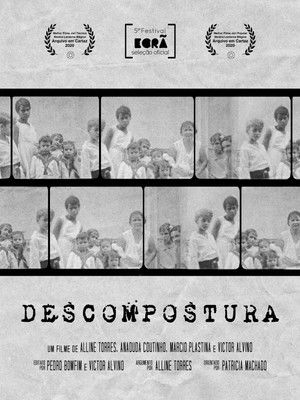
Discomposure is an experimental movie made of moving images of women, while they worked and were filmed under an aesthetic of fracture. Her bodies were positioned by the white middle classes men's eyes as if they were parts that served like props, support, and of spectators of lives which depended on these women. The movie disorganized this visual aesthetic. It did to see that, between who was filming and those entered, marginally, the scene, there was the black female look that stared at the camera, as an affront, so showing affirmation, contestation, and constraint.
The world shifts subtly while silent watchers already understand.
A political assassination leads to division and chaos.
A mathematical play on one repeated movement. It imparts a sense of possibilities: that something simple can produce complex and unexpected patterns. As with an atom, the variety of possibilities from a base movement is potentially infinite.
A short by Steven Soderbergh described as “intense sci-fi homage to Godard.”
Sangria is intended to discuss the women's role in Brazil since colonization until nowadays, once the females have been silenced and battered for ages. It's formed by 28 poems like a menstrual cycle. The poet, Luiza Romao, has recorded each poem in a studio and has invited 28 different female-artist to performing them. The guests came from distinct arts (photography, music, danse, grafitte, theater) and each girl has proposed an intervention. All the process was independent.
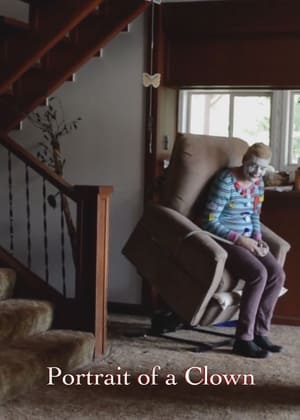
A portrait of the performance artists in colorful clothes and painted faces whom have transitioned from a symbol for joy and laughter, to horror and terror, to melancholy and sadness.
Lucy Harmon, an American teenager is arriving in the lush Tuscan countryside to be sculpted by a family friend who lives in a beautiful villa. Lucy visited there four years earlier and exchanged a kiss with an Italian boy with whom she hopes to become reacquainted.
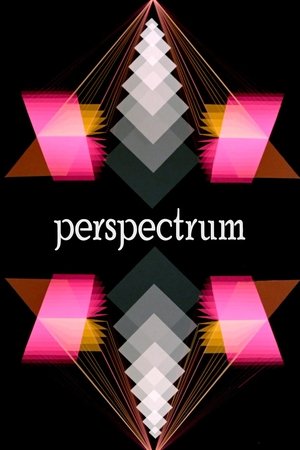
This is a didactic film in disguise. A progression of brilliant geometric shapes bombard the screen to the insistent beat of drums. The filmmaker programmed a computer to coordinate a highly complex operation involving an electronic beam of light, colour filters and a camera. This animation film, without words, is designed to expose the power of the cinematic medium, and to illustrate the abstract nature of time.
This animated short is a visual representation of Goethe's poem, The ErlKing that uses sand-on-glass animation set to the music of Franz Schubert. The moving images, resembling woodcuts, capture the haunting, nightmarish quality of the tale of the ErlKing who steals and kills a little boy.
Dajung, beloved by teachers and classmates, hides her dream to become an author. One day, Dajung meets a new girl – Seojung, who has won an award at a writing competition in which Dajung had no success. As she gets to know more and more about Seojung, Dajung has mixed feelings of admiration, jealousy, and self-doubt. A school writing competition is coming up. Dajung longs for Seojung’s world.
Extracorpus
A Lynchian depiction of self-transformation in the social media age. Steeped in saturated colour, unnerving cinematography and bold sound design, this chamber piece depicts a young woman’s confrontation with impostor syndrome and racialised beauty standards.
In the woods, a young woman and man scuffle as they fight for life. Gently lit and accompanied with a soundtrack of soaring strings, this film by Jessie Oldfield and Adam Murfet explores vulnerability, connectedness and a renewed sense of self among the autumn leaves.
A teenage boy, Jimmy, goes through his day-to-day life, preparing for a school dance with his friends. Unexpectedly, a mysterious black hand slowly takes from all aspects of his life, descending his life into a world of confusion and dread.
Emergence Collapse, the collaborative project of Berlin-based artist and filmmaker Rainer Kohlberger and Viennese electronic music producer Jung An Tagen is nearly beyond description (and perception): An assault on the senses that is at once euphoric and harrowing, at once completely alien and uncannily evocative, their work is perhaps the perfect artistic manifestation of existential angst. Jung An Tagens frighteningly frenetic and earsplitting dissonance is complimented perfectly by Rainer Kohlbergers constantly evolving, neon-tinged visual freak-out. The result is relentless and painfully overwhelming, but like a horror movie, Emergence Collapse demands – and ultimately rewards – your attention.
A 25-year-old former cult member seeks out his family in a closed world of neon crosses, deadly alcoholism, and abuse.
In this animated short, simple geometric forms as thin and flat as playing cards constantly form and re-form to the sound of the koto, a 13-stringed Japanese instrument.
A woman treads on a vague path of reality and dream