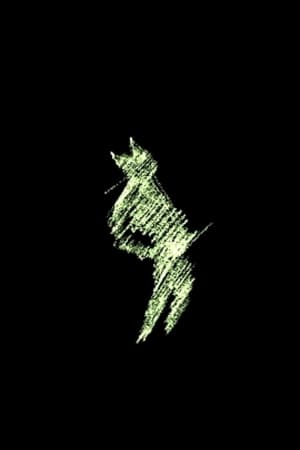
Writes Ando, "Oh! My Mother was the first work I made using a newly bought 16mm camera I had purchased with the writer Shuji Terayama in Paris. This piece was selected for the Oberhausen International Film Festival. In 1969, there were, of course, no video cameras like ones we see now, and color TVs were only found at broadcast television studios. I had just been employed at the TBS (Tokyo Broadcasting System), and I often snuck into the studios after hours to experiment with the equipment. Oh! My Mother was made using the feedback effect, which is produced by infinitely expanding the image by looping the video."
Distorted memories, hidden rituals. The journey of a soul returning to its essence through a silent funeral.
A woman on the run from the mob is reluctantly accepted in a small Colorado community in exchange for labor, but when a search visits the town, she learns that their support has a price.
A sitting man listens to his thoughts, but can't catch any of them.
This fragmented body… usually manifests itself in dreams when the movement of the analysis encounters a certain level of aggressive disintegration in the individual.it then appears in the form of disjointed limbs, growing wings and taking up arms for intestinal persecutions.
The world is getting more modern, people are starting to try to use metaverse technology. This gave rise to new ways of having fun, worshiping gods, and even strange ways of living.
in my darkest moment, fetal and weeping, the moon tells me a secret, a confidant As full and bright as I am, this light is not my own and a million light reflections pass over me, the source is bright and endless. She resuscitates the hopeless. Without her, we are lifeless satellites drifting.
You and AI at the end of the world.
The author's erotic imagination is mixed between desire and magazine clippings, and the trade of collage becomes a ship that travels from outer space to the city itself.
The gaze in autocorrelation.
Twenty-four images of a camera running in the woods, a moonlight and a cemetery through improvised gestures, mechanical abstraction and saturated colors
Ordinary people of both sexes, and of varying ages, races and ethnicities, tell stories that sound familiar. But each is a construct to plumb reality in a considered, theoretical, and, ultimately, playful fashion, as Delson continues the filmic experimentation begun during her collaboration with Jill Godmilow an the genre-bending Far from Poland.
The Garden is an experimental work that describes the inner worlds of two sisters manifested through their connection with the garden outside their home. While mourning the passing of their close relative, the sisters encounter a man in the garden, evoking a sense of mortality in one and awakening the sensuality in another. The film was directed by Ong Ann Meng (better known as Meng Ong), who went on to win numerous awards for his short films at the Singapore International Film Festival between 1991 and 1993. His first feature, Miss Wonton (2001), won the FIPRESCI Prize at the Locarno International Film Festival.
Holding Space explores the lived experiences of Burmese immigrants in Singapore under the gaze of neighbours in public flats. With a focus on spatial arrangements and housing exteriors, the experimental film challenges the ways architects visualise and instrumentalise their ways of seeing, seeking to hold space for subjective experiences and the subtle yet persistent influences on our domestic interiors.
state. is an exploration of liminal spaces, physical and emotional, from the perspective of a teenager. Unravelling through a desktop screen, the film navigates between different states: physical and digital, reality and whimsicality, and childhood and adulthood.
"Postcolonial Queen" is a video poem and collage film that satirizes Hong Kong's complex identity through dance, city visuals, and a reenactment of Queen Elizabeth II's visit. It captures nostalgic memories shaped by colonial history, using bamboo scaffolding to represent societal changes and mirrors to reflect surface-level modernity, hinting at deeper identity questions. The narrative weaves together collective memories and personal stories, contrasting the historical event of the queen's visit with a young woman's reflections on her past relationship. This intermingling of narratives invites viewers to explore the fluidity of identity and the evolving essence of Hong Kong amid tensions between progress and tradition.
TAMAN HUTAN Chapter Four: The Wound Response focuses on the rubber craze of the 20th century through both archival documentation of wages and an interview with Cek Anuan on his grandfather Rasimin who worked with English naturalist Henry Nicholas Ridley. Focusing on the Singapore Botanic Gardens as the site of interaction between colonists and labourers, the film reveals the wounds of those erased from colonial records but who remain inscribed within nature itself.
Proximities focuses on the trope of the Malay Boy found in the works of Singaporean artist Cheong Soo Pieng (b. 1917-1983). It attempts to locate the Malay male in art history while unpacking underlying systems of power that have shaped and naturalised the understanding of difference.
Marianne tells Paul that she is leaving him for Mathieu. Then, Mathieu's wife comes to see Paul and ask to help her to take revenge of the infidels. For that, she says they have to simulate to be in love to each other. Paul agrees to play the game ...
Ocean was a girl and now just a paper head. Her brother reminisces the times they shared during their childhood, a sorry experience that birthed emotional scars.