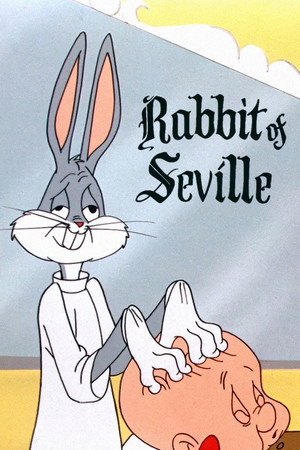
Behind the Hollywood Bowl stage which is playing the opera The Barber of Seville, Bugs Bunny flees into the backstage area with Elmer Fudd in close pursuit. Seeing his opportunity to fight on his terms, Bugs raises the curtain on Elmer, trapping him on stage. As the orchestra begins playing, Bugs comes into play as the barber who is going to make sure that Elmer is going to get a grooming he will never forget.
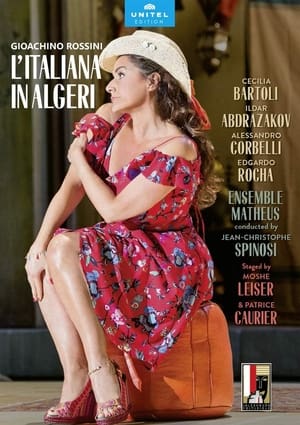
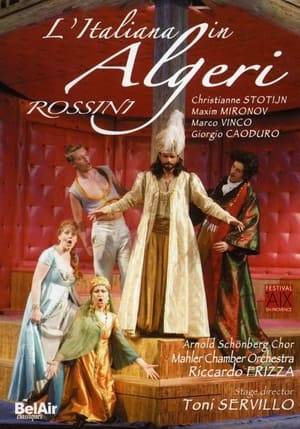
Isabella is a strong, independent woman who has no intention of giving in to the clumsy advances of the powerful Mustafà. In this production by Mosh Leiser and Patrice Caurier, which plays on preconceptions about culture clash, Mustafà is no longer a handsome Ottoman, but a shady gangster who traffics in electronic goods in the port of Algiers. Make of it what you will...
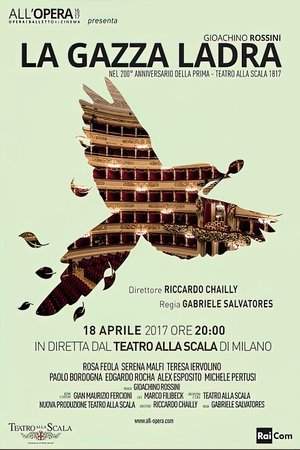
Rossini: La Gazza Ladra - Teatro alla Scala
Live performance, Festival d'Aix-en-Provence, July 2006. 'L'italiana in Algeri' (English: 'The Italian Girl in Algiers') is an operatic dramma giocoso in two acts by Gioachino Rossini to an Italian libretto by Angelo Anelli, based on his earlier text set by Luigi Mosca. It premiered at the Teatro San Benedetto in Venice on 22 May 1813. The music is characteristic of Rossini's style, remarkable for its fusion of sustained, manic energy with elegant, pristine melodies.
A silent black-and-white comedy inspired by the fizzing rollercoaster of Largo al factotum - the familiar aria from Rossini's The Barber of Seville - featuring the young apprentice hero and a recalcitrant, increasingly monstrous hairball.
Tom, famous baritone Signor Thomasino Catti-Cazzaza, enthralls a concert audience with his rendition of "Largo al factotum", from Rossini's "Il Barbiere di Siviglia", while Jerry strives for sleep under the stage.
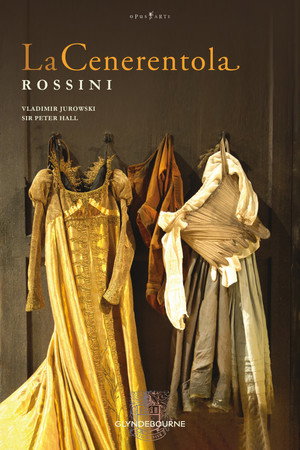
Figaro uses every trick he can muster to outwit Dr Bartolo and ensure his master wins his chosen bride. He meets his match in the would-be-bride Rosina, who has schemes of her own. Glyndebourne favourite Danielle de Niese adds the crafty Rosina to her growing list of bel canto heroines. Directed by Annabel Arden with playful energy springing from Rossini’s joyous music, this new production heralds the welcome return of a masterpiece not seen at Glyndebourne Festival since 1982.
Rossini: L'inganno felice - Teatro Fraschini di Pavia
Bestiario
The further adventures of Twain's most beloved fictional characters of Tom Sawyer and his friend, Huckleberry Finn.
A popular writer looking for a peaceful environment in which to finish his latest novel gets an unexpected surprise upon arriving at the remote summer home he once shared with his ex-wife.
A Spanish theatre company is rehearsing Shakespeare in the original style using young men to play the women's roles. Complicating their endeavors is the previously straight director's infatuation the new young man whose charming everyone except the slightly older young man who he's replacing. When the young man on the way out decides to settle the score with the young man on the way up, he draws on what he's learned in the theatre. Enter Iago.
Pasca is a sparring low hours without no aspirations in life, who's working at a gym and lives with her disabled brother. His best friend is an alcoholic former boxer. He wears a gray life until the moment he meets a young teacher girl with a very optimistic view of life, which makes him rethink how to live life.
This film is about what the routine of everyday life can do to the human mind and psyche. It also reflects on the importance of the choices we make and how limited these choices are in the first place. The plot evolves around a family of four. They live in the suburbs, in a strange villa that appears, through a complex game of mirrors, to be more like a piece of installation art than a real house. The main character, who hardly appears on screen, is the son, a man in his thirties. Suffering from asthma and eczema since childhood, he uses his condition to manipulate his parents and his sister. Thus the existence of the terrorized family turns into an endless ritual of attempting to satisfy his whims, and always on the alert for yet another one of his “health crises”. Las Meninas resembles the scattered pieces of a puzzle. It is up to the viewer to assemble them in order to form his very own picture – something that makes the film itself personal and unique.
Complex and intriguing Turkish drama about revenge killing. A young woman who went into hiding from her family talks about her life in a documentary. An uncle who sees the film in Germany won't let it rest .
A boy and a girl fall in love. But on the night they met, she was drunk and stoned and he took advantage of her. Although she does not remember almost anything from that night, she remembers something that may compromise their relationship.
Mamay draws on traditional Ukranian and Tatar folktales for its Romeo and Juliet-like love story and parable about chivalry and the struggle for freedom. Hundreds of years ago, in the wild steppes of Crimea that form an uneasy border between East and West, Europe and Asia, nomad and farmer, the proud Cossack Mamay falls in love with the Tatar beauty Omai. The title, like the storyline, holds a variety of different meanings taken from different cultures. In Turkic languages, it means "no one," but it was also the name of a famous Mongol conqueror, the great grandson of Ghengis-Khan. In Persian legends, mamay literally means "the spirit of the steppes. "
In a seedy brothel, their frustrations parade: A poet who has never published, a revolutionary who came late to history, a provocative angel, a bureaucrat with delusions of a dancer, a greedy Chinese man and his timorous wife, Monica, a prostitute with low professional esteem, a group of prostitutes of dubious sensuality and, finally, a priest with a stench of holiness and another with redeeming instincts. But a stranger with the air of a princess appears, and upsets the balance of the establishment.
Through a period of five days, the story follows intertwined characters who live in false serenity and rather chaotic general order.