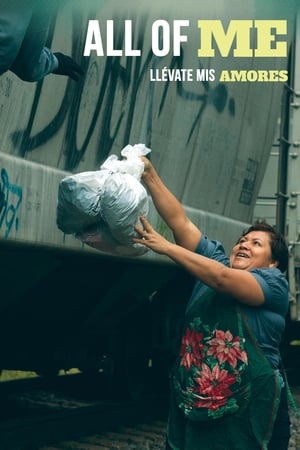
"Take my love" is a documentary film about "Las Patronas", a group of women who daily cook, pack and throw food to the migrants riding the "Beast" train.
Is the solution to Switzerland's future to integrate Germany into the confederation? After all, like Michael Ringier, CEO of the Ringier media group, says, blithely ignoring all minorities, we're very close in culture and language. Oskar Freysinger takes out his guitar and sings his answer. Politicians from French-speaking Switzerland and Ticino think expanding will help the country survive. The former German foreign minister thinks the two countries' traditions are too different. The banker Oswald Grübel is worried about Germany's debts, although he'd be prepared to take over its assets. With serious interviews interspersed with gags (boat people on Lake Constance, the last Habsburger as a peasant), Giaccobbo gathers off-the-cuff reactions which reveal a lot about the different mentalities. The movie laughs at preconceived notions, redefines neutrality and reflects on what designates a nation. Switzerland, which loves to teach the world a lesson, will soon helvetize the planet, oder?
A documentary picture about Finnish Americans. A husband, wife, and a daughter are travelling in the "Wonderland of the West" meeting many Finnish immigrants.
Young, inexperienced members of the Dutch Boarder Patrol undergo an intensive training on escorting refused asylum seekers to their homeland.
Artistic director of the National Theater Eric de Vroedt writes and directs a performance about his own mother Winnie, who passed away in 2020. This piece, titled The Century of My Mother, is a family story about the migration from the Dutch East Indies to the Netherlands. It is De Vroedt's way of examining the relationship with his mother and not having to say goodbye to her yet: 'I can let her live on stage, but when the curtain falls, when the play is completely finished, then she is really dead'.
Twenty-five films from twenty-five European countries by twenty-five European directors.
A Liberian refugee SAM REAYAH and his family have been separated for five years and live in uncertainty waiting for family reunion. While Sam and his younger daughter Ruth continue their lives in Buduburam Refugee camp in Ghana, his wife Decontee and his older daughter Joyce have already started a life in Rochester, USA. The film explores the idea of home. Sam's family had a home in Liberia, but they had to give it up. They were forced to build homes elsewhere. They built a home in Ghana. They build a home in The United States. They built homes together, they build homes separate of each other. But which home does the heart want?
The theater group Valendas from the Safiental in the canton of Grisons adapts Friedrich Dürrenmatt's grotesque novel.
Fearing for their lives, Afshin, Alain and Patricia fled their country, without their parents, when they were only children. They had to start all over here in Canada in the hope of a better life. Combining real shooting and animated cinema, "Alone" bears the imprint of hope: how does a child manage to rebuild himself in a new country, when he has left everything behind?
A computer screen, images from the four corners of the world. We cross borders in one-click while another trip’s story reach us in bits, through text messages, chats, phone conversations, and an immigration office’s questionnaire. It’s the journey of Shahin, a 20-year-old Iranian boy who, fleeing his country alone, lands in Greece, then winds his way to England where he claims asylum.
90's era home videos of a Mexican father starting a new life in the United States
Boulders in Valais presents the canton of Valais in Switzerland, its bouldering climbing spots and some of its historical and current actors and driving forces including Lucien Abbet, Benoît Dorsaz, Fred Nicole, Dave Graham... Frédéric and François Nicole gives us spectacular demonstrations of this sport, showing us routes like "Radja", the world's first 8b+. A topo-video part contains 28 climbing sites with a geographical map, and more than 160 video sequences for as many chosen blocks... more than 2h30 of climbing.
The film focuses on the exciting life journey of Swiss writer Katharina Zimmermann. She follows her husband on a mission to the jungle in Indonesia where she raises their four children and five foster children and lives through the military coup. Back in Switzerland Katharina discovers her voice and finds her path. Now, at eighty, she is writing her life story. Yet suddenly she faces another battle because her publisher is threatening to let her go.
The film tells of the radical life-search by the Swiss writer Paul Nizon, born 1929 in Bern, Switzerland, who became what “he was meant to be” in Paris. Now 90-year-old, Paul Nizon grants insights into his life and work in a self-ironic, direct manner. The intimate portrait of a great literary outsider emerges, for whom the risk of life and the risk of writing merge into one and the same work of art.
The story of three Turkish men. They all grew up in Switzerland and all got deported after various criminal offenses.
Robert Kongaika runs from his family to join the military and becomes the first Tongan US Air Force Colonel. This is the true story of the island traditions, faith, and family that made him into the father he is today.
What does it mean to belong to a place, a country? In a south Tel Aviv elementary school, that question is addressed head-on by a fourth-grade class and their teacher. The children are asylum seekers whose families mostly do not have a legal status in Israel, yet learn, sing and play in Hebrew all the while examining their identity and sense of belonging.
An intimate close-up on Aleya, a trans woman who has recently moved from Cairo to germany right after her transition. This portrait marks her first year as a woman, having to cope with the loss of loved ones, family disownment, hormonal and psychological turmoil. She shares intimate stories, anecdotes and poems that document her transition.
The Blocher Experience tells the story of Switzerland’s most controversial political leader. It also chronicles the face-to-face encounter between a film-maker and a man of power, through a year of exclusive, up-close interviews and access to his private life.
It is winter at an emergency shelter for the homeless in Lausanne. Every night at the door of this little-known basement facility the same entry ritual takes place, resulting in confrontations which can sometimes turn violent. Those on duty at the shelter have the difficult task of “triaging the poor”: the women and children first, then the men. Although the total capacity at the shelter is 100, only 50 “chosen ones” will be admitted inside and granted a warm meal and a bed. The others know it will be a long night.