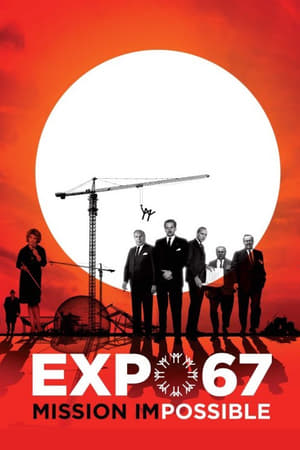
This documentary let us to relive the challenge of the men behind the 1967 Universal Exposition in Montréal, Canada. By searching trough 80,000 archival documents at the national Archives, they managed to bring light on one of the biggest logistical and political challenges that were faced by organizers during the "Révolution Tranquille" in the Québec sixties. Includes the accounts of the Chief of Advertising Yves Jasmin, and businessman Philippe de Gaspé Beaubien.
La Coupe Stanley à Montréal en 1993
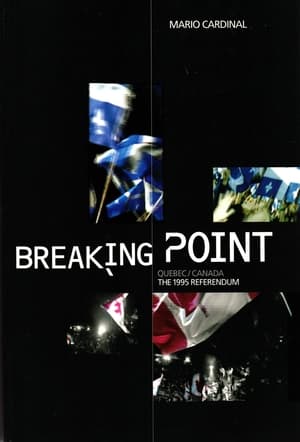
BREAKING POINT brings viewers back to those tense, critical moments when Canada's future as a country was at stake.
Fredy
This short film is a series of vignettes of life in Saint-Henri, a Montreal working-class district, on the first day of school. From dawn to midnight, we take in the neighbourhood’s pulse: a mother fussing over children, a father's enforced idleness, teenage boys clowning, young lovers dallying - the unposed quality of daily life.
Gilles Groulx's first film shot in 1955 with a camera borrowed from his brother and edited during his spare time when he worked as an editor at the Radio-Canada news service a few years before he joined the NFB. Silent film, presented as its author left it, where the soil and the dialectic of Groulx's work are already there: documentary realism, the social space to be explored, daily life, the relationship between individual and society, social disparities, the consumer society, seduction and happiness.
This documentary focuses on immigrant teens between the ages of 12 and 17 who share the story of their migration and their adaption to life in Canada through theatre. Young but wise, these children describe their experiences with emotion and authenticity.
Young Chinese-Canadian Susan Yee gives a tour of Montreal.
This short documentary shows the reactions of European immigrants as they land in Halifax at the beginning of the 1960s. From the port, we follow them on a snowy journey by train to Montreal.
In 1994, the Montreal Expos held the best record in baseball until the mid-August strike and the entire post-season was cancelled. The team never found success again, and in 2004, the franchise was forced to leave Montreal and move to Washington. This film provides access to powerful behind-the-scenes footage – ranging from the players’ bus ride to the stadium, to their emotional reactions stepping onto the field, to the Montreal fans who have never forgotten baseball’s best team in 1994. Interviews with media who followed the team’s season and discussions with former coaches and players will paint both a thrilling and heartbreaking picture of the influential ‘94 Montreal Expos – a groundbreaking squad whose legacy lives on in Montreal
This feature documentary studies the different faces of Montreal’s Greek community in 1969. Instead of giving voice to the businessmen and well-integrated few, the film highlights the cultural and economic problems encountered by new immigrants and their families.
On March 15, 2020, Montreal sees appearing on a wall, written in black letters on white paper "Stop feminicides". It is at this moment that the Collages Feminicides Montreal collective sees the light for the first time. Now the streets of the city are carpeted with their words. Today, after the 17th feminicide, they will continue to fight and stick, until this violence stops.
Prohibited, abandoned, and unexplored sites are hidden and sealed in Montreal. Entering defies the law, danger, and death. The urbex community is an even better-kept secret. Enter into this universe at your peril.
Show Girls celebrates Montreal's swinging Black jazz scene from the 1920s to the 1960s, when the city was wide open. Three women who danced in the legendary Black clubs of the day - Rockhead's Paradise, The Terminal, Café St. Michel - share their unforgettable memories of life at the centre of one of the world's hottest jazz spots. From the Roaring Twenties, through the Second World War and on into the golden era of clubs in the fifties and sixities, Show Girls chronicles the lives of Bernice, Tina and Olga - mixing their memories with rarely seen footage of the era.
Alanis Obomsawin turns her lens to Le Patro Le Prévost, a recreational centre in the Villeray quarter of Montreal. On the eve of its 80th anniversary in 1989, Le Patro is a vital focal point in the predominantly working-class neighbourhood. Beloved by the many generations who use the facilities and partake in activities daily, Le Patro encourages a strong sense of togetherness through principles of cooperation, respect and sharing. Obomsawin presents a tender portrait of a neighbourhood of diverse residents and the community centre many of them consider a second home.
This short film recreates the experience of Sylvie, a battered woman who seeks shelter in a Montréal transition house. Faced with the threat of violence, loneliness, the lack of financial resources or information about services, the victim is often understandably reluctant to seek help. Emphasizing the importance for women of speaking out, the film also points out the role of the transition house in putting victims of abuse in touch with appropriate legal and social services.
Documentary, poetry and essay rolled into one, this compilation of stockshots and clips sourced from NFB productions of the '50s and '60s offers a singular lesson in Montreal history - its famous figures, symbolic places, and ordinary citizens. Without commentary, the film moves from the red light district to Jean Drapeau, the Jacques-Cartier market, department stores downtown, textile factories, and the construction of Place Ville-Marie. We meet Geneviève Bujold, Oscar Peterson, Monique Mercure, and Igor Stravinsky. We hear Raymond Lévesque, Jean Drapeau, and René Lecavalier.
Made shortly after the referendum on Quebec's independence was held, this documentary illustrates what the politicians' promises were and how the population did not really care nor truly understand what was really at stake, even though just about everyone had an opinion on the subject.
A feature-length documentary portrait of Québécoise painter Johanne Corno, who has lived and worked in New York City for more than 20 years. Ignored by the art intelligentsia in Québec, she settled abroad to escape that creative constraint, and built an enviable international career. Today, she casts a lucid eye on her work and describes the resources she draws on to survive in the jungle of the contemporary art world.
Monsieur