Autodeclarado
Upon Canada's entry into World War II, the RCMP rounded up thousands of people it considered fascist sympathizers. Among them, 700 Italian-Canadians were held for up to three years in internment camps. None were ever charged with a criminal offence.
The explosive documentary from Black Channel Films daring to ask the question "Is it still just racism or is it a race war?" NOW IS THE TIME TO ASK IS IT STILL JUST "RACISM" OR IS IT A RACE WAR? RACE WAR IS THE FIRST DOCUMENTARY IN HISTORY THAT EXAMINES EVERY LEVEL OF AMERICAN SOCIETY TO EXPLORE THE MOST EXPLOSIVE ISSUE FACING AMERICA ALL OF OUR YESTERDAYS . . . AND TOMORROW.
A 1973 documentary film from the Central Office of Information about the Liverpool and Bootle Constabulary.
In 2003, actress Marie Trintignant died after being beaten by her partner Bertrand Cantat. The singer was sentenced to eight years in prison. Once released, Cantat attempted to return to the spotlight. It was an almost impossible comeback, especially since his first wife, Kristina Rady, committed suicide under mysterious circumstances. Who is Bertrand Cantat really? And how does he live today?
How do white South Africans deal with their fears of crime and violence? Like crocodiles, some survive without evolving, living with their fears. Others make fear their friend and evolve in ways you'd never imagine.
Elliot Page brings attention to the injustices and injuries caused by environmental racism in his home province, in this urgent documentary on Indigenous and African Nova Scotian women fighting to protect their communities, their land, and their futures.
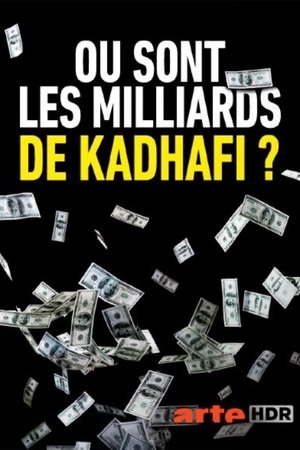
In life, the Libyan leader ruled with an iron fist for 42 years and treated Libya's wealth as his own. He died the richest man on the planet with a fortune of $150 billion. A dictatorial leader in life, the spell of Gaddafi's money remained in place after his death, triggering a ruthless race to find his missing billions. Two journalists pick up the trail of a mysterious $12.5 billion in cash, flown out of Libya in the dead of night just months before Gaddafi's demise.
In 1942, more than 8,000 Jews were arrested on 16 and 17 July and sent to the Vélodrome d'Hiver sports center in the 15th district, a stone's throw from the Eiffel Tower, before being deported. The expression "Vel d'Hiv round-up" has become part of our collective memory, to the point of becoming the main memorial reference point for France during the dark years. Based on research carried out in unpublished or rarely explored archives, this film retraces the history of this roundup as experienced by hunted Jews and police trackers, from its planning in the Vichy offices to its hour-by-hour unfolding in the streets of Paris.
October 2003, Alma and Lila Levy are excluded from the Lycée Henri Wallon in Aubervilliers solely because they were wearing a headscarf. What follows is a deafening political and media debate, justifying in most cases the exclusion of girls wearing head-scarves to school. February 2004, a law was eventually passed by the National Assembly. "A thinly veiled racism" is about this controversy since the affair of Creil in 1989 (where two schoolgirls were excluded for the same reasons) and attempts to "reveal" that maybe what hides behind is the desire to exclude these girls. This film gives them a voice as well as others - teachers, community activists, feminists, researchers - gathered around the group "A School for You-All" fighting for the repeal of this law they consider sexist and racist ... This movie was censured in Septembre 2004 in France.
Born June 8, 1964, Frank Matter films four "twins", born the same day as him, but in other latitudes. Interweaving their life stories with rich archival material, the filmmaker links these Parallel Lives with elements from his own biography, to compose a fascinating fresco where intimate trajectories are part of the advent of the global village.
In the collective imagination, international adoption evokes images of children being saved from a life of destitution in poorer countries by being adopted by families in Europe or America. But the reality that has emerged is one of child trafficking, falsified documents and governments around the world turning a blind eye.
A modern and fast-paced cinematic documentary that aims to trace, understand and demonstrate the historical and unwavering links between the United States, Bordeaux and its wines. An investigation like no other, Eastbound Westbound lets the viewer understand how this Franco-American friendship around Bordeaux wines had its starting point in the 18th century around the greatest connoisseur of fine wines and lover of Bordeaux, the American Thomas Jefferson, US Ambassador to Paris and third President of the United States. To better demonstrate Thomas Jefferson’s legacy, this intimate relationship between the two winegrowing continents is illustrated through interlinked portraits of wine families, from many and varied backgrounds but all sharing a real passion for wine. Leading players in their field, they produce some of the best wines in the world.
The documentary Schwarze Adler (Black Eagles) lets black players of the German national football team tell their personal stories for the first time. What road did they take before they got to where we cheer for them? What hurdles did they have to overcome? What prejudices and racist hostility were they exposed to – and what was it like in the past, what is it like today?
What if this next generation could transcend racism? One year, 12 teens, on a remarkable journey to face racism and white privilege, have the conversations most of us are too afraid to have. Once they push through naivete, guilt and tears, what they learn may change us all.
Aiming to expose the extreme mental and emotional demands of being a police officer, After The Sirens is an intimate documentary that unmasks how mental health is perceived and addressed in the police force from first hand accounts. The film invites viewers to consider the mental resilience required to be an officer, with conversations surrounding trauma exposure, emotional labour, multiculturalism and personal experiences of coping. Through displaying the force’s involvement in a recent traumatic case, as well as the trauma encountered throughout their individual careers, the documentary offers the opportunity to go inside the policing mind.
Benito Mussolini: Anatomy of a Dictator
United States, September 1st, 2016. American football player Colin Kaepernick kneels during the national anthem, protesting police brutality against black people. Part of the population regards the gesture as an unacceptable affront to the flag. Later, he loses his place on his team. Today, however, he is considered by many as a true hero.
An American story. Traces the career of Joe Louis (1914-1981) within the context of American racial consciousness: his difficulty getting big fights early in his career, the pride of African-Americans in his prowess, the shift of White sentiment toward Louis as Hitler came to power, Louis's patriotism during World War II, and the hounding of Louis by the IRS for the following 15 years. In his last years, he's a casino greeter, a drug user, and the occasional object of scorn for young Turks like Muhammad Ali. Appreciative comment comes from boxing scholars, Louis's son Joe Jr., friends, and icons like Maya Angelou, Dick Gregory, and Bill Cosby.
On August 29, 1970 in East Los Angeles, a peaceful march of over 20,000 Chicanas/os, united in protest against the Vietnam War as part of the National Chicano Moratorium movement, was violently interrupted by an extreme, unjustifiable response by law enforcement. The tragic events of that day left four dead. Chicano Moratorium: A Question of Freedom is a harrowing, eyewitness documentary of the events of August 29, 1970 and their immediate aftermath, including the murder of Chicano journalist, Ruben Salazar. In contrast to biased TV news reports of the period, this student-made short offers an impassioned, unvarnished community account of the unrest and violence unleashed by the Los Angeles Sheriff’s Department in response to the otherwise peaceful march in protest of disproportionate Chicano casualties in the Vietnam War.