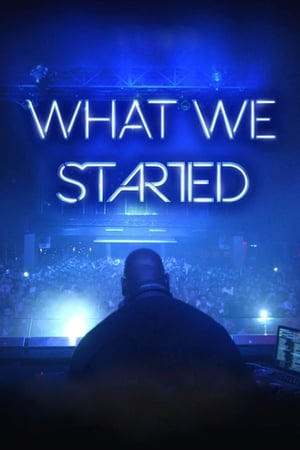
Bert Marcus and Cyrus Saidi present an informed and absorbing exploration of the history of EDM, boosted by an energetic soundtrack and anchored by the personal stories of legendary DJ Carl Cox and superstar newcomer Martin Garrix. Insights from numerous other DJs and musical talents like Moby, David Guetta, Paul Oakenfold and Usher help tell the often oppositional tales of old school vs. new school and mainstream vs. underground.
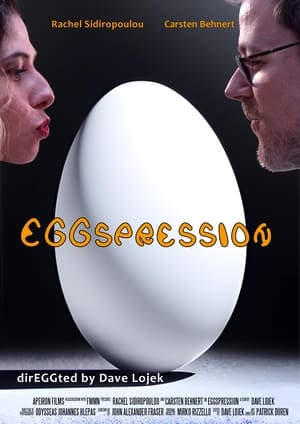
Egglantine loves salt on her eggs. Eggbert prefers pepper. Who blinks first in this playful Easter ritual?
Best friends Michael and Christian navigate through the pacific northwest searching for beauty and miracles in unexpected places.
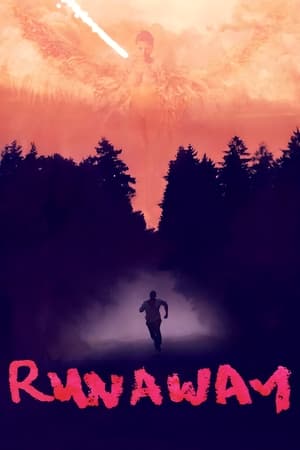
A man falls in love with a half-woman/half-phoenix who fell to Earth from the sky.
The quick response of a body in social isolation. The dancer moves alone in the living room of her apartment and expresses her feelings in the face of quarantine. A solo choreography of the automatic desires of a body that needs movement.
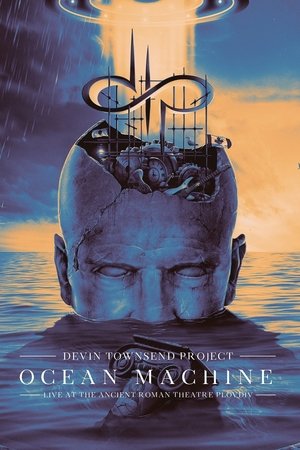
On the 22nd September 2017, Devin Townsend Project played a special show at the Ancient Roman Theatre in Plovdiv, Bulgaria, celebrating the 20th anniversary of the landmark Ocean Machine album in full, as well as a set of fan-requested tracks alongside the Orchestra and Choir of Plovdiv State Opera. This concert was filmed and released as 'Ocean Machine - Live at the Ancient Roman Theatre Plovdiv'.
Global Groove was a collaborative piece by Nam June Paik and John Godfrey. Paik, amongst other artists who shared the same vision in the 1960s, saw the potential in the television beyond it being a one-sided medium to present programs and commercials. Instead, he saw it more as a place to facilitate a free flow of information exchange. He wanted to strip away the limitations from copyright system and network restrictions and bring in a new TV culture where information could be accessed inexpensively and conveniently. The full length of the piece ran 28 minutes and was first broadcasted in January 30, 1974 on WNET.
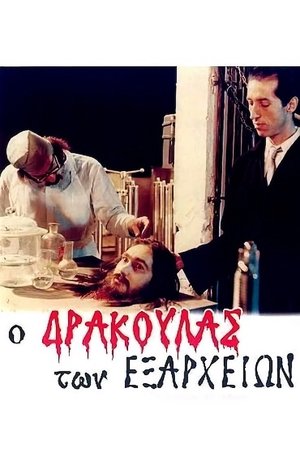
A mad scientist creates the band Music Brigades from body parts of dead musicians.
One of Lawrence Jordan's earliest animated films, PINK SWINE is an energetic and playful mix of various animation styles. Described as "an anti-art dada collage film," this free-form short presents cut-out images animated across old photos (a style picked up by Terry Gilliam a few years later) and found objects that dance to the beat of the rock-and-roll soundtrack. He produced this short during a summer spent with Joseph Cornell and Jordan edited the film entirely in camera, making the upbeat visual rhythm of this delightful lark even more impressive. –Sean Axmaker
Three percussionists each have a small table as their only instrument. The variety of tones is ensured by the different striking modes. The positions of the fingers and hands and the rhythmic figures are codified in a repertoire of original symbols used in the score.
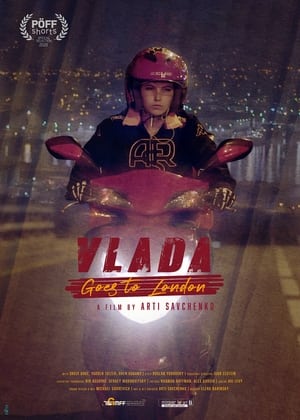
"Vlada Goes to London" is a short student film exploring the strong-willed Vlada on her night shift as a pizza delivery girl in her desperate attempt to book tickets to London and fulfill her dream of being a DJ. The end of the night brings more challenges than she expects.
Photos, animation, and music illustrate the story of the Beatles.
In a deconstruction of classic Hollywood codes, using repetitive single frame images, the re-editing of teenager movies produces an intense Oedipal drama.
Milky Chance - "Two High School Friends Making Music"
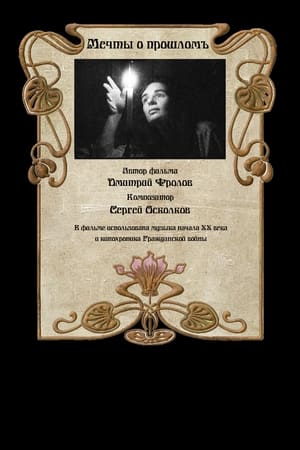
Two young men and two girls on a moonlit night confess to each other in their strange fantasies and loves that go beyond the usual standards.. The impetus to making the film was the book of the same name by the Russian religious philosopher Vasily Rozanov, who died 100 years ago. His treatise was devoted to the study of sexuality and its denial in Christianity. The film was made in the style of experimental films of the 1920s with a non-linear narration full of strange surrealistic images. He is black and white and devoid of dialogue. Filmed on film 16 mm of firm "Svema", released in the USSR. This added to his exoticism. The image was put to the music of Alexander Scriabin “The Poem of Ecstasy” (1907).
Two forever intertwined lovers, Edwin and Rosko, recollect on their long spanning relationship. What seems like a normal healthy relationship is revealed to have a dark brewing secret underneath. They explore their sexuality together but everything changes once they begin to taste the flesh of another...
Performed live on September 15th, 1985 on the SONY JumboTRON at Tsukuba Expo, Tukuba, Japan
A film about peace, love and war. Dedicated to the 100th anniversary of the end of the Civil War in Russia. The film takes place at the end of the summer of 1917, when Russia and the whole world were at a crossroads between two eras. None of the people could even imagine how much his life would change in the very near future. In a strange way, the atmosphere of the film echoes our current reality and what is happening in Russia today. According to the form of visualization, the film belongs to experimental mockumentary cinema. To give greater authenticity to what is happening on the screen, the shooting was carried out on black-and-white negatives of 16 and 35 mm, hand-operated cameras were used and the material was developed in manual spiral tanks. The documentary chronicle of the Kolchak army of 1919 and the White army in the Far East of 1922 is embedded in the finale of the film.
Animation. The theme is Weightlessness. Objects and characters are cut loose from habitual meanings, also from tensions and gravitational limitations. A lyric Eric Satie track accompanies the film. Such a portrait seems necessary from time to time to remind us that equilibrium and harmony are possible, and that we will not dissolve into a jelly if we allow ourselves to relax into them: A horseman rides through the landscape, through the town, but never arrives anywhere in particular. An acrobat swings on a rope above a canal in Venice, and is content just to swing there. Nothing threatens to disturb them. This film is a total contrast to the Kafka-like oddities of Eastern European animation. —Canyon Cinema
Meet Shavon O'Brien: Her family doesn't understand her, her church ignores her, even Jesus forgets about her. With only the spirit of Sinead O'Connor to guide her, Shavon battles institutional child abuse, narcissistic group think, a talking stomach and a singing poop bucket! Shavon goes from Catholic to Crusty Punk in this very, very, very, dark musical comedy!