A series of four 2-reelers based on the stories of George Bronson Howard, directed by Duke Worne, and starring Roy Stewart in the title role; each episode in the series was a story complete in itself. They are all presumably lost.
A young girl is presented, on her birthday, with a beautiful pearl necklace, the oldest heirloom in the family. Her maid carefully locks it up in the bureau drawer; but the next morning the necklace is missing. Naturally, the maid is accused, but she denies all knowledge of the whereabouts of the necklace, and puts the blame on the washerwoman, who had called at the time she was locking the jewels up; in consequence, the washerwoman is arrested, and her little son, thrown on his own resources, finds employment with the milkman. Two or three days later, while delivering milk at a fashionable residence, he sees a young lady walking in her sleep, out across the lawn, and follows her to a hollow tree, where he sees her dig up the jewels, which she has hidden on a previous somnambulistic promenade. Of course, this soon leads to the straightening out of all the difficulty. This short is presumably lost.
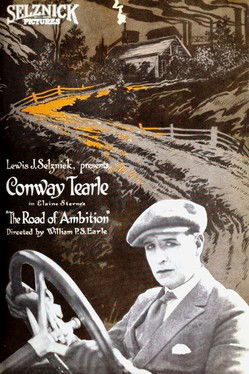
Hiram, a country youth, is in love with Sallie. They go fishing and Sallie falls into the water. Hiram cannot swim, so he runs to the road and stops an automobile, driven by Alfred, a city chap. The latter rescues Sallie, and she feels grateful to him. His attentions to Sallie are not displeasing, and Hiram becomes insanely jealous.
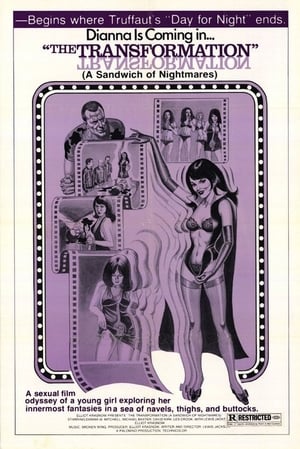
An orphan named Innocence leaves her county home after her foster-father dies. She travels to the city and makes a living as a novelist. Subsequently, she has an affair with a painter named Amadis de Jocelyn, who later dumps her.
Irked by the success of a brassy nightclub owner. her rivals set out to drive her out of business, and frame her for a murder in the bargain.
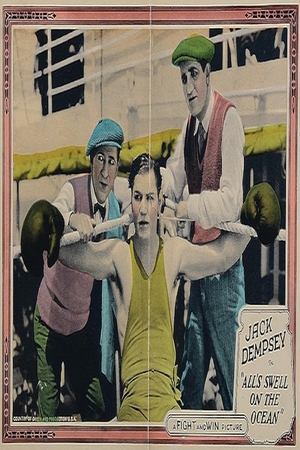
In spite of their oversupply of energy, their Pa-to-be just doted on the kids. The fascinating traveling salesman, who won away their fickle Ma, did not, but through the widow's deception, the kids won the parent of their hearts.
To be a fond and devoted parent, and to be unable to play with the heaven of your heart is indeed a cruel decree. That was the case of Papa Binks, but he outwitted Mrs. Binks and the nurse in a very effective, yet unostentatious manner, while he and the baby had the time of their lives.
One of the two earliest horror films ever made. This film is presumed lost. In this black comedy scene, the bottom falls out of a coffin, the corpse tumble out, and is jolted back to life. Short sequences like this, as well as street scenes and dancing geisha girls were the main subjects of early Nippon cinema, pioneered by Shiro Asano and Shibata Tsunekichi from 1897 onwards. In creating dramatic, scenes, film-makers naturally chose the most striking or bizarre. Another undocumented film, recalled by cameraman Shiro Asano.
When Harlan Carr inherited his Uncle Ebenezer's "Jack-O Lantern" house and too his bride there to live, he found himself the unwilling host of a score of hungry relatives within a week. Soon, strange things began to happen. A black cat made the house his headquarters, unexplained sounds could be heard and a shadowy figure floated through the halls at night.
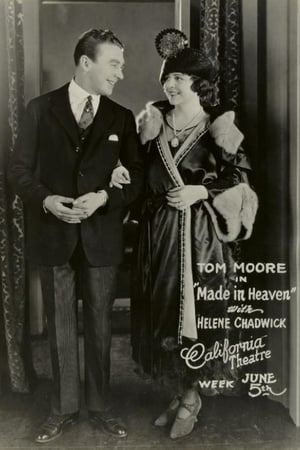
After graduating from a convent school, Betty travels to New York to visit her relatives, the Hastings. She quickly catches the eye of Jim Denning, a wealthy neighbor who proposes to her, but Betty decides to experience city life before settling down and finds work as a salesclerk. When the floorwalker becomes too familiar, Betty quits and her showgirl friend Maizie Follette helps her get a job as a cabaret dancer, but Betty finds that’s a tough racket too and decides city life on the loose isn’t for her.
Young Frederica Calhoun, naïve to the ways of the world, having grown up on her father’s Montana ranch, is swept off her feet by the arrival of Lord Cecil Grosvenor, a prospective buyer. He opens her eyes to a hitherto undreamed-of world of refinement and he by her unfailing sweet disposition and sunny bubbling good spirits. They are soon engaged, but during a trip to New York to visit his sister Frederica begins to let her doubts get the better of her and disguising herself as a man follows him to the French Ball, but all turns out well in the end.
As a boy, Raoul is reared by an Arab tribe in Algerian Sahara. Years later, as a refined Europeanized gentleman, he falls in love with Barbara, an officer's daughter, who rejects him when she discovers his background. Affecting a raid, he captures her and then secretly buys her at a slave auction. When she is rescued by French troops, however, his ancestry is established and they find happiness together.
Photographer Peter Christiansen, University of Miami student, does a picture story at an LSD party on the beach.
A Spanish soldier falls under the spell of a fiery gypsy girl named Carmen. His obsession with her leads to his ruin.
A sorrowing mother, bereft of her infant, visits a foundling asylum and adopts a baby girl. The young window lavishes her love and care on the adopted infant and her environment is the finest. Father Time present the baby with an hour glass containing "The Sands of Time" which are all in the upper part of the glass.
Ruth Carroll, a schoolteacher in New York's Lower East Side, meets Bolshevist Alexis Minski at her grandfather's bookstore. After Ruth complains to her superintendent about undernourished schoolchildren, Minski's ravings cause her suspension, and she joins the Reds. Meanwhile, Captain Nathan Levison, returning from the Argonne, is assigned by the Secret Service to investigate New York's radicals. While visiting the Carrolls to announce the imminent arrival of Ruth's brother Davy, who saved Levison's life but lost his foot, Levison falls in love with Ruth. Chagrined, Minski convinces Ruth that Levison plans to arrest her and her grandfather, whereupon Ruth furiously requests that Levison be killed. After Governor Alfred E. Smith signs a bill making it illegal to display the Red flag, the Bolshevists plot to assassinate him, the Mayor of Seattle, and Attorney General Alexander Palmer, but Davy, with other soldiers, break up the meeting.
Melia Nobbs, a young Canadian woman, supports both her invalid father Ambrose and brother Henry. When Henry faces arrest for helping himself to his employer's cash, Melia steals the amount from the star of the theater where she has been dancing and offers it to her brother if he will enlist in the army. Henry agrees and goes off to war, making Ambrose proud of his son, but when Ambrose learns that his daughter has been arrested for theft, he disowns her. Melia does not reveal the reason for taking the money and is sent to prison. Meanwhile, Henry fights bravely in France and returns home minus an arm but wearing the Victoria Cross. He finds his sister, weak and worn from overwork, in the prison hospital. Seeing her brother with his medals, Melia realizes that her sacrifices for him and her country have not been in vain, and that in her own way, she has served her country.
Richard "The Imp" Audaine is a clever but dissolute orphan whose guardian and friends are trying to lead him from the path of ruin and back to his senses.
Larry Fiske works at a curiosity shop. The shop's owner, Martin Giles, is forcing his daughter Marion to marry a wealthy collector named Travers, while Marion is in love with Larry. Larry must contend with the rich rival and the father's plans for his daughter, who holds the shop's valuable dagger.
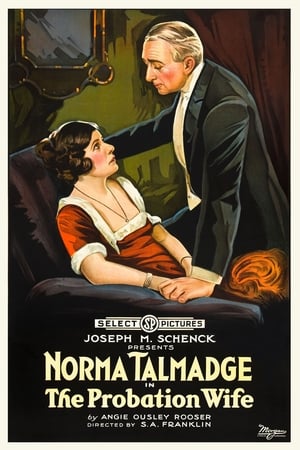
Wealthy, bored socialite named Mary Lang disguises herself and runs away to seek adventure, but is recognized by reporter Hugh Grey, who tricks her into falling in love with him. On the eve of their planned wedding, she discovers he is a fortune hunter who stole her photograph and manipulated her for the reward money. After she denounces him, Grey locks her in her room, collects the reward from her father, and is thrashed by John Barrick, Mary's father's business partner, for his treachery. Her eyes are opened to Barrick's sincerity, and she ultimately marries him.