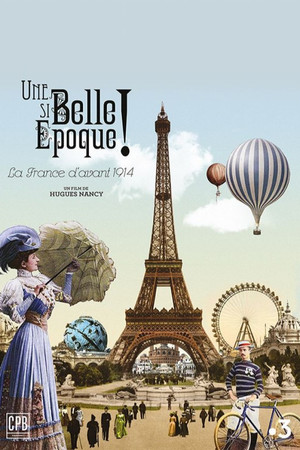
In 1900, the eyes of the whole world are on Paris. The World's Fair welcomed 50 million amazed visitors, and the city celebrated itself in a glamorous era. This period went down in history as the "Belle Époque." Elaborately restored and colorized historical photographs bring to life the exciting life in Paris between the end of the 19th century and the beginning of World War I in 1914. Bicycles, cars, airplanes, moving pictures, newly founded film studios, revolutionary composers and painters, avant-garde ballet performances, fashion houses, summer resorts on the Atlantic coast – life was intoxicating. People celebrate in the variety shows, cabarets, and revue theaters of Paris. Moulin Rouge, Folies Bergères, Bal Tabarin—in Paris, the nights are long and life is too short to sleep through. It is a dance on the volcano, given the political developments in the world.
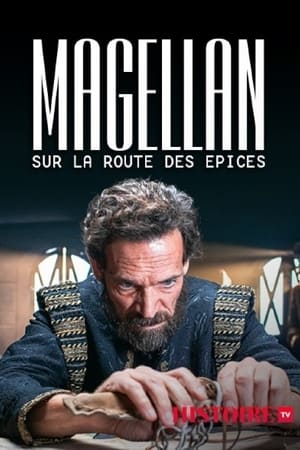
In 1519, Portuguese explorer Fernand de Magellan and his men embarked on an expedition that would forever change the way we see the world. Like Christopher Columbus before him, he set out in search of a western sea route to Asia's legendary Moluccan archipelago.
On October 14, 1947, Captain Chuck Yeager accomplished what many thought was impossible: he broke the sound barrier and in doing so, changed aviation history forever. Behind this remarkable achievement was a dedicated team of rocket scientists and engineers, and one incredible plane, a Bell X-1 named "Glamorous Glennis." This is the story of the plane and the people who dared to travel faster than the speed of sound, pushing flight science forward and proving that no matter the barrier, humanity can find a way to break through.
On a volé le Maréchal !
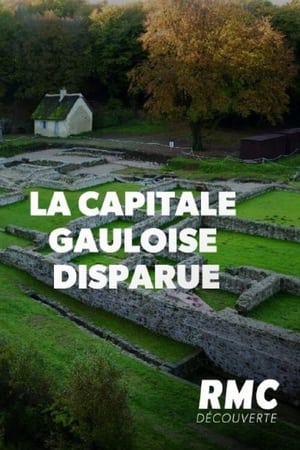
La capitale gauloise disparue
Le dernier guillotiné
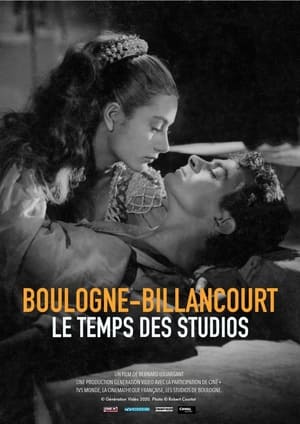
Since 1922, Boulogne-Billancourt cinema studios have welcomed the greatest actors, directors and technicians of French cinema and have given birth to many masterpieces.
Moka Malo, des corsaires à la conquête du café
In the heart of central Europe are some of the world’s most impenetrable military strongholds. In France, 160 megastructure fortresses still line the country’s borders 3 centuries after they were constructed. As solid as ever, how did they withstand attack after attack? Was the secret in their materials? Their shape? In fact, the strength and resilience of these megastructures is due to the genius of one man: Sébastien le Prestre de Vauban.
Cremaster 5 is a five-act opera (sung in Hungarian) set in late-ninteenth century Budapest. The last film in the series, Cremaster 5 represents the moment when the testicles are finally released and sexual differentiation is fully attained. The lamenting tone of the opera suggests that Barney invisions this as a moment of tragedy and loss. The primary character is the Queen of Chain (played by Ursula Andress). Barney, himself, plays three characters who appear in the mind of the Queen: her Diva, Magician, and Giant. The Magician is a stand-in for Harry Houdini, who was born in Budapest in 1874 and appears as a recurring character in the Cremaster cycle.
Jeannie and her estranged business partner Amanda have a falling out leading to Amanda getting back with an ex and Jeannie bonding more with her non-paralyzed twin Lauren.
In Rain of the Children, Ward further explores the subject of his earlier film, In Spring One Plants Alone when, as a young film student he travelled to the Ureweras and documented the lives of an elderly Māori woman (Puhi) and her schizophrenic son (Niki).
In an Arctic village in 1931, British mapmaker Walter Russell selects 12-year-old Eskimo Avik as his guide. When the boy contracts tuberculosis, Walter flies him to a Montreal hospital, where Avik meets Albertine and is infatuated. A decade later, a grown Avik encounters Albertine again in London, where he's serving as a British combat pilot. Despite her relationship with Walter, she and Avik begin an affair.
Tony is a homosexual law student who quits his studies. With a van and a handful of cash, he hits the road hoping to become a salesman. This, however, turns out to be harder than he expected.
In Alex Jones' 11th feature documentary, made in 2004, Alex documents the major candidates in the staged 2004 United States presidential election.
Seven lost children wander the night streets while their mothers await their return home.
POLICE STATE 4 chronicles the sickening depths to which our republic has fallen. Veteran documentary filmmaker Alex Jones conclusively proves the existence of a secret network of FEMA camps, now being expanded nationwide. The military industrial complex is transforming our once free nation into a giant prison camp. A cashless society control grid, constructed in the name of fighting terrorism, was actually built to enslave the American people. Body scanners, sound cannons, citizen spies, staged terror and cameras on every street corner -- it's only the beginning of the New World Order's hellish plan. This film exposes how the "Continuity of Government" program has established an all powerful shadow state. Prepare to enter the secretive world of emergency dictatorship, FEMA camps, and a shredded Constitution.
In an historic final interview, filmmaker and music promoter Aaron Russo goes in depth on the insider-knowledge given to him by a member of the Rockefeller family. Russo was told– prior to 9/11– of plans to stage terror attacks, invade foreign nations, and kickstart a high-tech police state control grid that would track the populations’ every move with implantable RFID microchips. This information-packed presentation is filled with never-before seen footage. Throughout the film, Alex Jones breaks down the latest activities of the New World Order and how it ties into what Russo predicted.
En 90-minuters makalöst underhållande monolog med Johan Rheborg, där han rannsakar sin hjärna för att svara på den klassiska frågan: Vad vill kvinnor egentligen?. Komedin "Hur tänker hon", med originaltitel "The Male Intellect" är en enmansshow där Rheborg spelar alla karaktärerna. Med en enkel axelryckning, en knyck på nacken eller med att himla med ögonen förvandlar Rheborg sig till någon av sina fem alter egos. "Hur tänker hon?" är en unik show, där kombinationen av teater och stå-upp-komik, som är både provokativ, manar till eftertanke och samtidigt får folk vrida sig av skratt, är oslagbar.
For the first time Karl Lagerfeld has agreed to let someone create an artwork on his every day life and to trust in the director. Until today there is no authorised biography existing and the memories who Karl Lagerfeld would compose stay perfectly confidential. After three years of work, and over three hundred hours of footage, Rodolphe Marconi discloses the daily life of the star through his personal lens as a filmmaker.