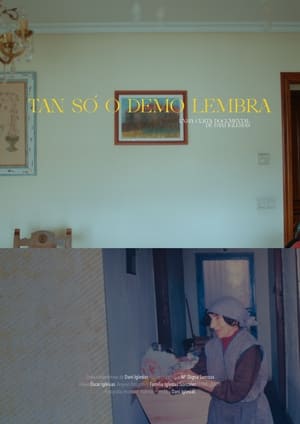
An ancestral house builds itself, comes to life, and shows us its story spanning one hundred fifty years. Through the ages, it allows us to perceive the passage of time.
In the age of multiplexes, a small Brazilian movie theater strives to survive with an alternative programming in the city of Maceió.
Lieutenant Keiu Matsuo lost his life in a midget submarine attack at Sydney Harbor during the night of May 31 and June 1, 1942. This short animation film pays homage to Keiu Matsuo and his mother Matsue.
IT CAME FROM AQUARIUS RECORDS tells the story about the San Francisco based independent record store, Aquarius Records. Having closed in 2016 after 47 years, this small apartment-sized store championed local, underground, independent, and challenging music to the masses - most memorably with their infamous bi-weekly, college essay-length, new-release lists. Six years in the making, interviewing collectors, musicians, and store owners, the film has a very personal angle, with lots of behind-the-scenes footage (and drama) that shows both the joy and excruciating stress that comes with running — and closing — a store like this, helped in no part by the changing city around them.
After an abrupt and violent encounter with a French warship inflicts severe damage upon his ship, a captain of the British Royal Navy begins a chase over two oceans to capture or destroy the enemy, though he must weigh his commitment to duty and ferocious pursuit of glory against the safety of his devoted crew, including the ship's thoughtful surgeon, his best friend.
Alongside England, Spain is the other great historical monarchy on the European continent. Sex, money, revenge, and betrayal—the recent history of the Spanish monarchy reads like a suspenseful soap opera. We take a closer look at the best-kept secrets of the Spanish crown: its true heritage, its daily lifestyle, and finally, how the women of the family took power.
In celebration of his ninetieth birthday, Sir David Attenborough shares extraordinary highlights of his life and career with broadcaster Kirsty Young, including the inspiring people he has met, the extraordinary journeys he has made and the remarkable animal encounters he has had across the globe. Joined by colleagues and friends, including Michael Palin and Chris Packham, Sir David shares some of the unforgettable moments from his unparalleled career, from capturing unique animal behaviour for the first time to the fast-paced advances in wildlife filming technology, as well as stories of the wonder and fragility of the natural world - stories that Sir David has spent his life exploring and championing.
Fabiana, Carlo, Claudio and Vincenzo… I met them in 1982 in Mercatale, their village in Tuscany, near Florence. They were aged between 25 and 45 and were cheerful militants in the Italian Communist Party, that strange party which has made its mark on history and which was both a school and a family for them. I have filmed in Mercatale every two or three years for over 20 years (1982/2004). The fi lm takes the “long view” of their political and personal development against the backdrop of village life. Stories with both human and political interest spanning over a quarter of a century with relevance for present day issues: what has become of the plans to change the world in Berlusconi’s Italy? From a more global perspective: what else can politics do? When the time comes to take stock the paths of their rich and varied personal lives cross once more with all their doubts and allegiances.
Voyage dans les abysses
An intimate look at the human faces of America's current opioid epidemic. Seen through the eyes of a mother and the lens of a small town.
Don Letts's hilarious and colourful profile of the godfather of funk, whose 50-year career has defined the genre. From his 1950s days running a doo-wop group out of the back of his barber store, through the madness of the monster Parliament/Funkadelic machine of the 70s to his late 90s hip-hop collaborations with Dre and Snoop, George Clinton has inspired generations of imitators. Contributors include Outkast's Andre 3000 and Macy Gray.
Born in Ozan, Arkansas in 1933, White traveled the world observing and documenting the Black experience from Nigeria to France to Chicago. He arrived in the Bay Area in 1958, and opened the first Black owned art gallery in San Francisco.
A sound is heard from the depth of the soil as the archeological exploration of the Shahre Sukhte goes on. While following the archeologists to document the explorations, the film in parallel seeks out the sound coming from the depths of the soil and steps deep in history to accompany the ancient citizens of the city. The film depicts the wonderful city of “Shahre Sukhte” (The Burnt City) in Zabol in Iran, which was home to one of the highest civilizations at the dawn of history lasting for over 1400 years. In this city was no central government or leadership in Shahr-e-Sukhte. The government was administered by a group that was matriarchal, meaning that power was in the hands of women. It may be for this reason that we witness no trace of violence and war in this city. Something that the world today desperately needs.
A powerful cultural documentary about a Caribbean father and son who return to Grenada to reclaim ancestral stories. Blending folklore, myth, and underwater visuals, the film preserves Black heritage and reframes the feared Jab Jab as a symbol of resistance and identity.
This documentary takes an in-depth look at the witch hunts that swept Europe just a few hundred years ago. False accusations and trials led to massive torture and burnings at the stake and ultimately to the destruction of an organic way of life. The film questions whether the widespread violence against women and the neglect of our environment today can be traced back to those times.
When half-breed Indian Yaqui Joe robs an Arizona bank, he is pursued by dogged lawman Lyedecker. Fleeing to Mexico, Joe is imprisoned by General Verdugo, who is waging a war against the Yaqui Indians. When Lyedecker attempts to intervene, he is thrown into prison as well. Working together, the two escape and take refuge in the hills, where Lyedecker meets beautiful Yaqui freedom fighter Sarita and begins to question his allegiances.
After a spell cast by Grandma Faraway, the oldest son of a small family encounters the ghost of his late Grandma Maria still living in her old house, and they chat as they used to.
Cold Refuge is about the physical, psychological, and spiritual aspects of full immersion in the natural world: how, though it may seem counter-intuitive, swimming in cold water helps mitigate some of life’s most serious challenges. The film’s diverse film subjects include a wheelchair-bound, paralyzed swimmer who faces fear by diving off a high pier; a Black man who was told by whites when he was 13 that “Black people don’t swim” (it took him 30 years to try); a blind man who tethers himself to a sighted swimmer; a woman with aggressive breast cancer who “swims to chemo;” a lawyer who reduces courtroom stress in the open water; and a young woman who communes with her late mother in San Francisco Bay, where they both swam together. Along with swimmers’ stories of adversity and resilience, the film’s marine mammals, birds, artwork, and a variety of open-water locations create a visual meditation on what it means to escape our abstract digital world in favor of what’s real.
A Naval officer, reprimanded after Pearl Harbor, is later promoted to Rear Admiral and gets a second chance to prove himself against the Japanese.
Mr. Roberts is a Navy officer who's yearning for battle but is stuck in the backwaters of World War II on a non-commissioned ship run by the bullying Captain Morton.