In the year 2035, convict James Cole reluctantly volunteers to be sent back in time to discover the origin of a deadly virus that wiped out nearly all of the earth's population and forced the survivors into underground communities. But when Cole is mistakenly sent to 1990 instead of 1996, he's arrested and locked up in a mental hospital. There he meets psychiatrist Dr. Kathryn Railly and the son of a famous virus expert who may hold the key to the Army of the 12 Monkeys; thought to be responsible for unleashing the killer disease.
Ray Ferrier is a divorced dockworker and less-than-perfect father. Soon after his ex-wife and her new husband drop off his teenage son and young daughter for a rare weekend visit, a strange and powerful lightning storm touches down.
A comfortable rhythm composed of light and shadow. Director Ogino-style absolute movie which freely manipulates geometric figures.
In 1920s Ireland young doctor Damien O'Donovan prepares to depart for a new job in a London hospital. As he says his goodbyes at a friend's farm, British Black and Tans arrive, and a young man is killed. Damien joins his brother Teddy in the Irish Republican Army, but political events are soon set in motion that tear the brothers apart.
A teenage skateboarder becomes suspected of being connected with a security guard who suffered a brutal death in a skate park called "Paranoid Park".
The short film poem KYKLOP is dedicated to a mechanical eye as an autonomous being. Round wheels and targets similar to him seem to arouse the interest of this main character. The atmosphere is thundery, thunderous. It reminds of the cyclopean thunder demons from the "Theogony" of the ancient Greek poet Hesiod. KYKLOP (2023) is another autonomous part of the film cycle by Telemach Wiesinger and Alexander Grebtschenko that began with TURBULENCE (2022) and its pairs of mechanical wings.
“Poussières de Juillet”, produced in 1967 by Hachemi El-Chérif, is taken from a poem by Kateb Yacine. "We made a film on the return of the ashes of Emir Abdelkader, to Algeria. It was the opportunity to make a film on the ancestors with M'hamed Issiakhem. He designed glass plates on the basis of my texts. Then we had actors collaborate. It was a film which cost us a total of 300 dinars, proof that we could do work for television without too much money. We won two first international prizes at the Belgrade festival. We left the original of the film with the Egyptians in Alexandria and they lost it. We kept a copy but over time I wonder what happened to it, because there is no not even had a screening, they say it still exists, but I don't know in what state." Kateb Yacine, July 28, 1986, interview with Arlette Casas.
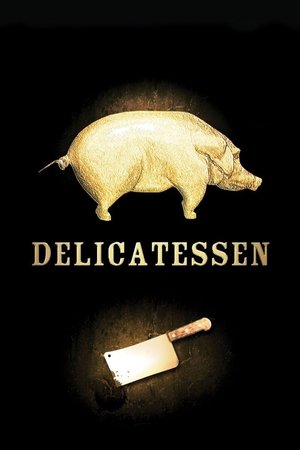
In a post-apocalyptic world, the residents of an apartment above the butcher shop receive an occasional delicacy of meat, something that is in low supply. A young man new in town falls in love with the butcher's daughter, which causes conflicts in her family, who need the young man for other business-related purposes.
A documentary featuring 30 Argentinian women aged between 4 and 80, sharing their stories of resilience, strength, and unique perspectives on womanhood through performance art.
A strange story from Somerset, England about a filmmaking farmer and the inspiring legacy of his long-lost home movies.
Trevor, an insomniac lathe operator, experiences unusual occurrences at work and home. A strange man follows him everywhere, but no one else seems to notice him.
A surreal mosaic pieced together from fractured memories and childhood recollections as told by an unnamed narrator who relives a traumatic incident from his past. A time when people went about their lives, and yet, they told tales of a predator who stalked the streets at night, sneaking into windows and abducting the innocent; this menace went by one name, Pastor Jessup.
In order to turn their lives around, three taxi drivers living at the bottom rung of society hatch a plan to steal an invaluable art piece. Their plan was supposed to be perfect, but as coincidences pile up it becomes clear that nothing is going to go according to plan.
Born from steel and glass Kino Kopf is created by two inventors. They are assembled by their mother, a nurturing artist, and their Father a greedy entrepreneur. Kino Kopf is the first of its kind a sentient humanoid VHS camera. They are given a life by their mother but presented to the world by their father. Kino Kopf is the next big sensation and spurs a technological revolution. They are soon forgotten and alone as new models surpass them. Kino Kopf is left alone to contemplate if they ever had a soul, as visions of an electric cowboy dance through their dreams.
Jake, full of anger after his father's death, is just starting to find a place for himself at his new Orlando high school - until Ryan, head of an underground MMA fight club, picks Jake out as a prime opponent. After being trounced by Ryan in front of the entire school, Jake begins training under the firm, moral guidance of a MMA master, where he learns how to fight... and how to avoid a fight. But it becomes obvious that a rematch will be inevitable if Jake wants to stop Ryan and his bullying, once and for all.
When rogue stealth-fighter pilot Vic Deakins deliberately drops off the radar while on maneuvers, the Air Force ends up with two stolen nuclear warheads -- and Deakins's co-pilot, Riley Hale, is the military's only hope for getting them back. Traversing the deserted canyons of Utah, Hale teams with park ranger Terry Carmichael to put Deakins back in his box.
In Preparação I (Preparation I) Letícia Parente prepares herself to go out. In front of a bathroom mirror, she places bandages over her mouth and eyes, draws eyes and a mouth over the bandages, fixes her hair, takes her bag and leaves the room. This masquerade becomes a political commentary about the female gaze, voice, modes of interaction, sociality and corporeality in Brazilian society during the 1970s.
Cinema clerks Silva and Felix work the final night before their beloved cinema is demolished by private investors. An empty final screening allows them to reflect on the meaning of cinema in an age wherein art no longer occupies physical space.
This is a story about a man who believes that he has two “selves” - external and internal. That is, an organism is a certain conglomerate of cells, each of which is a separate individual. This hybrid creature has a certain common personal “I” that uses the entire organism, and is the organism itself, which has its own will. According to the character, one can communicate with him, which is what he is trying to do. He wants to reach him and comes up with different ways of communication: injecting substances under the skin or intravenously, tattooing texts on the body, swallowing objects. The answer would come in the form of a rash or other physical manifestation that had to be interpreted. As a result, communication is carried out and the second “I” agrees to die.
A tale about a strange young man, Bulcsú, and the fellow ticket inspectors on his team who work aboard the subterranean Budapest Metro. A tale about racing along the tracks, and about a mysterious serial killer. And a tale about love.