On the occasion of the fiftieth edition of the French Theater Festival in Israel, Francis Huster takes to the stage in Tel Aviv to perform the play "Molière, le magnifique." This is an opportunity for him to introduce Molière's language to novices and to showcase his work, which still touches and speaks to us today. Recorded for Olympia TV (Canal+ Group) during the 5th edition of the Horizons Festival at the Beit Lessin Theater in Tel Aviv on October 26, 2022, in Israel.
On a bitterly cold London evening, schoolteacher Kyra Hollis receives an unexpected visit from her former lover, Tom Sergeant, a successful and charismatic restaurateur whose wife has recently died. As the evening progresses, the two attempt to rekindle their once passionate relationship only to find themselves locked in a dangerous battle of opposing ideologies and mutual desires.
Weller Martin and Fonsia Dorsey, two elderly residents at a nursing home for senior citizens, strike up an acquaintance. Neither seems to have any other friends, and they start to enjoy each other's company. Weller offers to teach Fonsia how to play gin rummy, and they begin playing a series of games that Fonsia always wins. Weller's inability to win a single hand becomes increasingly frustrating to him, while Fonsia becomes increasingly confident. While playing their games of gin, they engage in lengthy conversations about their families and their lives in the outside world. Gradually, each conversation becomes a battle, much like the ongoing gin games, as each player tries to expose the other's weaknesses, to belittle the other's life, and to humiliate the other thoroughly.
Gabriela Preissová wrote her two most famous dramas, Gazdina roba and Její pastorkyňa, when she was not yet thirty. Both were set to music and became famous. The first opera, entitled Eva, was written by J. B. Foerster, and the second by Leoš Janáček. The fame of Janáček's work greatly overshadowed the original. On the other hand, "Gazdina roba," the author's debut work, is still performed on Czech stages, regardless of the era. That is how powerful and impressive this drama is. The production by director Zdeněk Kaloč premiered at the Vinohrady Theater in May 1992. Dagmar Veškrnová endowed the title role of Eva the seamstress with warmth, temperament, pride, and tragic shadows.
When a beautiful first-grade teacher arrives at a prep school, she soon attracts the attention of an ambitious teenager named Max, who quickly falls in love with her. Max turns to the father of two of his schoolmates for advice on how to woo the teacher. However, the situation soon gets complicated when Max's new friend becomes involved with her, setting the two pals against one another in a war for her attention.
45 year old Don Valter is a traditional priest who still wears an old fashioned black tunic out of nostalgia. One day young Claudio and his exuberant troupe of actors appear, proposing to perform an avant-garde show based on the Gospel's miracle of the rebirth of Lazarus*. The powerless priest is overwhelmed by this young upstart, who stirs within him emotions that will, whether he likes it or not, pull him into the modern era.
Members of an otherwise typical New York Brooklyn family are "tortured" by a kind of hereditary madness. In the meantime, the adopted nephew Mortimer tries to do everything to protect his two aunts, who indulge in a variety of dangerous acts, such as poisoning lonely and homeless elderly people, and burying them in the basement of their house. When another niece, Jonathan, arrives, the situation will spiral out of control. The play was released on DVD by Radiotileorasi magazine in December 2010 (78th DVD of the "ERT Cultural Film Archive" series).
Orgon and his mother swear by Tartuffe, the self-styled devout who lives off them. The other members of the family, scandalized by the clergyman's hold over them, will do anything to expose his hypocrisy. Michel Bouquet plays an almost monstrous Tartuffe, whose only weakness lies in his feelings for Elmire.
A wealthy Japanese patron, enamored with Rousseau, offers an atypical and versatile filmmaker the opportunity to freely adapt Jean-Jacques Rousseau's epistolary novel into a film. The filmmaker brings together three young actors in a deserted palace above Clarens and begins shooting. Rousseau's tragedy then reverberates through the contemporary characters.
After being dumped by her live-in boyfriend, an unemployed dancer and her 10-year-old daughter are reluctantly forced to live with a struggling off-Broadway actor.
As explicit photos of the school’s ‘it’ couple go viral, and real-world consequences of online life spread, so do everyone’s opinions... Birds and Bees is a brand new play by award-winning writer Charlie Josephine exploring the complicated nature of teenage relationships using spoken word, physical theatre and a specially commissioned soundtrack.
A police drama that chronicles the efforts of a police officer to uncover an unexplained murder case that blends the lives of two women and a theater actor, the victim of an "artistic" shot, part of a play.
A shrewd ex-prisoner runs a successful antique shop -- until his assistant discovers the collectibles are stolen goods and begins blackmailing him.
Les parents terribles
The story behind the translation and performance of Shakespeare's "Hamlet" in Klingon.
Le Jeu de la vérité 2
"Vanity of vanities, everything is vanity" says the bible. The word flows from the tongue naming the pleasure of earthly life and judging it as beautiful, but shallow and useless; vanity is a deadly sin. A female sin. The man painted the woman, put a mirror in his hands and called it vanity. The woman in representation admires herself, but the one who really admires her body is the artist. Whose vanity? In VANITAS, we re-divide the woman in our bodies, showing the depth of what is palpable. If the Father's temple hides after death, clean and perfect, we reject them. We welcome Mother Nature in us, life-death in a perpetual sacred cycle, also honoring her dark face. You may wish to reach heaven, but it is on earth that your knees fall.
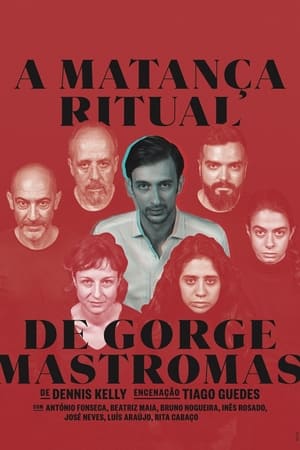
Tiago Guedes returns to Dennis Kelly, the British playwright with whom he has already enjoyed success in his dizzying descent into the depths of human complexity. After Órfãos, the director and stage director now tackles The Ritual Slaughter of Gorge Mastromas, a 2013 text about the banality of evil in the person of the man that Kelly's play scrutinizes in retrospect: "Existence is not what you thought it was until now. It is not honest, it is not kind, it is not fair. Most of the world has no idea about this; they believe in God, or Daddy, or Marx, or the invisible hand of the market, or honesty, or kindness. They go through life with their eyes closed, getting beaten up and screwed over. He's like that. You're like that. But a tiny part of us, let's call ourselves the resistance, knows the true nature of life. The world is ours for the taking. We are powerful and rich and have everything, because we will do whatever it takes.
A struggling actress becomes entangled in an abusive relationship with her idol at a cult-like New York theatre company.
David Ireland's award-winning dark comedy about sectarian hatred in Northern Ireland. Eric Miller, a Belfast loyalist, mistakes his five-week-old granddaughter for Gerry Adams.