May 10th, 1940, Hitler takes on the West. Will he precipitate Europe into the Apocalypse?
WWII. The Nazis create an elite team of scientists to scour the globe and mount expeditions to extreme and harsh locations. Their mission: rewrite history and collect ancient artifacts in the name of the thousand-year Reich.
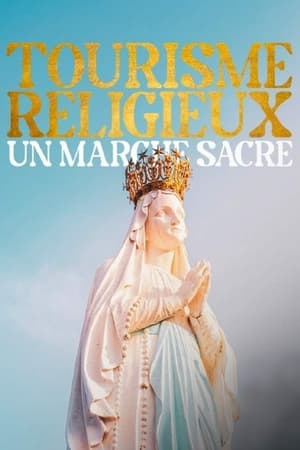
In emblematic places around the world, Frédéric Lenoir, philosopher, sociologist and writer, goes to meet those who experience a spiritual quest, both religious and secular. A pilgrimage that mixes the voices of anonymous witnesses and personalities such as the Buddhist monk Matthieu Ricard, the apneist Guillaume Néry and the astrophysicist Hubert Reeves.
The Power of Myth is a television series originally broadcast on PBS in 1988 as Joseph Campbell and the Power of Myth. The documentary comprises six one-hour conversations between mythologist Joseph Campbell and journalist Bill Moyers.
14-18, l'histoire belge
The series chronicles the everyday lives of young Michelin-starred chefs. On the pass, the interface between kitchen and service, they prepare their extraordinary creations, reflecting their world of thought. They all share a passion for cooking, 16-hour workdays, and enormous responsibility. "On the pass" looks behind the scenes and provides unusual and very personal insights into the world of Michelin-starred cuisine.
Terra X - Deutschland von oben
Der Rhein-Ruhr-Ripper Frank Gust
A Cleveland grandfather is brought to trial in Israel, accused of being the infamous Nazi death camp guard known as Ivan the Terrible.
Tony Robinson explores the weird and wonderful history of belief, superstition and religious experience in Britain. For 2000 years, Britain has been a Christian country. Or has it? In fact, our ancestors actually kept many other dark, fantastical beliefs alive. It was a world underpinned by outlandish, dangerous and plain weird beliefs. Ideas that today seem unbelievable, but were seen as uncontroversial and hugely influential, with some having shaped our history as much as mainstream religion
Historian James Holland goes inside the Nazi war machine, exploring the extraordinary weapons produced under the Third Reich, in a series that includes rare archive material
"Talent" Chip Tsao went to London, Greenwich, Wales, Oxford, Cambridge, England, to analyze the British people's living habits, academic development, economic conditions, etc .; and went to Warsaw, Gdansk, Krakow to know a country with a hundred years of blood and tears. Eason Chan visited Tokyo, Kyoto, Osaka, and Fukuoka in Japan to learn about the cultural differences; Social worker Shiu Ka-chun went deep into Finland's Turku, Helsinki, Nokia and other places to experience the local customs through living with locals. They will introduce the details of each famous city from a social, historical, and cultural perspective, bringing different connotations, depths, and education.
A close look at the engineers who designed powerful military technology for the Nazis and who also encouraged a technological revolution that would forever change warfare.
Jenke. Zeitreise.
High tension in the Alpine foothills: real emergencies, tough decisions, strong stories. „The Lifesavers of Murnau“ shows medicine where it counts – told directly, closely and intensely. The series that follows the daily work of emergency physicians, nurses, and rescue teams at BG Unfallklinik Murnau, one of Germany’s leading trauma hospitals located in the Bavarian Alps. Showing real emergency cases — from rescue operations in the mountains and severe traffic accidents to intensive care treatments, complex surgeries, and rehabilitation. With close-up footage from bodycams, drones, and cameras inside the trauma room, viewers experience how the medical teams handle life-threatening situations with precision and compassion.
Between storms and towering waves, in sunshine or in the dead of night: Sea rescuers from the German Maritime Search and Rescue Service (DGzRS) risk their lives for people in distress on the high seas! The documentary series "The Sea Rescuers" accompanies these heroes of the seas up close during their spectacular missions on the North and Baltic Seas.
Lucy Worsley travels to Russia to tell the extraordinary story of the dynasty that ruled the country for more than three centuries - the Romanovs.
Docudrama in two parts, based on the abduction of the president of the employer's association of Germany, Hanns Martin Schleyer, by the Baader-Meinhof gang in the Autumn of '77.
A century ago, the world experienced a revolution in mobility. Cities like Berlin grew rapidly, with the Graf Zeppelin soaring over the city in 1928, sparking excitement for airship travel. These majestic airships made ocean crossings faster and more luxurious, and even enabled polar expeditions. At the same time, automobiles and motorcycles became staples for many, although streets became congested. Women like Amelia Earhart and Elly Beinhorn broke barriers in aviation, inspiring new possibilities for both genders in the field of technology. While air travel grew in popularity, trains remained the main long-distance transport. The era also saw an explosion of new mobility options, with faster, cheaper ways to travel across the globe, making the world seem smaller and more connected. However, this golden age of mobility would be cut short by the outbreak of World War II.
French King Louis XIV revoked the Edict of Nantes in 1685, a document that had protected the rights of French protestants for almost one hundred years. The decision led to a mass exodus of French Protestants with many going to Prussia.