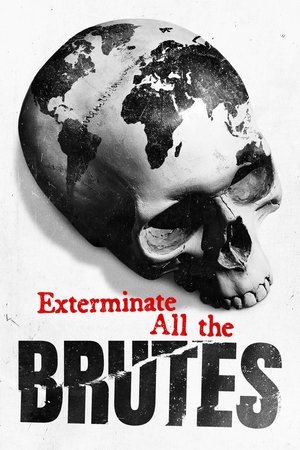
Hybrid docuseries offering an expansive exploration of the exploitative and genocidal aspects of European colonialism, from America to Africa, and its impact on society today.
Sara Dane is a 1982 Australian television miniseries about a woman transported from England to Australia for a crime she did not commit.
In 1939 in eastern Algeria, Omar, a young boy of ten, lives with his family in a room in Dar Sbitar, a house shared by several families who overcome the trials they go through every day to ensure their subsistence. Her deceased father is Aïni, the mother, who bleeds herself from all four veins to keep her children and their grandmother alive. The families of Dar Sbitar share their intimacy and their daily life, this life animates the big house, which itself becomes a character in its own right. "El Harik" (The Fire), is an Algerian drama series in 10 episodes adapted from Mohamed Dib's trilogy "The Big House", "The Fire" and "The Loom".
Afrique(s), une autre histoire du XXème siècle
South Africa, 1823. The Zulu Empire, headed by King Shaka, a brilliant but ruthless military strategist, begin to encroach on the British colony of Cape Town. A volunteer cadre of explorers, mercenaries and professional soldiers are sent to Zululand to try to make contact with Shaka and assess the real threat of his army.
A look into the Belgian colonisation of Congo through interviews of both colonials as Congolese people that lived it.
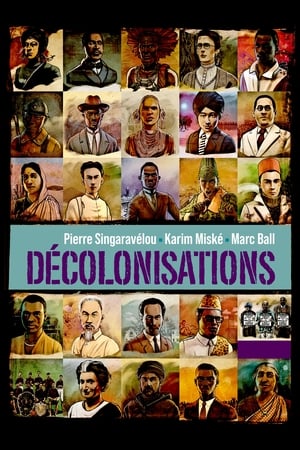
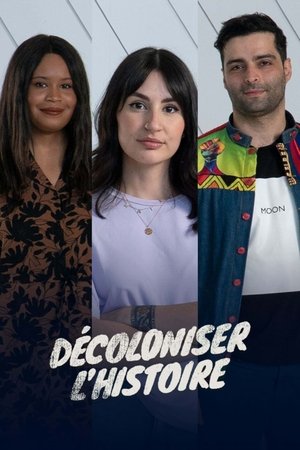
The history of decolonization from the point of view of colonized peoples, an epic story that still resonates and reverberates to this day.
The specter of drug trafficking haunts Europe. Struggling with ultra-violent criminal groups that control the vast majority of cocaine trade, European police forces are overwhelmed. The epicenter of all this trafficking: the Netherlands. A nation at the forefront of international trade and drug policy. This two-part film delves into the origins of European drug trafficking through the unique history of the Kingdom of the Netherlands.
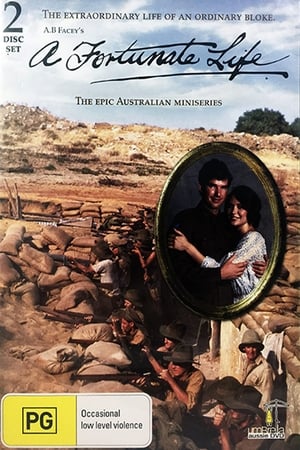
At eight years old, an impoverished Bert Facey was forced to start the backbreaking, dawn-to-dusk life of a farm labourer. Unschooled, his father dead, abandoned by his mother, by the age of twenty he had survived the rigours of pioneering the harsh Australian bush and the slaughter of the bloody WWI campaign at Gallipoli.
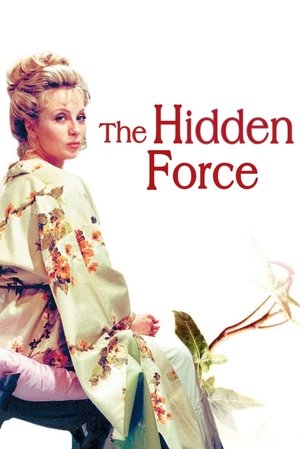
In the sweltering Dutch East Indies, the European colonizers are plagued by a hidden force; a combination of tropical magic, Eastern inscrutability and mutual incomprehension. Blind and deaf to the slumbering powers of the East Indian people, resident Van Oudyck, his son, daughter and seductive wife slowly but surely fall prey to this mysterious force...
Décoloniser l’histoire
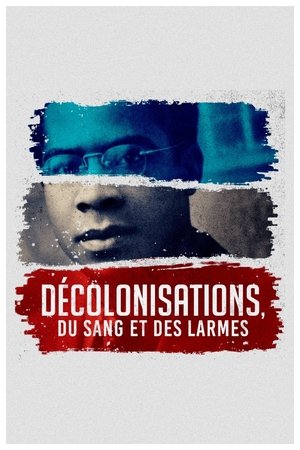
After World War II, the French colonial empire, which dominated the lives of over 110 million people on five continents, collapsed in just under a quarter century of blood and tears.
How did a small island once rule over a quarter of the world's population? This shared history still shapes us today - and billions of people are part of its story.
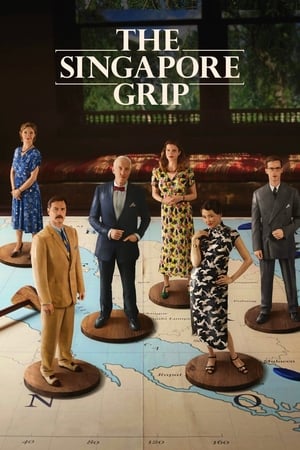
In colonial Singapore during World War Two, this epic drama follows the schemes – both commercial and amorous – of a wealthy British family as they struggle to preserve their prosperous business amid cataclysmic world events.
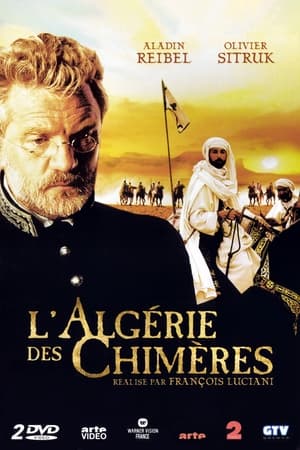
Through the fictionalized lives of two young Saint-Simonians, this television film presents the history of French colonization in Algeria from 1837 to the end of the Second Empire.
The rise and fall of one of the most extreme civilisations the world has ever witnessed – one founded on discipline, sacrifice and frugality, centred on the collective, whose goal was to create the perfect state and the perfect warrior.
Many lawyers consider themselves prophets, but Eli Stone may be the real deal. Eli has built a successful career at a top law firm in San Francisco representing only the biggest and richest corporations that make a habit of screwing over the little guy. But after experiencing a series of odd hallucinations, Eli seeks to find a deeper meaning to life while trying not to lose his job and destroy his relationship with the bosses' daughter. When Eli discovers an aneurysm in his brain, he wonders if his condition is truly medical or if perhaps he now has a higher calling.
Scully was a British television drama with some comedy elements set in the city of Liverpool, England, that originated from a BBC Play For Today episode "Scully's New Years Eve". Originally broadcast on Channel Four in 1984, the single series was spread over six half-hour episodes plus a one-hour final episode. It was written by playwright Alan Bleasdale. The drama is notable for featuring many of the Liverpool football club first-team squad of that era. Francis Scully is a teenage boy who has his heart set on gaining a trial match for Liverpool to hopefully fulfil his ambition of playing for the club. Francis, in everyday situations during his waking hours, occasionally "sees" famous Liverpool players such as Kenny Dalglish when they are not really there. These dream-like sequences recur throughout the episodes. The main plotline is the efforts of Scully's school teachers to persuade Scully to appear in the school pantomime which they attempt by promising him a trial with his beloved Liverpool if he will cooperate. When Scully and his friends are not in school making trouble for the teachers and the school caretaker, they are seen roaming the local streets upsetting the neighbours and getting into trouble with the police. Scully sometimes has visions of the school caretaker appearing as a vampire due to the caretaker's nickname being Dracula. These frequent waking dream sequences give the show a somewhat surreal atmosphere.
John Safran's Music Jamboree was a light-hearted Australian music documentary television series, hosted by John Safran for SBS television. The program was produced by Selin Yaman and directed by Craig Melville, Clayton Jacobson and a number of other directors under the production company Ghost of Your Ex-Boyfriend Productions in association with SBS Independent. It screened in 2002, and consisted of sketches and outlandish public stunts, typical of Safran's work. The series won two Australian Film Institute Awards; "Best Comedy Series" and "Most Innovative Program Concept". SBS followed the series up with the similarly styled John Safran vs. God in 2004.
Spindoe is a British television series which was shown on ITV in the spring of 1968. It was named after the lead character, Alec Spindoe, a South London gangster; the plot of the series showed how Spindoe re-established his gangland empire after he had been supplanted during a term of imprisonment, but found once he had succeeded that he is no longer interested.