The Human Body is a seven-part documentary series that looks at the mechanics and emotions of the human body from birth to death.
Explore the mysterious regions inside the human body. See how vital organs interconnect to make human life possible. Learn how skeletons fit together. Witness the lightness and strength of bone, how muscles work as levers, what it takes to achieve the "perfect" body. See how the heart functions, and learn the roles of white and red blood cells. Discover the complex systems controlling breathing, digestion, glandular changes, and hearing.
The series investigates Paolo Macchiarini’s claims to have invented a ground-breaking method to create new organs. His method using plastic tracheas sown with stemcells has been operated on patients in the US, Russia, Sweden and the UK. So far, unfortunately, the track record of his plastic organs is not very good. Almost all patients are dead. And several of his former surgeon colleagues in Sweden claim that not only does the method not work, but that his scientific claim to fame is based on falsified and misrepresented data. Some even claim that his patients have been used as human guinea-pigs.
The Johns Hopkins Science Review is a US television series about science that was produced at Johns Hopkins University from 1948-1955. Starting in 1950, the series aired on the DuMont Television Network until the network's demise in 1955. The series' creator was Lynn Poole, who wrote or co-wrote most of its episodes and acted as the on-camera host. In 2002, Patrick Lucanio and Gary Coville wrote that, "In retrospect, Lynn Poole created one of those unique series that allowed television to fulfill its idealized mission as both an educational and an entertainment medium." The original series was followed by three related series produced by Poole at Johns Hopkins University: Tomorrow, Tomorrow's Careers, and Johns Hopkins File 7. Johns Hopkins University ended its production of television series in 1960.
Elliot and his best friend Ian set off on a personal journey to explore LGBTQ cultures around the world. From Japan to Brazil, Jamaica to America, they discover the multiplicity of LGBTQ experiences, meeting amazing people and hearing their deeply moving stories of struggle and triumph. Gaycation celebrates the state of LGBTQ identities across the globe.
Tales of the Unexpected is a new strand of provocative, confronting and thoroughly entertaining science documentaries. Each episode reveals a fascinating, sometimes awkward, and frequently unsettling world where peculiar ideas are put to the test. Come with us to where nothing is quite as it seems, where diseases are diagnosed by palm-readers, where paternity uncertainty drives the mating game, and where breasts are a toxic health hazard.
A high-end documentary series that takes a deep and thought-provoking dive into a variety of topics - such as the future of human life extension, breakthroughs in interspecies communication, the rise of “cyborgism”, existing in virtual reality, and more.
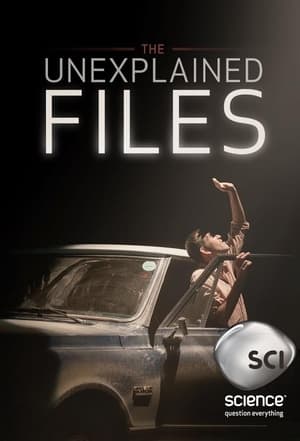
From strange abductions, to mutated species, to bizarre occurrences, there are some phenomena that science cannot - or will not - explain. This summer Science Channel unveils some of these shocking and mind-boggling cases from around the world in the world premiere series THE UNEXPLAINED FILES. From mysterious disappearances and UFO encounters, to unidentified fanged predators and reported curses, THE UNEXPLAINED FILES investigates actual, inexplicable occurrences that have confounded scientists and inspired legends. Science Channel invites viewers on a mystifying journey that will challenge disbelief with THE UNEXPLAINED FILES.
Stephen Hawking’s Science of the Future investigates the very latest game changing innovations. Each episode takes one area of progress and sends five top scientists out to actively test the inventions and breakthroughs that are driving it. The team explore human upgrades, the virtual world, bio-mimicry, high-tech emergency responses, and more. Featuring a wide range of examples, from advanced robotics and breathtaking digital actors, to cutting edge smart homes and electronic brain stimulation, the series reveals how science is delivering astonishing improvements to all our lives. Using the evidence they gather, the team reveals the year when each innovation will be rolled out for us all to benefit from, and Hawking then draws out his own uniquely insightful predictions about what our world will be like in the years to come.
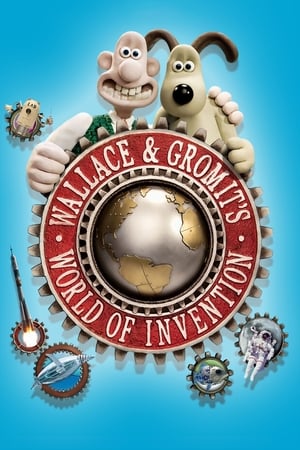
In the series, "Wallace will take a light hearted and humorous look at the real-life inventors, contraptions, gadgets and inventions, with the silent help of Gromit. The series aims to inspire a whole new generation of innovative minds by showing them real, but mind-boggling, machines and inventions from around the world that have influenced his illustrious inventing career" (the BBC press statement). Peter Sallis reprised his role as the voice of Wallace. The filmed inserts are mostly narrated by Ashley Jensen, with one in each episode presented in-vision by Jem Stansfield. John Sparkes also voices a portion in the unseen character of archivist Goronwy.
Scientists, researchers, and entrepreneurs are revolutionizing the way people see, touch, taste, hear, and smell with cutting-edge advances in technology.
"Caligula" is a psychological phenomenon in which you want do things that are prohibited. Featured here are numerous pitches rejected by multiple TV stations. However, there are some treasures buried among them. Proposals once buried in the darkness revived here!
Tour de force
Science And Islam
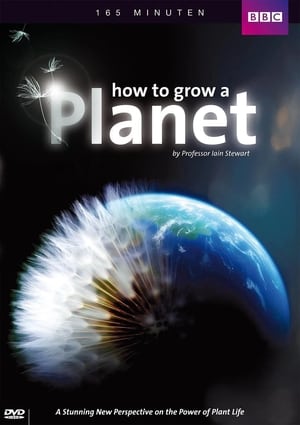
Geologist Iain Stewart explain in three stages of natural history the crucial interaction of our very planet's physiology and its unique wildlife. Biological evolution is largely driven bu adaptation to conditions such as climate, soil and irrigation, but biotopes were also shaped by wildlife changing earth's surface and climate significantly, even disregarding human activity.
On this immersive journey, Cara Delevingne puts her mind and body on the line in search of answers regarding human sexuality, its joys, mysteries, and constantly changing nature. In every episode, she shares her own personal experiences. Uniquely unfiltered and authentic, there's no limit on how far Cara's willing to go to explore what makes us all human.
Popularis
Jurre Geluk and Dzifa Kusenuh investigate the dickpic phenomenon. What is its history? Why make one? And how do you deal with an unwanted dick pic? Jurre and Dzifa get to the bottom of it and at the same time also look for the Perfect Post.
NOVA scienceNOW is a News magazine version of the long-running and venerable PBS science program Nova. Premiering on January 25, 2005, the series was originally hosted by Robert Krulwich, who described it as an experiment in coverage of "breaking science, science that's right out of the lab, science that sometimes bumps up against politics, art, culture". At the beginning of season two, Neil deGrasse Tyson replaced Krulwich as the show's host. Tyson announced he would leave the show and was replaced by David Pogue beginning season 6.
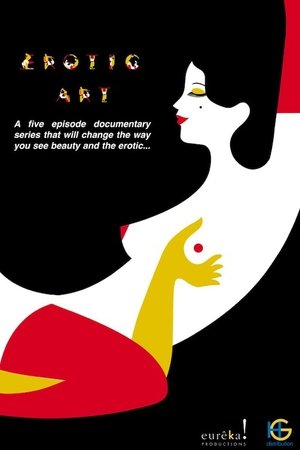
On a journey through a dozen countries, Anik Magny met contemporary artists who are exploring the secrets of desire and the forbidden, creating stunning works that stimulate the senses and give us pause.