TV's most-watched history series brings to life the compelling stories from our past that inform our understanding of the world today.
Professor Brian Cox embarks on a mission to guide viewers through 350 years of British science, laying bare what science really is, who the people are who practise it, and how it connects to the past, present and future of each of us.
The Oddity Archive is a web series that revolves around the "cultural dustbin", especially as it pertains to media. The Archive also functions as an actual archive of sorts, with a modest collection of off-air Betamax and VHS recordings (about 400 total as of June, 2014). There's also a decent collection of ephemeral video, "ripoff" and "drugstore" LP's/cassettes/8-tracks, as well as (working) obsolete technology.
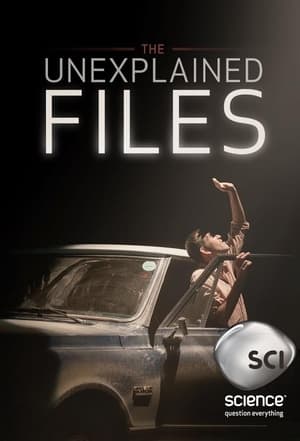
From strange abductions, to mutated species, to bizarre occurrences, there are some phenomena that science cannot - or will not - explain. This summer Science Channel unveils some of these shocking and mind-boggling cases from around the world in the world premiere series THE UNEXPLAINED FILES. From mysterious disappearances and UFO encounters, to unidentified fanged predators and reported curses, THE UNEXPLAINED FILES investigates actual, inexplicable occurrences that have confounded scientists and inspired legends. Science Channel invites viewers on a mystifying journey that will challenge disbelief with THE UNEXPLAINED FILES.
Dr Adam Rutherford explores the consequences of one of the biggest scientific projects of all time - the decoding of the entire human genome.
Bill Nye explores science and its impact on politics, society and pop culture. Each episode tackles a topic from a scientific point of view, dispelling myths, and refuting anti-scientific claims that may be espoused by politicians, religious leaders or titans of industry.
Thrill Factor explores the exciting world of thrill rides, waterslides and other heart-pumping experiences through a scientific lens. Hosts Kari Byron and Tory Belleci dive into the engineering and physics that explain why these rides excite adrenaline junkies.
Explore the mysterious regions inside the human body. See how vital organs interconnect to make human life possible. Learn how skeletons fit together. Witness the lightness and strength of bone, how muscles work as levers, what it takes to achieve the "perfect" body. See how the heart functions, and learn the roles of white and red blood cells. Discover the complex systems controlling breathing, digestion, glandular changes, and hearing.
Génie français
Histoire des Inventions
Enjoying the best and worst of new and old technology.
Lazy Game Reviews: Tech Tales
The Johns Hopkins Science Review is a US television series about science that was produced at Johns Hopkins University from 1948-1955. Starting in 1950, the series aired on the DuMont Television Network until the network's demise in 1955. The series' creator was Lynn Poole, who wrote or co-wrote most of its episodes and acted as the on-camera host. In 2002, Patrick Lucanio and Gary Coville wrote that, "In retrospect, Lynn Poole created one of those unique series that allowed television to fulfill its idealized mission as both an educational and an entertainment medium." The original series was followed by three related series produced by Poole at Johns Hopkins University: Tomorrow, Tomorrow's Careers, and Johns Hopkins File 7. Johns Hopkins University ended its production of television series in 1960.
A look inside one of the world’s biggest startup nations - Israel, and Shenzhen, looking at how and why the city has evolved so rapidly.
Satellites orbit Earth at 17,000 miles an hour, capturing images of our world that are breathtaking, but some are bizarre. This unique perspective reveals objects that seem to make no sense & phenomena that defy explanation. Such images force the question, what on Earth is that?
A nine part television series, produced by J.C. Crimmins for PBS. Music composed, arranged and performed by Pat Metheny and Lyle Mays. The stated purpose of “The Search for Solutions” is to stimulate interest in science and technology, primarily among the young. The film comprises nine 18-minute sections touching on various aspects of scientific inquiry that its makers say can be shown as a whole, as it is in this engagement, or in any combination of its parts.
James May takes a look at some of the greatest developments of the 20th century.
Television program of cultural diffusion, born in September 1995, designed and conducted by Piero Angela, development of transmission appreciated Quark.
An epic adventure that aims to unravel the mystery at the heart of our existence: the questions of our identity and our destiny. The series features some of the world’s most baffling real life stories and exciting findings in the fields of consciousness studies, near-death experiences and past-life memories. Adventurous researchers following the evidence where it leads them have discovered that the lines of evidence converge to a conclusion that is refreshingly new – yet perennially known.
Michael Mosley takes an informative and ambitious journey exploring how the evolution of scientific understanding is intimately interwoven with society's historical path