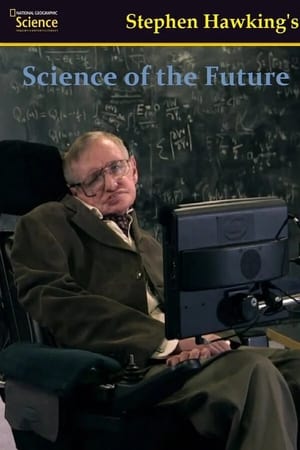
Stephen Hawking’s Science of the Future investigates the very latest game changing innovations. Each episode takes one area of progress and sends five top scientists out to actively test the inventions and breakthroughs that are driving it. The team explore human upgrades, the virtual world, bio-mimicry, high-tech emergency responses, and more. Featuring a wide range of examples, from advanced robotics and breathtaking digital actors, to cutting edge smart homes and electronic brain stimulation, the series reveals how science is delivering astonishing improvements to all our lives. Using the evidence they gather, the team reveals the year when each innovation will be rolled out for us all to benefit from, and Hawking then draws out his own uniquely insightful predictions about what our world will be like in the years to come.
The series uses stunning interactive CGI to reveal step-by-step how a world is put together. With a little help from the world's top scientists and engineers, Hammond will build the Earth and Solar System piece by piece.
Capturing the latest breakthroughs in science, technology and innovation. With anchor Hari Sreenivasan, we check out the hottest gadgets, meet the innovators creating the startups of tomorrow and map out the mysteries of the scientific world.
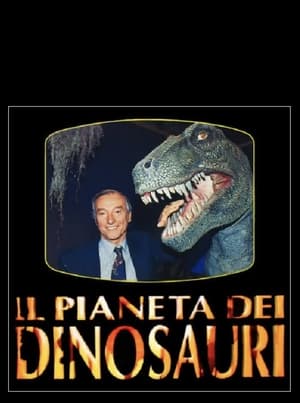
Il planet of the dinosaurs was a television documentary series, hosted by Piero and Alberto Angela in 1993, dedicated to the life of the Dinosaurs studied by the reconstructions, thanks to the co-production with Agip and the advice of Professor Dale Russell.
Seven episodes explore the fascinating adventure of the universe. Scientific rigor is complemented by spectacular images created with the aid of cutting-edge technology and special effects, films, animated fact sheets, and astronomical instruments. Piero Angela connects with a replica of himself in space, AstroPiero. A second correspondent, Alberto Angela, connects with the study from astrophysics laboratories and observatories around the world.
Catalyst is Australia's premier science investigation series. Each week the team brings you stories from Australia and around the world, meeting scientists at the forefront of discovery.
Professor Brian Cox goes on a grand tour of the planet to explain how the Earth's beauty is created by just a handful of forces.
Pandora's Box is a six-part 1992 BBC documentary television series which examines the consequences of political and technocratic rationalism. The episodes deal, in order, with communism in The Soviet Union, systems analysis and game theory during the Cold War, economy in the United Kingdom during the 1970s, the insecticide DDT, Kwame Nkrumah's leadership in Ghana during the 1950s and 1960s and the history of nuclear power.
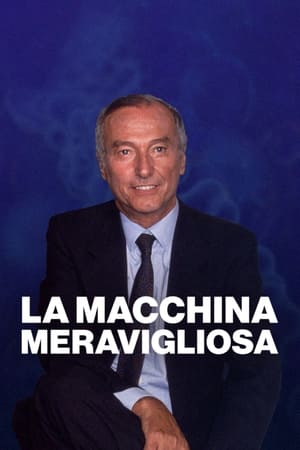
A long journey in 8 episodes to discover the human body, with Piero Angela who closely observes our organism, focusing each time on a theme: the eye, the ear, taste and smell, the stomach and the intestine, liver, bones, lungs and heart. How does our "wonder machine" work? To make each explanation direct and clear, the program uses films, animations and photographs developed with the scanning electron microscope.
Two-part documentary which deals with two of the deepest questions there are - what is everything, and what is nothing? Professor Jim Al-Khalili searches for an answer to these questions as he explores the true size and shape of the universe and delves into the amazing science behind apparent nothingness.
From strange abductions, to mutated species, to bizarre occurrences, there are some phenomena that science cannot - or will not - explain. This summer Science Channel unveils some of these shocking and mind-boggling cases from around the world in the world premiere series THE UNEXPLAINED FILES. From mysterious disappearances and UFO encounters, to unidentified fanged predators and reported curses, THE UNEXPLAINED FILES investigates actual, inexplicable occurrences that have confounded scientists and inspired legends. Science Channel invites viewers on a mystifying journey that will challenge disbelief with THE UNEXPLAINED FILES.
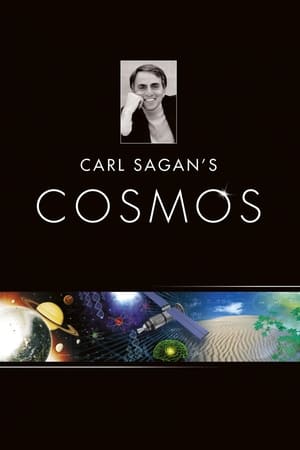
Carl Sagan covers a wide range of scientific subjects, including the origin of life and a perspective of our place in the universe.
In the series, "Wallace will take a light hearted and humorous look at the real-life inventors, contraptions, gadgets and inventions, with the silent help of Gromit. The series aims to inspire a whole new generation of innovative minds by showing them real, but mind-boggling, machines and inventions from around the world that have influenced his illustrious inventing career" (the BBC press statement). Peter Sallis reprised his role as the voice of Wallace. The filmed inserts are mostly narrated by Ashley Jensen, with one in each episode presented in-vision by Jem Stansfield. John Sparkes also voices a portion in the unseen character of archivist Goronwy.
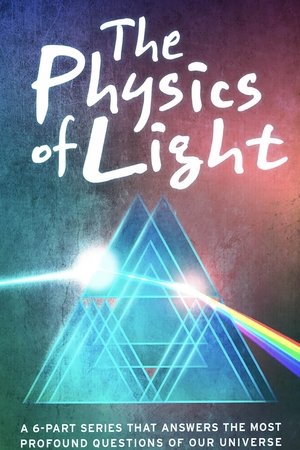
While the terms "quantum physics" and "Theory of Relativity" are used casually every day, not many people know what they really mean. Yet these theories have had a profound impact not only on science and technology, but also on our world view. This intriguing 6-part documentary series explores the concepts of physics from familiar theories, such as Newton's Law of Gravity, to the latest in scientific research, like string theory and M-theory. By connecting all of this research with the medium of light, we can gain a deeper understanding not only of our immediate reality, but of the unseen realities that are hidden beyond our perception. Starting with Einstein's Theory of Relativity, Physics of Light explores the true nature of light, peers inside the atom, and looks ahead to the most cutting edge theories in physics.
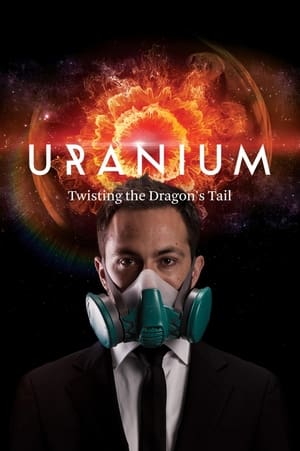
A stunning new documentary series exploring the incredible story of uranium, from its creation in an exploding star to its deployment in nuclear weapons, nuclear power, and nuclear medicine. It’s a journey across nine countries and more than a century of stories, to discover the rock that made the modern world. It’s part science, part history, and all epic adventure. Join physicist and YouTube phenomenon Dr. Derek Muller as he reveals the untold story of the most wondrous and terrifying rock on Earth.
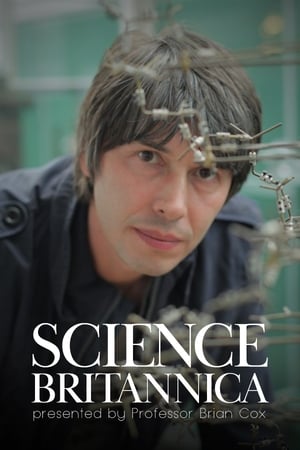
Professor Brian Cox embarks on a mission to guide viewers through 350 years of British science, laying bare what science really is, who the people are who practise it, and how it connects to the past, present and future of each of us.
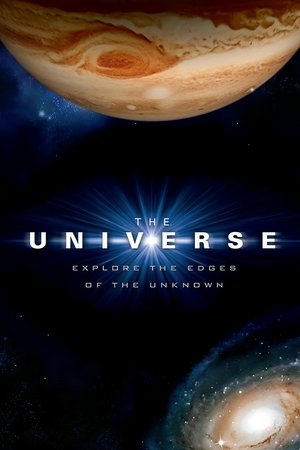
From the planets to the stars and out to the edge of the unknown, history and science collide in a wondrous yet deadly adventure through space and time.
NOVA scienceNOW is a News magazine version of the long-running and venerable PBS science program Nova. Premiering on January 25, 2005, the series was originally hosted by Robert Krulwich, who described it as an experiment in coverage of "breaking science, science that's right out of the lab, science that sometimes bumps up against politics, art, culture". At the beginning of season two, Neil deGrasse Tyson replaced Krulwich as the show's host. Tyson announced he would leave the show and was replaced by David Pogue beginning season 6.
Explore the mysterious regions inside the human body. See how vital organs interconnect to make human life possible. Learn how skeletons fit together. Witness the lightness and strength of bone, how muscles work as levers, what it takes to achieve the "perfect" body. See how the heart functions, and learn the roles of white and red blood cells. Discover the complex systems controlling breathing, digestion, glandular changes, and hearing.
The series investigates Paolo Macchiarini’s claims to have invented a ground-breaking method to create new organs. His method using plastic tracheas sown with stemcells has been operated on patients in the US, Russia, Sweden and the UK. So far, unfortunately, the track record of his plastic organs is not very good. Almost all patients are dead. And several of his former surgeon colleagues in Sweden claim that not only does the method not work, but that his scientific claim to fame is based on falsified and misrepresented data. Some even claim that his patients have been used as human guinea-pigs.