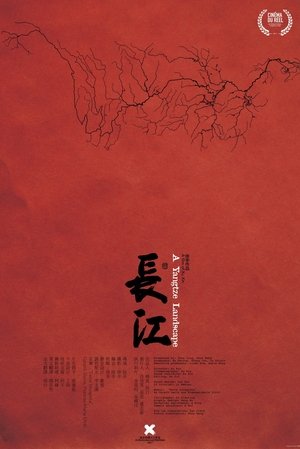
Before the Flood is a study of the final weeks of a dying city, as thousand-year-old Fengjie on the Yangtze River is reduced to rubble and its inhabitants uprooted to make way for the new Three Gorges Dam that will flood the entire valley.
China marks the beginning of the extensive Asian theme in Ottinger’s filmography and is her first travelogue. Her observant eye is interested in anything from Sichuan opera and the Beijing Film Studio to the production of candy and sounds of bicycle bells.
"China Gate" tells the story of young Chinese fight to change their fate through studying. Right before dawn, students in Huining have already started their self-studying session; hard working youngsters have filled up the space of school ground. This is one of the most poverty-stricken Counties in Western China; here people's only hope is in education, as the way to change their social status. Therefore all their effort point towards the College Entrance Examination, the process is like going through a gate, those who pass can study at urban Universities, and have the chance to build a better life. During the same winter season in Beijing, a graduate student faces a big decision. Should he keep trying to survive in the big city or get back to his countryside home? The exhausted faces at the Beijing underground seem to be revealing the truth about their distance in between. The student comes to see the flag ceremony at Tiananmen Square, where the pulsing symbol of the nation lies.
Six-year old Lin resides in an isolated fishing village with her brother and their widowed mother. When the family gets an opportunity to start a new life, Lin has a startling revelation. A melancholic tale inspired by real events.
A microcosm of China past and present flows through Xu Tong’s intimate docu “Shattered,” in which the maverick indie filmmaker continues to refine his techniques and concerns shown in his previous “Wheat Harvest” and “Fortune Teller.”
Follow the lives of the elderly survivors who were forced into sex slavery as “Comfort Women” by the Japanese during World War II. At the time of filming, only 22 of these women were still alive to tell their story. Through their own personal histories and perspectives, they tell a tale that should never be forgotten to generations unaware of the brutalization that occurred.
Gentle, easy-going Or Kia moves from the countryside to Kuala Lumpur to work for his cousin and best friend Ah Soon, a mid-level gangster and enforcer. While Or Kia works hard to put a sister through school, Ah Soon cares for an unstable girlfriend prone to mysterious disappearances. As they both sink deeper into a nocturnal world of debts, drugs, and betrayal, Or Kia's loyalties are strained when Ah Soon falls out of favor with the bosses and tries to escape the business.
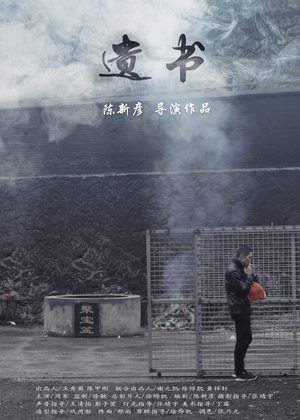
Four college students from Shandong University of Technology planned to make a documentary about the folk culture of ghosts and spirits. They went to a village in Heze City, Shandong Province, and made some interviews with local villagers. During the interviews, they heard a lot of local weird tales. The shooting of the documentary went smoothly, and that night, they chose to stay in the village. At this point, strange things, however, began to happen...
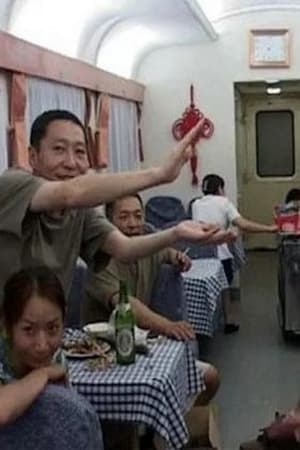
Filmed over three years on China’s railways, The Iron Ministry traces the vast interiors of a country on the move: flesh and metal, clangs and squeals, light and dark, and language and gesture. Scores of rail journeys come together into one, capturing the thrills and anxieties of social and technological transformation. The Iron Ministry immerses audiences in fleeting relationships and uneasy encounters between humans and machines on what will soon be the world’s largest railway network.
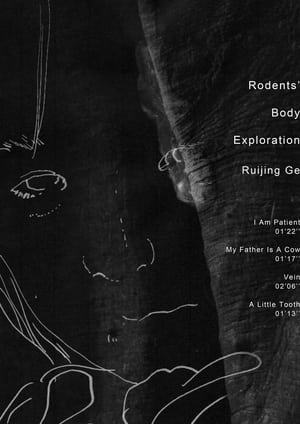
The father tells his daughter Nunu a lie that there is a cow in her milk cup. She believes it and drinks up milk, but there isn't any cow. Her father tells her a variety of lies, which Nunu finds increasingly difficult to believe.
Chinese film directed by Zhang Ming,
Twenty plus classmates look back into the past, tracing back through a 30 year history. One after another adapts to the random events that come to shape their lives, to the four seasons of life and nature. The years they were about experience coincided with the reforms and opening up of China. Floating in the changes of the new era, some experience compromises and the loss of ideals, whilst some keep struggling ahead with great determination. Thirty years later, Lin Xin encounters his old classmates, and records their individual lives and history; the ease of monotony, the loneliness of success, the weariness of a life of plentiful, the helplessness of poverty... all come forth in the lives of these group of people, becoming an epitome of the lives of ordinary people in small to middle-sized cities in this era, and at the same time reflecting on a generation that advances forward undefeated.
Due to his history of theft in the past, Lin Kuan is falsely accused of stealing from his high school classmate. To prove his innocence, Lin enlists his friend Xiao Bing to make a plan that will clear his name. However, heir seemingly perfect plan takes a turn that pushes Lin to a dangerous edge.
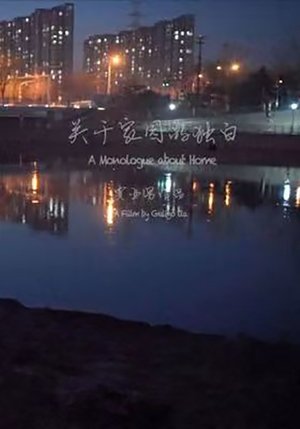
I just watch the news of war in a distant country on my mobile. My fingers go back day by day to the day the war broke out and pose to see comments posted on the Facebook News Feed that I follow. Outside, I have friends who participated in anti-war rallies.
Li Shouwang is the leader of a blind storytellers team, learned storytelling at the age of 19. His childernare living hard in other cities. Li's money amost goes to his children's pocket every year. But with urbanisation, the storytellers have lost almost all their audience. As the conflict between the storytelling team and the village team intensified, his son, who was far away from home, became the only spiritual sustains... When he was excited that his son would be taking his family home for Chinese New Year, what's await is a sigh.
Andy is a novelist who works from home. One day, a girl mysteriously appears in his toilet. She claims to be from the future and needs his help. Her name is Pomegranate.
Fishermen couple Ah Shing and Mei-wah, having lived from boat to shore, stayed together for most of their lives. After their son grew up, they have different visions towards the rest of their days. Ah Shing insists on fishing amid the decline of the local fishing industry. Mei-wah works as a factory worker and wishes for a more stable life. Even when there are subtle and profound changes in their relationships due to the different views, their affections for each other never stopped and they still support each other. This story is based on the real-life experience of the director's parents, and they play their own character in the film.
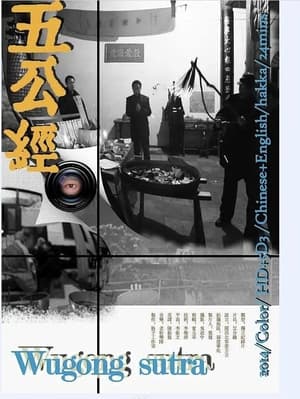
"Mazu" or "The Sea God" has been the most important religious belief of ordinary people in my hometown for four hundred years. Along the coast of China and even in the Nanyang region, there is at least one temple dedicated to Mazu in various seaside cities-this geographical and historical distribution coincides with the contemporary economic or industrial area of Chinese society. It is frustrating that rapid economic development has led to global warming. The factories located on the coast of southern China from all over the world will eventually cause flooding and inundate these temples dedicated to Mazu. This is indeed a very ironic discovery for our civilization, "We", not only Chinese or all human beings, now or in the past, how can we Chinese avoid this upcoming tragedy?
The Chinese police visit head-teacher Chen at home. Her daughter, a dissident filmmaker living in Hong Kong, plans yet another critical film about China's colonization of the small autonomous territory. The authorities demand that Chen travel to her daughter to stop the film project. What they do not take into account is that Chen and her daughter lost contact long ago.
For Chinese parents, finding out that their kid is gay usually presents a major tragedy, with the big majority utterly unable to accept the homosexuality of their son or daughter. However, during recent years a fresh rainbow wind has been blowing over the Chinese mainland: a pioneer generation of Chinese parents has been stepping up and speaking out on their love for their gay kids. This documentary features 6 mothers from all over China, who talk openly and freely about their experiences with their homosexual children. With their love, they are giving a whole new definition to Chinese-style family bonds.