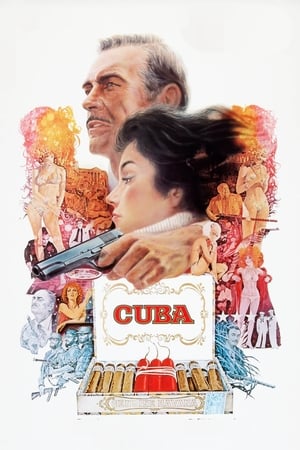
A British mercenary arrives in pre-Revolution Cuba to help train the corrupt General Batista's army against Castro's guerrillas while he also romances a former lover now married to an unscrupulous plantation owner.
In a future Leeds, society is divided between loyalists of the powerful Queen Bear and radical followers of Galahad. Avalon is a young woman desperate not to take sides, but as civil war begins she must undertake a dangerous mission to rescue a precious relic from destruction.
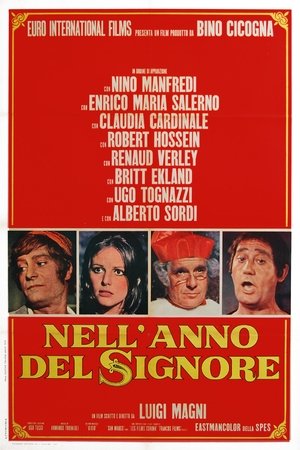
Rome, 1825. Bishop Rivarola and Colonel Nardoni are in charge of suppressing the liberal revolution. Shoemaker Cornacchia got the information that the liberal Filippo Spada is a spy and is going to denounce his revolutionary companions.
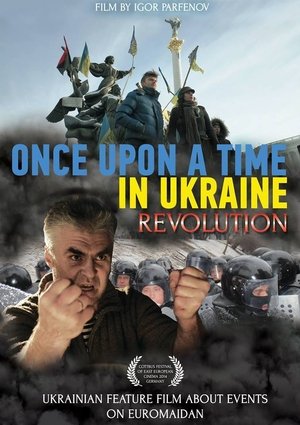
Whilst the first shots ring out between pro-Russian government forces and members of the opposition in the winter of 2013, young Nina leaves Crimea. She was raped by a corrupt policeman, her friend was killed, and now she seeks refuge with the protesters on Maidan Square. Revolutionary chaos prevails, and it‘s not at all clear who remains loyal to whom and which means can be regarded as legitimate in the struggle for freedom. Ultimately Nina and her tormentors come face to face again and the spiral of violence is stepped up a further notch. The film was shot to a genuine backdrop, the result of which is a multifaceted allegory on the tragedy currently playing out in Ukraine.
Biography of Argentinian revolutionary Ernesto "Che" Guevara, who helped Fidel Castro in his struggle against the corrupt Batista regime, eventually resulting in the overthrow of that government and Castro's taking over of Cuba. The film covers Guevara's life from when he first landed in Cuba in 1956 to his death in an ambush by government troops in the mountains of Bolivia in 1967.
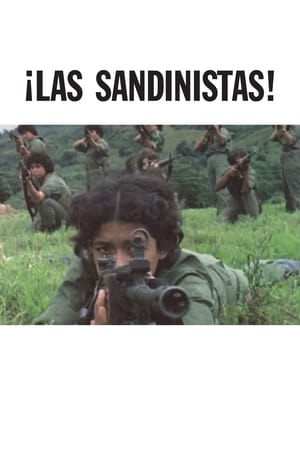
¡Las Sandinistas! uncovers the disappearing stories of women who shattered barriers to lead combat and social reform during Nicaragua’s 1979 Sandinista Revolution, and who continue to lead Nicaragua’s current struggle for democracy and equality.
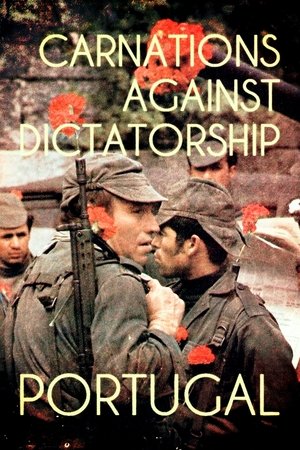
In Portugal, during the night of April 24-25, 1974, a peaceful uprising put an end to the last government of the Estado Novo, the authoritarian regime established in 1933 by dictator António de Oliveira Salazar (1889-1970), paving the way for full democracy: a chronicle of the Carnation Revolution.
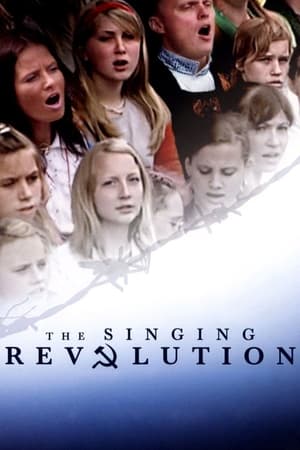
Most people don't think about singing when they think about revolutions. But song was the weapon of choice when, between 1986 and 1991, Estonians sought to free themselves from decades of Soviet occupation. During those years, hundreds of thousands gathered in public to sing forbidden patriotic songs and to rally for independence. "The young people, without any political party, and without any politicians, just came together ... not only tens of thousands but hundreds of thousands ... to gather and to sing and to give this nation a new spirit," remarks Mart Laar, a Singing Revolution leader featured in the film and the first post-Soviet Prime Minister of Estonia. "This was the idea of the Singing Revolution." James Tusty and Maureen Castle Tusty's "The Singing Revolution" tells the moving story of how the Estonian people peacefully regained their freedom--and helped topple an empire along the way.
A story set in the Philippine Republic in the 1900s where a lass, a Spanish mestizo, and a fisherman are caught up by Macabebe soldiers who are trying to capture Emilio Aguinaldo.
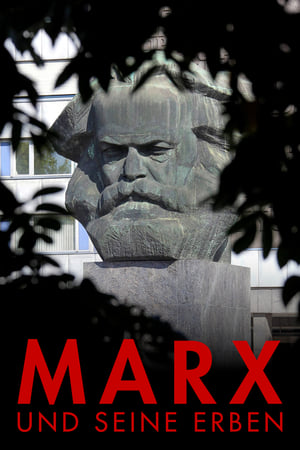
Over the past hundred years, dramatic social upheavals have taken place in the name of Karl Marx's theories. In Western Europe, the student movement of 1968 and the Eurocommunists were inspired. And in recent times, the thinker has experienced a renaissance.
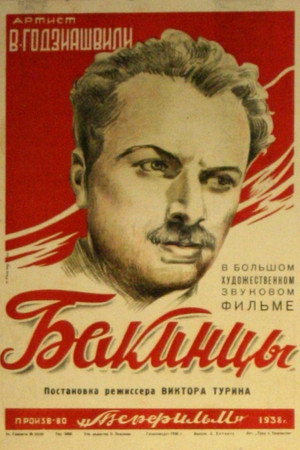
The film is about the revolution which began bacause of dissemination of Bolshevik ideas among workers.
Observing the first years of the formation of Soviet power, about the life and work of Feliks Dzerzhinsky from 1918-1925; in July 1918, as a result of a revolt of the Left Socialist Revolutionaries, German ambassador Mirbach is killed. Feliks Dzerzhinsky alone goes to the headquarters of the Left Socialist Revolutionaries and Anarchists, he manages to persuade ordinary soldiers and sailors, participants in the rebellion, who are now cracking down on their leaders.
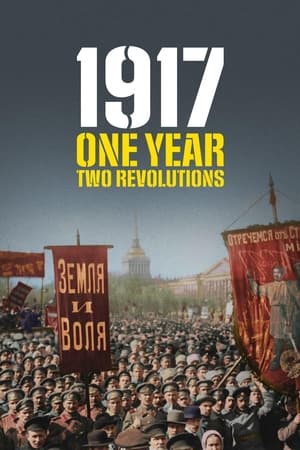
In February 1917, Imperial Russia plunges into revolution. Nine months of unrest before a coup brought about an upheaval that changed the course of history and profoundly altered the future of civilisation.
The dramatic events around the French king Louis XVI and the French crises in the late 1700's with no will to pay taxes, which led Louis XVI into an impossible situation as a king.
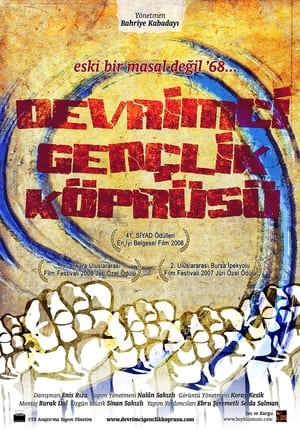
Year 1969 - in Turkey. 60s youth were living the most excited days. There was a great effort to make a bridge in Istanbul, on the Bosphorus. Meanwhile, on the eastern border of Turkey, in a Kurdish city between the borders of Iran and Iraq that is left to its destiny, in Hakkari, Zap River was taking lives since there were no passage on it.
Pulipaarvai, also called Puli Paarvai, is a Tamil film about Balachandran Prabhakaran directed by Praveen Gandhi. It is based on the real life of the 12 year old youngest son of the LTTE leader ,Velupillai Prabhakaran who disappeared after the destruction of the LTTE and the death of his father during the end of the Ealam war is widely believed to be executed after he surrendered to the Sri Lankan Army. Praveen Gandhi was inspired make the movie after seeing documentaries about Balachandran Prabhakaran's execution in Channel 4 and BBC.
A young Russian peasant feels pity for the Princess Anastasia and saves her life by accidentally wounding her in the massacre of the Romanovs during the Russian Revolution.
A patriot (René Lavan) with a rebellious brother falls in love with a dissident's daughter (Mayte Vilán) in Castro's Cuba.
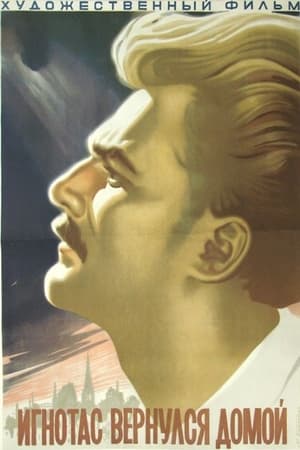
Based on the novel by the famous Lithuanian writer A. Gudaitis-Guzevičius “The Truth of Blacksmith Ignotas” about the revolutionary events of 1918-1919. in Lithuania, about the struggle of workers for Soviet power, for the freedom of their homeland.
The young Austrian princess Marie Antoinette is arranged to marry Louis XVI, future king of France, in a politically advantageous marriage for the rival countries. The opulent Marie indulges in various whims and flirtations. When Louis XV passes and Louis XVI ascends the French throne, his queen's extravagant lifestyle earns the hatred of the French people, who despise her Austrian heritage.