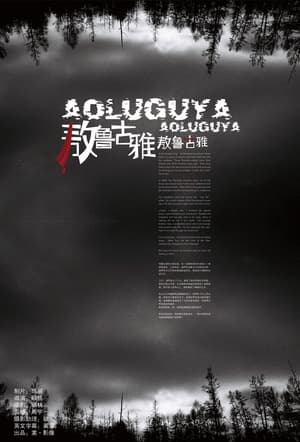
Aoluguya, Aoluguya is the first film in Gu Tao’s Ewenki Trilogy. A tale that unfolds in the Aoluguya forest, featuring such unique characters as a mother who dulls her sadness over the absence of her son, Yuguo, with alcohol; her brother; and Maria, the tribal chieftain who watches over them.
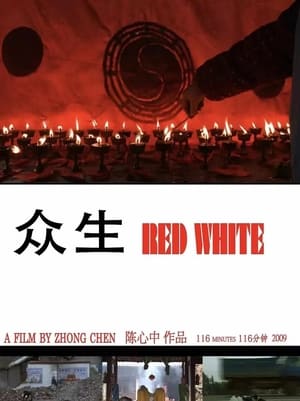
A small rural township called Red White was seriously devastated by the May 12th Earthquake in China 2008. A 62-year-old Taoist survived even though his temple was largely torn by the disaster. This documentary tells the story of how the Taoist practices the widely believed Chinese traditional religion and the local people’s daily life during the township’s post-quake reconstruction.
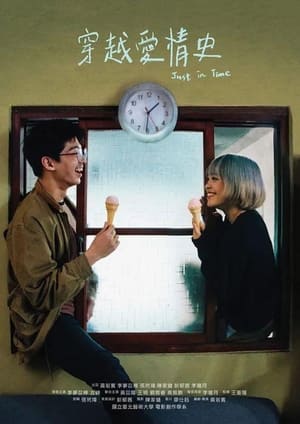
Andy is a novelist who works from home. One day, a girl mysteriously appears in his toilet. She claims to be from the future and needs his help. Her name is Pomegranate.
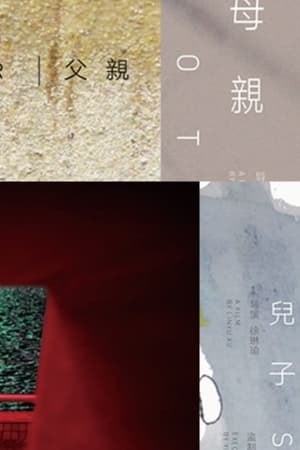
Director Xu Linyu presents four short films: Mother, Father, Daughter and Son, in which the characters are bound together by the same family, but one of the greatest feelings between the relationships is the sense of alienation. During the filming process, Xu Linyu tries to sort out everyone's dilemma and re-understand the family relationship.
Tan Dongdong, aged 16, rode a motorcycle for a living. On his way to get back his ex-girlfriend Lin Qing, Tan Dongdong accidentally got acquainted with hair salon girl Wu Xiaoxia. After learning that Lin Qing had left with another man, Tan Dongdong gradually developed feelings for Wu Xiaoxia. At Tan Dongdong’s request, Wu Xiaoxia agreed to give up her job as a prostitute in the hair salon. However, when Tan Dongdong found out that Wu Xiaoxia had violated the agreement, he chose to take revenge…
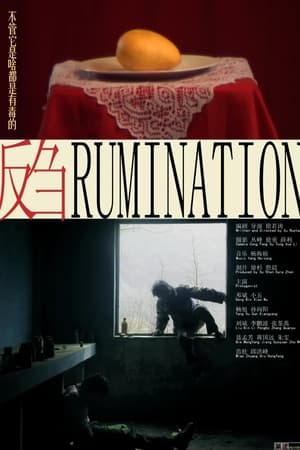
Wang Yang has an interview today. However, a series of abrupt and absurd interludes, such as cockroachs that suddenly appear, the phone that he can't get rid of, ceaseless music, and mysterious phone calls, keep popping up to prevent him from leaving the house. The veracity of this story is immediately doubted after he tells his brother about all of this, but he believes that everything that happens to him is real...
Broken Line
The documentary Building Archeology (jiànzhú kǎo) (2011) considers the more recent past. It’s made up of three vignettes about different buildings in Beijing: a museum, an abandoned hospital, and a detention center. The latter two vignettes are especially interesting. In the second, a woman wanders around the ruins of a hospital built in a week to deal with the 2003 SARS outbreak. The third concerns a former prisoner, tracing out a map of the detention center where he was held in 2011.
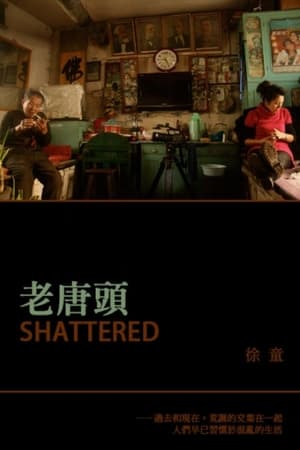
A microcosm of China past and present flows through Xu Tong’s intimate docu “Shattered,” in which the maverick indie filmmaker continues to refine his techniques and concerns shown in his previous “Wheat Harvest” and “Fortune Teller.”
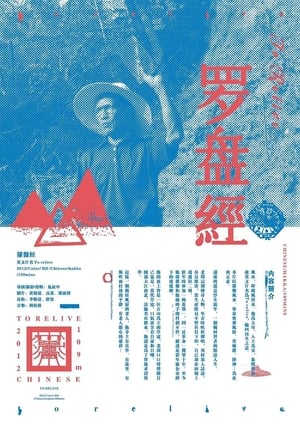
Geomancy is to say hinding winds to gain water. The earth is mother , burial brings peace to the deceased, symbolizing reincarnation. So the name of this story in English is “Revive”, which means getting into the cycle of reincarnation. The documentary is going to tell a story contains several elements such as Geomancy of compass, Hakka funeral and interment culture, General om teach, Seance. Moreover, it also porse deeply on the floating life with fleeting time- the sanguine life of a wise man in countryside. This is an old man whose life is full of hardships, he possesses real learning and stories, owns peace after overcoming severe difficulties, and has the special graciousness as being in such an age…
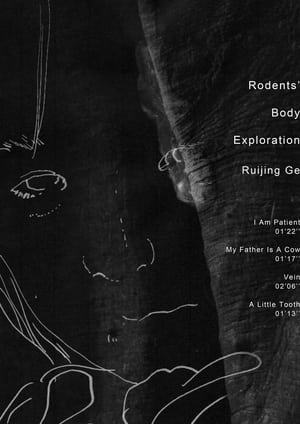
The artist works around the different individual experiences which consolidates the different changes in the body while examines intimate relationships under the structure of the disease, all by making her experience visible and public. Within the realms of Ruijing’s discussions, she hopes for the work to push the boundaries of the marginality of the body, for the work to allow oneself to look at their and others’ body in an objective manner that escapes the ontological. She further wished for the experience of living and the reflection on the mass would help the discovery of the self and its connection with society, while reflecting on life itself by doing so.
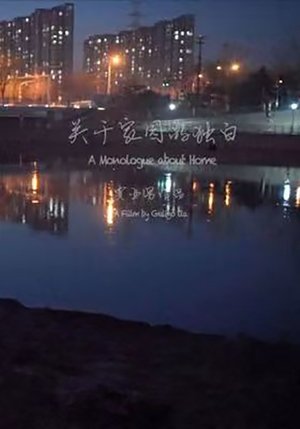
After the outbreak of the war in Ukraine, I reached out for a Ukrainian who studies in Beijing. Born in Russia, his father was Russian and his mother is Ukrainian. As the war escalates, his hometown was also bombarded, and his family breaks apart while his mom seeks for asylum in Bulgaria and his stepdad staying at home. He is about to leave China, feeling lost about his next destination. Gradually Mark and I have more resonance. And the pain caused by war started to strike me too.
An exploration of the Cultural Revolution that depicts both its chaotic later years – through the story of a squad of Red Army guards running amok in the countryside – and its continuing legacy in today’s China.
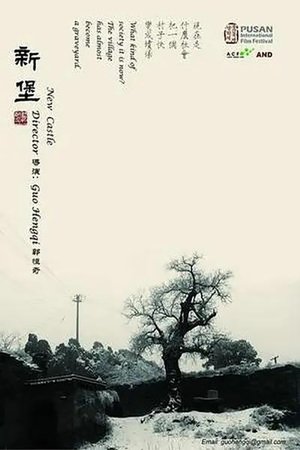
New Castle is a remote rural village where houses and mountains have been distorted due to excessive mining. Under the "New Village" campaign, all the villagers will be moved into the nearly completed Luxury Buildings. The documentary depicts the life of two groups of people, miners and villagers. The miners who are from all over the country, lost their jobs because of the Olympic Games in Beijing - the mine was shut down to make the air less polluted. The villagers had no better luck. Granny Fan lost two sons and two grandsons in a mining accident. Old Han and Old Wang are still farming. Some youngsters are gambling in the house of Han Bin, who was crippled in another mining accident. In the film, you can also see the village election, the service of local Christians, and people worshipping for a better year to come.
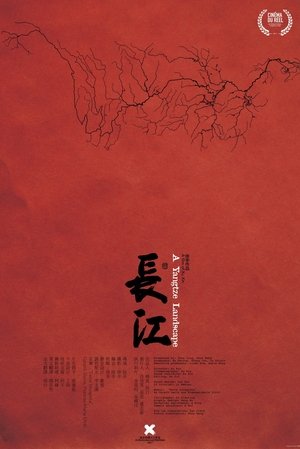
A Yangtze Landscape utilizes a non-narrative style, setting off from the Yangtze's marine port Shanghai, filming all the way to the Yangtze River's source, Qinghai/Tibet - filming a total distance of thousands of kilometers. Experimental music and noise recorded live on scene are used in post-production, painstakingly paired with relatively independent visuals, creating a magically realistic atmosphere contrasted with people seeming to be 'decorative figures' right out of traditional Chinese landscape scrolls.
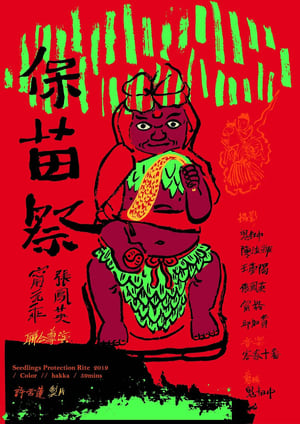
Seedlings protection rite (also called the parade of big rice dumplings) is a spring agricultural festival of Hakka people in Western Fujian, China. People worship the God of Grains (Shennong) in the rite. People collect thousands of fresh bamboo leaves, sew them together and make a pair of big dumplings filled with 120 kilograms of rice each. They also make tens of thousands of finger-sized rice dumplings for believers to take home. On the 15th day of the 2nd lunar month, villagers carry out the statues of the God of grains and big dumplings. Followed by flowers cars, eight sheds carry children chosen from every clan name in the village who are dressed up as ancient heroes, as people parade around the village. After the rite, villagers believe that farmland is awakened and that disasters are averted. A new agricultural cycle begins.
A man who was hiding for 7 years to avoid creditors has embarked on his journey home because of the death of his mother. On the way back home, the childhood memories stroke him constantly just like dreams. In search of a notebook full of poems written for his ex-wife, he went to the former factory to find an old friend. Elsewhere in the city, three senior students are talking about their future plans. All the wandering man under the bridge, the little boy in his childhood and the young senior students, imperceptibly but inexorably are linked together by the river, and the memory has been revived.....
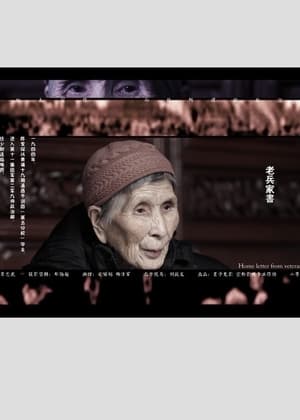
Veteran's Letters to Home
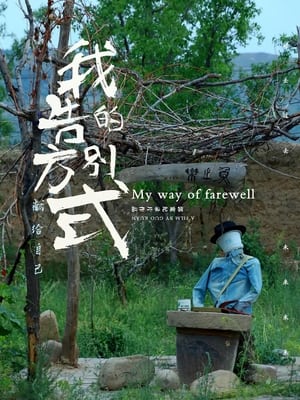
In order to face his 30th birthday, the author of the film began to implement a long-planned plan for the Dragon Boat Festival, bringing a dog, a computer, some vegetables and eggs to the dilapidated yard on the north side of the mountain in Pingyao County, where he will live alone for more than a dozen. Day and night, organize and pack the first half of my life, recall and think, talk with the self in the device, and smoke, silence, think or sing with the middle-aged neurotic who comes to ask for cigarettes every day.
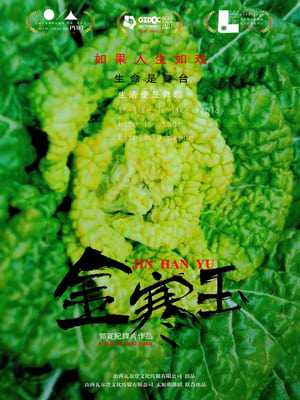
The film records a middle-aged woman Han Mei who longs for life. In the fight against the disease, the experience makes her redefine the meaning of life...