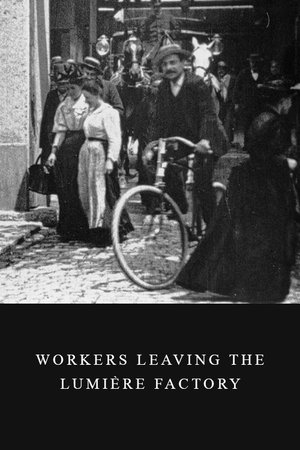
Working men and women leave through the main gate of the Lumière factory in Lyon, France. Filmed on 22 March 1895, it is often referred to as the first real motion picture ever made, although Louis Le Prince's 1888 Roundhay Garden Scene pre-dated it by seven years. Three separate versions of this film exist, which differ from one another in numerous ways. The first version features a carriage drawn by one horse, while in the second version the carriage is drawn by two horses, and there is no carriage at all in the third version. The clothing style is also different between the three versions, demonstrating the different seasons in which each was filmed. This film was made in the 35 mm format with an aspect ratio of 1.33:1, and at a speed of 16 frames per second. At that rate, the 17 meters of film length provided a duration of 46 seconds, holding a total of 800 frames.
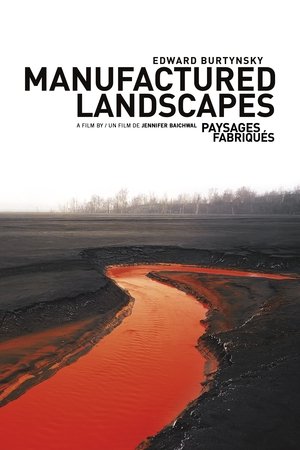
MANUFACTURED LANDSCAPES is the striking new documentary on the world and work of renowned artist Edward Burtynsky. Internationally acclaimed for his large-scale photographs of “manufactured landscapes”—quarries, recycling yards, factories, mines and dams—Burtynsky creates stunningly beautiful art from civilization’s materials and debris.
The concept of machine-made knit was known as early as the 1850s, but it was only during the 1920s that the quality of the material had improved. When the plant known as "Atlas" was introduced in 1931, the shop windows drew a lot of attention, and Aho & Soldan was ordered to make a promotional film. In this well-paced film, we see the jersey production step by step.
Megacities is a documentary about the slums of five different metropolitan cities.
This portrayal of the rhythm of life and work in a gigantic textile factory in Gujarat, India, moves through the corridors and bowels of the enormously disorienting structure—taking the viewer on a journey of dehumanizing physical labor and intense hardship.
Making of: Volvo FH Trucks
Jana Beller won the TV show „Germany's Next Top Model“ in 2011. Today she is a businesswoman and runs two branches in Bochum of one of the most modern backshop chains in Europe. Model measurements and pastries - does that fit together? And how! The young entrepreneur gives insights into the business of sweet and salty snacks. Shock-frozen, the breads and desserts are delivered from a central production to the individual shops and sold to hungry walk-in customers.
The high consumption of snacks and sweets in Germany keeps producers on their toes. In Viersen, consumer giant Mars produces 10 million cookie chocolate bars every day-and each of them must look and taste absolutely identical. In Erdmannhausen, snack pretzels are produced in the first Württemberg pretzel factory, Huober. And the Lübeck-based marzipan manufacturer Niederegger wants to use traditional production processes to produce what it claims is the best marzipan in the world.
This documentary, produced by Paul Burnford, features how products are made in factories. It uses an example of a jack-in-the-box produced by Mattel.
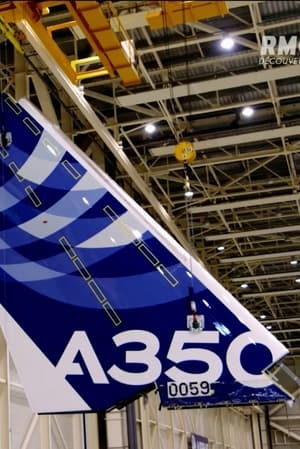
Megastructures: Airbus Beluga XL
Documenting the production of kerosene tins and their reuse in rural India, this early short by Bimal Roy observes industrial labor and everyday life with a restrained, humanist perspective.
An original portrayal of a small Czech village where – as the locals put it – an UFO has landed in the form of a kilometre-long silverish factory: a Korean Hyundai automobile plant. The village, hitherto famous mostly for its sauerkraut and the “Radegast” beer was thus turned into an industrial zone – the largest greenfield investment project in the Czech Republic’s history. Nonetheless, for a long time many farmers resisted selling the land upon which the factory was now standing. Eventually, they all succumbed under the pressure from the neighbours, and even the anonymous death threats. The filmmakers returned to Nošovice two years after the dramatic property buyouts, at the time when the factory has just started churning out cheap cars. Combining the perspectives of seven characters, they have composed a portrayal of a place suddenly changed beyond recognition that is playful and chilling at the same time: a politically engaged absurd flick about a field that yields cars.
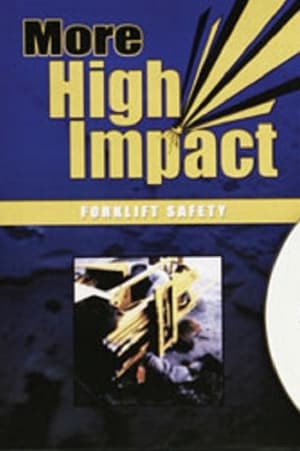
With graphic re-enactments of industrial accidents, the More High Impact Forklift Safety Video gives viewers a scared-straight lesson on the importance of forklift safety. This forklift video is great for training your forklift operators on accident awareness and prevention.
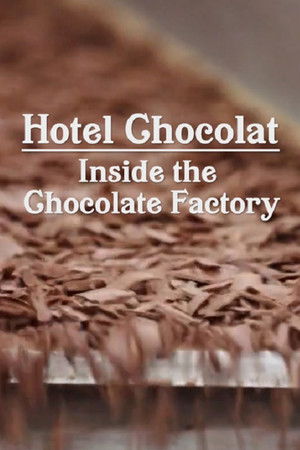
In the lead-up to the festive bonanza, an exclusive look inside the chocolate-maker's inventing room, and its 'chocolate imaginarium' too. Prepare for special choc drinks and cranberry treats.
Worldy renowned for his masterpiece The Housemaid (1960), Kim Ki-young debuts with his first short film I Am a Truck (1953), which was sponsored by UN and made a year after the armistice of the Korean War. This film is a fascinating glimpse into the mind of a soon-to-be powerful auteur and influential filmmaker in the post-war Korean cinema, if not the whole history of Korean cinema.
As a decades-old state-run aeronautics munitions factory in downtown Chengdu, China is being torn down for the construction of the titular luxury apartment complex, director Jia Zhangke interviews various people affiliated with it about their experiences.
The word panchão was first heard in Macao. From the Chinese pan-tcheong or pau-tcheong, dictionaries define it as a Macanese regionalism also known as China cracker. Who inhabits the ancient IEC Long firecracker factory?
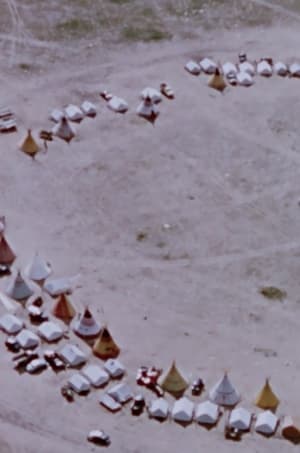
On the Kainai (Blood) First Nations Reserve, near Cardston, Alberta, a hopeful new development in Indigenous enterprise. Once rulers of the western plains, the Bloods live on a 1 300-square-kilometer reserve. Many have lacked gainful employment and now pin their hopes on a pre-fab factory they have built. Will the production line and work and wages fit into their cultural pattern of life? The film shows how it is working and what the owners themselves say about their venture.
Film sponsored by the Troy, New York–based manufacturer of Arrow shirts to explain its reasons for moving its business down south. The true story of how two World War II veterans invited the company to occupy an industrial plant that they had built in the hope of revitalizing Buchanan, Georgia. Five hundred residents signed a pledge stating that they were willing to work in the new factory. Cluett, Peabody & Co. eventually employed one-third of the townspeople.
Steve Glew, a small-town Michigan farmer, boards a plane for Eastern Europe soon after the fall of the Berlin Wall. His mission is to locate a secret factory that holds the key to the most desired and valuable pez dispensers. If he succeeds, he will pull his family out of poverty and finally find a purpose in his mundane life.