Ohio is the Midwest's eastern gateway, a vast land originally controlled by the Iroquois Indians. An important rail link, Ohio is bordered by the Allegheny Mountains to the east and the farmlands of the Great Plains to the west. A century ago, Ohio's most famous residents, Orville and Wilber Wright, were two bicycle mechanics who ended up leaving their mark in aviation.
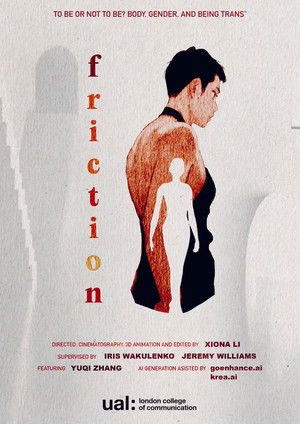
“Are you a man, or a woman?” In a world built on binaries, this is the question every trans soul must learn to answer—again and again. But imagine a future where bodies wither, yet minds ascend—consciousness can be uploaded to the cloud, and we could inhabit mechanised shells. In such a world, would gender still hold weight? Would it matter if you were man, woman, turtle or elephant?
Musician, octogenarian and transgender activist Beverly Glenn-Copeland and his wife navigate the implications of the former’s dementia diagnosis, contemplating high stakes, complex decisions about care and wellbeing while they embark on a mission to preserve his artistic legacy.
Benoît built his paradise hidden from view, emancipated in his own way, resolved to face the constraints of a space which, in imaginations, conflicts with his identity. The countryside. One day, he and other queers from the area decide to organize the first Pride of the Périgord vert, because it is time to come out, to take up space to celebrate, heal, and finally open a path.
Trans and queer communities shaped carnival traditions in the Canary Islands, exploring their historical role in developing costumes, performances, and celebrations that define the region's festive identity.
In the 50s and 60s, deep in the American countryside at the foot of the Catskills, a small wooden house with a barn behind it was home to the first clandestine network of cross-dressers. Diane and Kate are now 80 years old. At the time, they were men and part of this secret organization. Today, they relate this forgotten but essential chapter of the early days of trans-identity. It is a story full of noise and fury, rich in extraordinary characters, including the famous Susanna, who had the courage to create this refuge that came to be known as Casa Susanna.
Documentary that goes behind the curtain, exploring the intimate relationships and untold stories that shape the pro wrestling industry.
“Being French in 2024 means being able to serve as Prime Minister while openly gay.” With these words closing his policy speech on January 30, 2024, Gabriel Attal made history. The documentary *Homos en politique: le dire ou pas?* uses this milestone — the appointment and visibility of France’s first openly gay Prime Minister — as a springboard for a broader inquiry. Journalists Jean-Baptiste Marteau and Renaud Saint-Cricq travel across France to meet LGBTQ politicians of all generations, from Paris to rural towns. Eleven years after the protests against same-sex marriage, has France really changed? Through interviews with figures like Bertrand Delanoë, Sarah El Haïry, Jean-Philippe Tanguy, Franck Riester, and others, the film explores how coming out intersects with politics, homophobia, and representation — questioning whether saying “I’m gay” in politics is still an act of courage or simply a sign of the times.
Ricardo was once Sara, a homeless HIV positive transvestite, living in the underbelly of Manhattan. Today he is a churchgoing, married man, "saved" by a Dallas ministry. He has renounced his homosexuality, but is his conversion complete? Susana Aiken and Carlos Aparicio offer an intimate look at Ricardo's transformation.
"TDS, derrière l'écran des travailleuses du sexe" is a deep dive into the lives of Betty, Anaïs, Noochka, Manon, and Barty. They have all ventured into the world of selling sexual content online. What pushes someone to take the step of signing up on these platforms? What are their motivations? What are the consequences on their personal lives? Why do some choose to stick with it for years, while others decide to stop for good?
The story of five lesbian and gay seniors in the Northwest Florida region as they navigate coming out, identity, politics, and the challenges and victories inherent in the gay experience. The film weaves together interviews with fictionalized interludes of magical realism that capture their feelings and experiences.
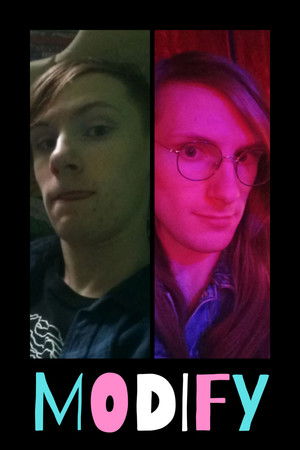
Vikken is transgender. He’s about to take hormones for the first time. He records his voice that will disappear, and summons the figures of the past from all over the world for an intimate dialogue with himself.
A significant group of trans and queer artists gather to mourn the loss of their friend – Indigo, AKA Spiral – to suicide.
The Alexander Ball is an observational documentary extravaganza celebrating Samoan-Māori-Australian trans woman of colour, Ella Ganza, and the Meanjin (Brisbane) ballroom scene, as she and her ballroom family prepare for one of the biggest pride events of the year: The Alexander Ball.
A documentary film depicting five intimate portraits of migrants who fled their country of origin to seek refuge in France and find a space of freedom where they can fully experience their sexuality and their sexual identity: Giovanna, woman transgender of Colombian origin, Roman, Russian transgender man, Cate, Ugandan lesbian mother, Yi Chen, young Chinese gay man…
In this intimate portrait addressed directly to Hélène Hazera, filmmaker Judith Abitbol revisits a key figure of France’s countercultures from the late 1960s to the 1990s. A member of the Gazolines and the FHAR (Homosexual Front for Revolutionary Action), Hazera was a tireless LGBTQ activist who founded Act Up’s Trans and AIDS commissions—one of her proudest achievements. Her true victory, however, was becoming the first transgender journalist at a major national newspaper (Libération), and later a producer at Radio France and France TV. Through her story, Abitbol reconnects with the insurrectionary spirit and creative chaos of those decades—an era when French culture was shaken by radical imagination, humor, and defiance. The film celebrates these modern Antigones who dared to live their desires beyond the reach of any law.
A truly major work, I Don’t Know observes the relationship between a lesbian and a transgender person who prefers to be identified somewhere in between male and female, in an expression of personal ambiguity suggested by the film’s title. This nonfiction film – an unusual, partly staged work of semi-verité – is the first of Spheeris’s films to fully embrace what would become her characteristic documentary style: probing, intimate, uncompromising. Preserved by the Academy Film Archive in 2014.
Two legends contested their identities as women in the court of public opinion: April Ashley, who was immortalized as a trailblazer by embracing her transgender history; and Amanda Lear, who has consciously denied and obfuscated her history for decades. Their divergent paths reveal disparate but intertwined legacies.
Focuses on one of the most talked about and important issues of our time – how to find yourself and your truth. It follows model and transgender activist Munroe Bergdorf’s journey and provides hope for those facing similar challenges.
Ludruk Tobong artists are trying to maintain the arts that support their livelihood and are also trying to eliminate the negative stigma of trans women through cultural media.